

Listen to the article
They start as comedies, crime dramas, or sitcoms—and end somewhere much darker.
Some TV shows tell you exactly what they are from the first episode. Others ease you in, smile politely, and wait.
They begin as comedies, crime dramas, or comfort-food sitcoms. Easy sells—shows you can recommend with confidence. However, gradually, they change. The jokes resonate differently, and the tension lingers longer as the emotional weight subtly builds.
Before you realize it, you’re no longer watching the show you signed up for.
These series don’t switch genres overnight; rather, they evolve gradually. Here are some of the best shows that start as one thing and end as something entirely different, ranked by how subtly and effectively they achieve that transformation.
8. Nathan For You (Comedy Central)
Genre shift: Business parody → social experiment → ethical stress test
On paper, Nathan For You is a prank show about a socially awkward comedian (with really good grades) who helps small businesses with absurd marketing ideas. Nathan’s deadpan and absurd interactions are perfect comedy fodder.
But as the series goes on, the laughs start to curdle. Nathan’s plans get more complicated as the show’s runtime stretches. And before you know it, the power imbalance between Nathan and his subjects becomes impossible to ignore.
By the later seasons, the show is less interested in punchlines than in control, consent, and how far people will go when they trust the person holding the clipboard. What once played as cringe comedy slowly morphs into something closer to an ethical endurance test.
By the end, Nathan For You barely functions as a comedy at all. The series finale is a quiet, unsettling look at self-delusion and loneliness.

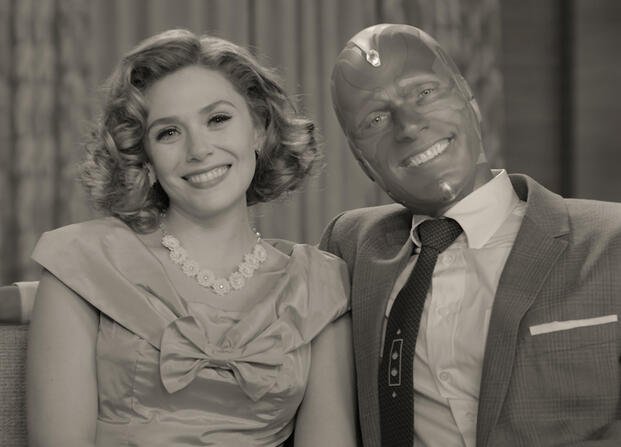
Genre shift: Sitcom homage → mystery box → psychological grief story
WandaVision begins as a novelty. A Marvel series filtered through classic sitcom eras, complete with laugh tracks, stage sets, and broad comedy beats. It feels light, safe, and slightly disposable.
Then the “wrong” moments start lingering. Things start to feel off, and the edges of the sitcom wallpaper begin to peel back.
What looks like a clever format exercise slowly reveals itself as something much sadder and more intimate. The sitcom framework isn’t a gimmick, but a commentary on media and our relationship to it, and it also works as an emotional shield for Wanda, the character at the center of the show.
By the time the superhero mechanics fully kick in, the show has already done its real work. The genre shift is rooted in grief, denial, and isolation. Once that clicks, WandaVision stops feeling playful and starts feeling heavy.

6. Atlanta (FX)
Genre shift: Comedy-drama → surreal social satire → horror anthology
Atlanta never announces when it’s about to change. It just does.
Early episodes feel grounded by dry humor, music-industry frustrations, and social commentary tucked into everyday moments. Then reality starts bending, and episodes drift into surrealism, nightmare logic, and full-blown horror. Sometimes the series drops the main cast altogether.
“Teddy Perkins,” anyone?
As the series goes on, the plot becomes secondary to mood. Genre becomes a tool to explore paranoia, racial anxiety, and the constant unease of existing in modern America. The comedy never disappears, but it does stop being comforting.
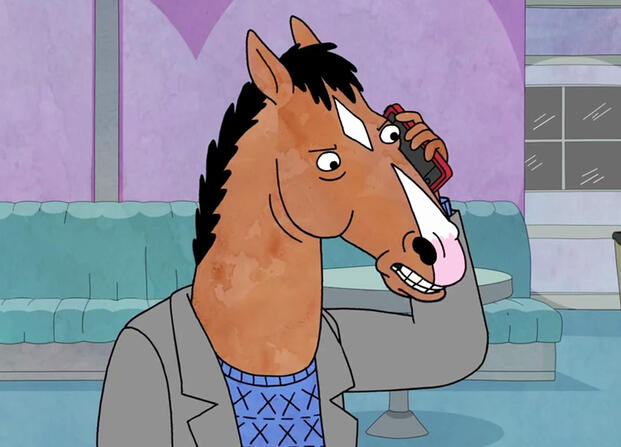
Genre shift: Animated Hollywood satire → addiction drama → existential despair
BoJack Horseman starts as a solid joke machine. There are plenty of animal puns, celebrity skewering, and, of course, a talking horse navigating cartoon Hollywood excess.
Then the hangovers stop resetting.
Season by season, the satire peels away, revealing a brutally honest portrait of addiction, self-sabotage, and emotional avoidance. The show experiments with silence, structure, and perspective in ways most live-action dramas wouldn’t dare.
By the end, BoJack Horseman isn’t really a comedy anymore. It’s an animated tragedy that used jokes as bait, then refused to let the audience laugh their way out of the consequences.
If you’re wondering where these shifts actually happen, there’s usually a single episode where the tone quietly locks in.
| Show | “Turn” Episode | What Changes |
|---|---|---|
| Barry | S2E5 — “ronny/lily” | Comedy mutates into feral violence. The show stops treating killing as a punchline and never goes back. |
| BoJack Horseman | S2E11 — “Escape from L.A.” | Satire collapses into consequence. The show crosses a moral line it can’t uncross. |
| WandaVision | S1E4 — “We Interrupt This Program” | Sitcom novelty cracks open, revealing grief, dread, and real stakes underneath the format. |
| Atlanta | S2E6 — “Teddy Perkins” | Psychological horror enters the room. Reality becomes unstable, and the rules disappear. |
| Nathan For You | S4E8 — “Finding Frances” | Prank comedy turns into a documentary about regret, control, and emotional fallout. |
| The Sopranos | S4E13 — “Whitecaps” | Mob drama gives way to emotional warfare and long-term psychological decay. |
| Breaking Bad | S4E11 — “Crawl Space” | Crime thriller locks into tragedy. There is no longer a way back. |
| Better Call Saul | S3E5 — “Chicanery” | Legal comedy collapses into moral inevitability. The mask is gone. |
| The Rehearsal | S1E6 — “Pretend Daddy” | Reality TV mutates into existential horror about control and authorship. |
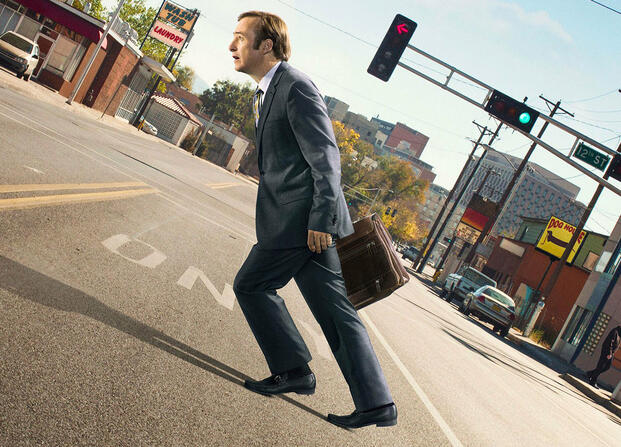
4. Better Call Saul (AMC)
Genre shift: Legal comedy→ tragic inevitability
Better Call Saul begins lighter than its predecessor ever did. It’s a legal comedy about small-time cons, courtroom loopholes, and a hustler you want to root for. Jimmy McGill is charming, scrappy, and just self-aware enough to seem redeemable.
Then, inch by inch, the air drains out of the premise.
The jokes linger a little less. The victories feel smaller. Consequences stop resetting. Over time, Better Call Saul transforms from courtroom comedy into the tragic downfall of Jimmy McGill.
By the end, the tension no longer comes from what might happen next. It comes from what’s already been set in motion. The genre shifts from an absurd, comedic take on a courtroom drama to something closer to an existential punishment.
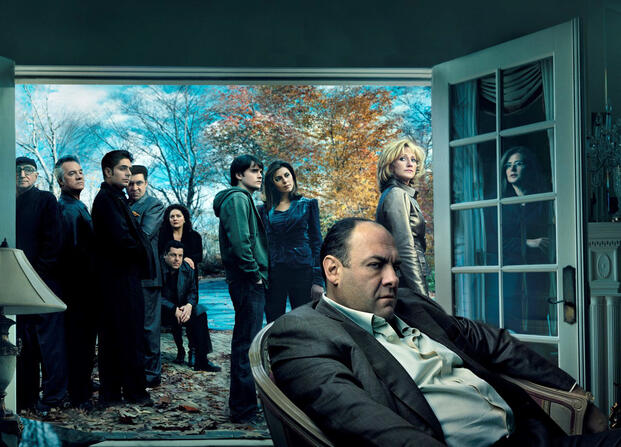
Genre shift: Mob drama → family sitcom → clinical depression study
The Sopranos was sold as a gangster show, and early on, it delivers precisely that. Mob politics. Brutality. Power plays. Dark humor sharpened to a razor’s edge.
But season by season, the show’s focus narrows. The crimes blur together. Therapy sessions stretch longer. Family arguments repeat with minor variations. Characters don’t evolve so much as they harden.
By the final seasons, the mob is almost incidental. The show isn’t about organized crime anymore; instead, the focus shifts to emotional paralysis, about people who understand themselves perfectly and still can’t change.
The genre doesn’t pivot. It sinks. Quietly. Relentlessly. Until what’s left feels less like drama and more like a study in entropy.

2. Barry (HBO)
Genre shift: Hitman comedy → moral tragedy → existential horror
Barry starts with a premise you can pitch in one breath: a hitman wants to become an actor. For a while, the show lets that joke breathe, following the leads’ awkward auditions, punctuated by sudden violence. But the comedy is allowed to build on that contrast.
Then it tightens the vise.
Violence stops being funny. Reinvention turns into self-deception. Every attempt at escape leaves more wreckage behind. By the final season, the original premise is barely recognizable.
What remains is a bleak meditation on guilt, identity, and the lie at the center of self-improvement fantasies. The genre shift doesn’t feel shocking. It feels honest. Like the show finally admitting what it was always working toward.

1. The Rehearsal (HBO)
Genre shift: Reality comedy → philosophical experiment → existential nightmare
If this list has an endpoint, The Rehearsal is it.
It begins as a familiar extension of Nathan For You: elaborate simulations designed to help people practice difficult conversations. It’s awkward. Meticulous. Very funny. Nathan Fielder controls every variable.
Then control becomes the subject.
As the series unfolds, the rehearsals spiral outward. Performances bleed into real life. Ethics blur. The camera turns inward. The question quietly changes from “Is this funny?” to “Should this exist at all?”
By the end, The Rehearsal is no longer reality TV or comedy. It’s philosophical horror. A show about free will, performance, and the quiet terror of trying to engineer uncertainty out of human life. At the same time, its second season confronts real-world systems of power, including the modern airline industry’s workplace dynamics and the risks posed by rigid hierarchies and unchecked authority. What other comedy even attempts that?

These aren’t shows that “switch genres” so much as shows that reveal themselves. They use comedy as camouflage, crime as momentum, sitcom rhythms as muscle memory, then slowly let the mask slip until you’re staring at the thing underneath: grief, guilt, power, control, consequence. And once that tonal door swings shut, it doesn’t swing back open.
That’s the trick, and it’s also the thrill.
You think you’re settling in for something easy, then an episode lands like a weight in your lap, and you realize the series has been rewriting the rules around you the whole time.
Story Continues
Read the full article here
19 Comments
It’s remarkable how WandaVision’s use of classic sitcom eras serves as a commentary on media and our relationship to it, adding layers to the show’s themes and ideas.
The fact that Nathan For You’s series finale is a quiet, unsettling look at self-delusion and loneliness underscores the show’s successful transition from a comedy to a more dramatic, thought-provoking exploration of human nature.
I appreciate how the article highlights the gradual evolution of these TV shows, rather than a sudden genre switch, making the viewing experience more nuanced and engaging.
The article’s focus on TV shows that change genres without the viewer realizing it makes me wonder about other examples of this phenomenon, and how they achieve such a seamless transition.
One possible example could be the TV show ‘Russian Doll’, which starts as a dark comedy but gradually evolves into a more philosophical exploration of mortality and personal growth.
The use of stage sets and broad comedy beats in WandaVision’s early episodes is a clever way to establish its sitcom homage, before slowly subverting these expectations to reveal a more complex narrative.
WandaVision’s genre shift from a sitcom homage to a psychological grief story is a testament to the show’s ability to balance tone and theme, making it a compelling watch.
The way these TV shows evolve over time, without losing their core identity, is a remarkable achievement in storytelling, and a testament to the versatility of the medium.
Elizabeth Olsen’s portrayal of Wanda Maximoff in WandaVision is a great example of how a character’s emotional journey can drive the genre shift in a TV show, making it more character-centric and emotionally resonant.
The way Nathan For You’s jokes start to curdle as the series progresses is a clever technique to subvert viewer expectations and create a sense of unease, reflecting the show’s shift in tone and genre.
Nathan For You’s exploration of how far people will go when they trust the person holding the clipboard is a thought-provoking commentary on the human psyche, and the dangers of unchecked power and control.
I’m intrigued by the idea that some TV shows can change genres without the viewer even realizing it, as seen in the case of Nathan For You, which gradually morphs into an ethical endurance test.
The fact that WandaVision uses a sitcom framework as an emotional shield for Wanda’s character adds depth to the show and highlights the complexity of grief and denial.
This narrative choice allows the audience to connect with Wanda on a deeper level, making her journey even more relatable and impactful.
The image of Nathan Fielder in a scene from Nathan For You, used for editorial commentary, perfectly captures the show’s blend of humor and social commentary, hinting at the complexities that lie beneath its surface.
The power imbalance between Nathan and his subjects in Nathan For You is a crucial aspect of the show’s genre shift, as it transitions from a comedy to a more serious exploration of control and exploitation.
WandaVision’s ability to balance its superhero mechanics with a deeper exploration of grief and denial is a testament to the show’s writing and the cast’s performances, making it a standout in the Marvel series.
The transformation of Nathan For You from a business parody to a social experiment is fascinating, as it seamlessly shifts from comedy to a thought-provoking exploration of control and consent.
This evolution is indeed captivating, and it raises important questions about the ethics of reality TV and the impact on participants.