

Listen to the article
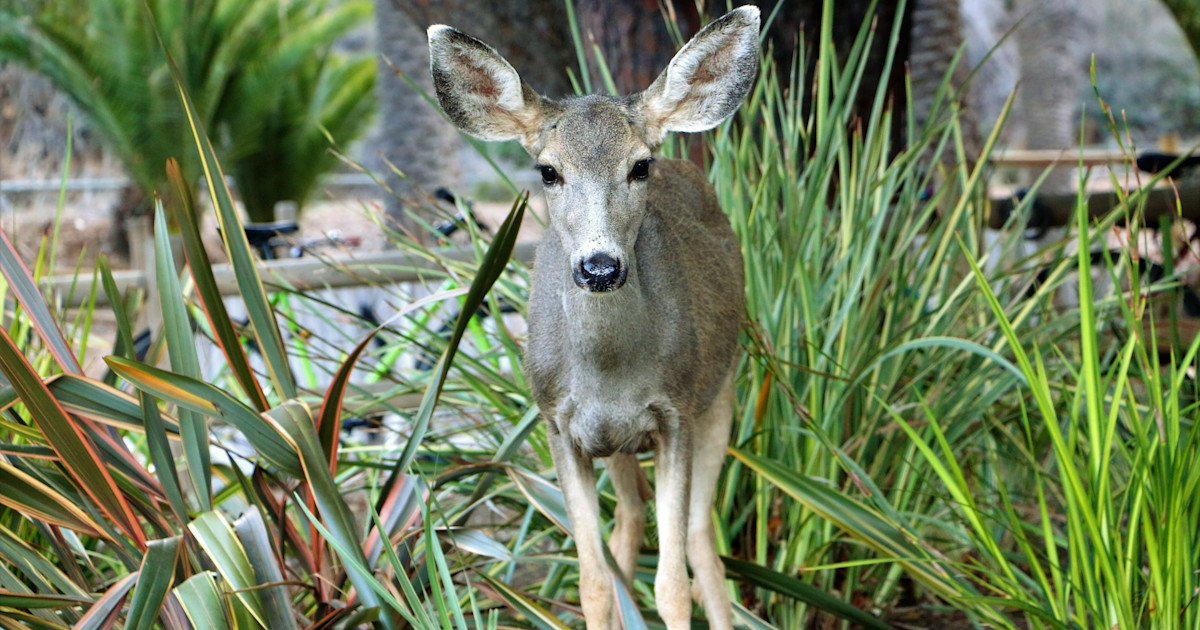
Last week, the California Department of Fish and Wildlife approved a plan to eradicate mule deer on Catalina Island, located about 23 miles off the southern California coast. Behind the plan is a nonprofit called the Catalina Island Conservancy, which owns 42,000 acres on Catalina—about 80% of the total island.
According to the Conservancy, mule deer are non-native to the island and pose a threat to native plant and wildlife species. The plan outlines a strategy to remove the estimated 800 to 2,000 animals on the island over the next six years, beginning this fall with “professional sharpshooters” killing deer over bait and watering holes.
Mule deer were originally introduced to Catalina for hunting in the 1920s, and in the time since, they’ve provided many successful hunts, including on the Conservancy’s private lands. In 2024, 1,000 deer tags were made available to California residents. Hunters only shot 397 deer that year, and the Conservancy called the hunt a failure. Yet then in 2025, the Conservancy lowered tag quotas to 200, and limited them exclusively to Catalina Island residents—a decision that raised eyebrows with hunters, in light of the Conservancy’s deer-management goals.
Even with some public hunting opportunities, however, the nonprofit argues that recreational hunting has been ineffective in controlling deer populations. “Because of Catalina’s rugged terrain, recreational hunters have never been and are unlikely ever to be able to take a high proportion of Catalina’s deer population,” the plan states. “Additionally, deer have learned to avoid hunters throughout the hunting season by going to Avalon, making many deer inaccessible to hunting.” Avalon is the one city on the island—and apparently a good one for deer to take refuge in.
While hunting opportunity is part of the issue, the overall eradication goal represents a shifting of priorities toward the preservation of native vegetation on the island. The Conservancy says that deer have eaten down native plants and prevented seedlings from establishing over the last century. As a result, about 35% of the island is now dominated by highly flammable, invasive grasses—similar to those that fueled the LA wildfires last year, just two dozen miles away on the mainland. The change has also negatively impacted the island’s smaller fauna species like the Catalina Island fox and the Catalina Island ground squirrel—both of which are only found on their namesake piece of ground.
According to the Conservancy, the island’s natural ecosystem and the presence of deer are mutually exclusive—meaning they can’t co-exist. Thus, the no-holds-barred approach to eradication.
The plan authorizes the use of dogs, thermal imaging, helicopters, and drones in locating deer. The only thing off-limits is aerial gunning. All shooting will be done with boots-on-the-ground by hunters contracted through a company called White Buffalo Inc. According to White Buffalo’s website, the organization has conducted similar operations, culling or capturing deer near cities in Virginia and South Carolina. Their extermination work costs between $200 and $400 per deer, although that number will likely be much higher on Catalina once helicopters are added to the mix.
Once the bulk of the deer have been killed by sharpshooters, the Conservancy will employ some unique strategies to track down the stragglers. The plan outlines an operation to live-capture a handful of deer, fit them with GPS collars, and then use them as “sentinels” to track down other holdouts. In the town of Avalon itself, contracted killers will set bait, then shoot the deer with tranquilizer darts from air rifles, and later kill or sterilize them
Deer carcasses will be left to decompose in the island’s hills, though meat from animals shot near public areas or in highly visible spots will be donated to the California Condor Recovery Program or given to local native tribes. If all goes according to plan, mule deer will be completely eradicated from the island by January of 2032.
Unsurprisingly, the eradication is not without controversy. Online petitions against the culling have been circulating for several years, since the idea first gained serious steam in 2023. Animal rights groups have also taken issue with the culling and “waste” of the deer carcasses. A group called Howl for Wildlife even released an hour-and-twenty-minute film, “Killing Catalina,” decrying the culling.
But despite the opposition, the path forward appears relatively clear with the California Department of Fish and Wildlife’s stamp of approval now in pocket. It’s unclear what opportunities will be available to hunters over the next several years as the culling unfolds, but hopefully, some of the island’s deer will end up in chest freezers, rather than rotting in the hills.
Read the full article here
6 Comments
Interesting update on Sharpshooters Will Eradicate Deer on Catalina Island Under New Plan. Looking forward to seeing how this develops.
This is very helpful information. Appreciate the detailed analysis.
Great insights on Hunting. Thanks for sharing!
Solid analysis. Will be watching this space.
I’ve been following this closely. Good to see the latest updates.
Good point. Watching closely.