

Listen to the article
For the first time in more than two decades, the House of Representatives has approved a major increase in benefits for some of the nation’s most catastrophically disabled veterans.
The House recently passed the Sharri Briley and Eric Edmundson Veterans Benefits Expansion Act, legislation that would increase benefits by roughly $10,000 annually for veterans receiving the highest levels of Special Monthly Compensation while also increasing support for surviving military spouses and families receiving Dependency and Indemnity Compensation, or DIC.
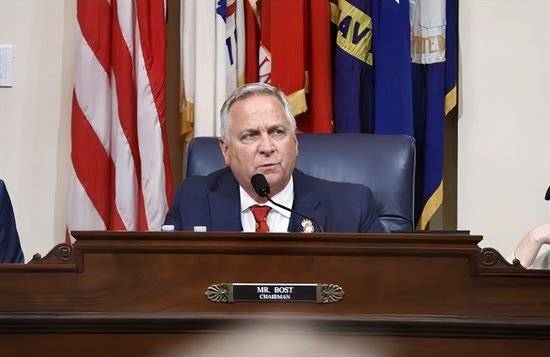
In an exclusive interview with Military.com, House Veterans’ Affairs Committee Chairman Mike Bost, R-Ill., said the legislation addresses a problem that has persisted for decades.
I want you to think about this, Bost said. It’s been decades since we’ve increased the amount that they receive. Decades since 9/11 that any increase at all was given.
The legislation now heads to the Senate, where supporters hope to build momentum around a bill that has drawn support from more than 20 veteran service organizations such as the Paralyzed Veterans of America, Wounded Warrior Project, The American Legion, and the Veterans of Foreign Wars.
The Veterans the Bill Was Designed to Help
The legislation is named after two individuals whose stories illustrate the challenges facing some of the military community’s most vulnerable members.
One is Sharri Briley, widow of Chief Warrant Officer Donovan “Bull” Briley, the helicopter pilot portrayed in the film Black Hawk Down who was killed during the 1993 Battle of Mogadishu.
The other is Iraq War veteran Eric Edmundson, who survived devastating injuries after his Humvee struck an improvised explosive device.
According to Bost, Edmundson’s injuries changed every aspect of his life.
“When his Humvee had struck an explosive device and blew up, it ruptured his spleen. It broke his back, it caused internal brain injuries,” Bost said. “And actually, for 30 minutes, his heart stopped. By the grace of God, he lived.”
Today, Edmundson requires around-the-clock care.
“He doesn’t speak. He knows what’s going on,” Bost said. “He doesn’t have control of a majority of his body.”
Yet Edmundson remains active in his family’s life, attending church, spending time with his children and participating in community activities with the help of caregivers and loved ones.
“But it’s 24-hour care,” Bost said.
The legislation would provide approximately 7,000 catastrophically disabled veterans nationwide with additional annual support to help offset those care needs.
“There’s 7,000 of them, which is 7,000 too many,” Bost said.
Why Supporters Say the Increase Is Needed
The legislation focuses on veterans receiving the highest levels of Special Monthly Compensation, a benefit intended for those with severe service-connected disabilities requiring substantial assistance from caregivers.
Supporters argue that while the cost of care has risen dramatically over the past two decades, the benefit itself has not kept pace.
For families caring for veterans with catastrophic injuries, the financial burden can be enormous. Many require specialized equipment, home modifications, transportation assistance and full-time caregiving support.
Bost said the increase is intended to help address those realities.
“What this does, it gives $10,000 more a year to each one,” he said.
For the chairman, the legislation reflects the core purpose of the Department of Veterans Affairs and the nation’s obligation to those who sustained the most severe wounds in service.
“If you think about the VA, this is our real mission,” Bost said. “Isn’t this what we’re supposed to do? Provide for them.”
Increased Support for Gold Star Families
The bill also expands support for surviving spouses and families receiving Dependency and Indemnity Compensation.
According to Bost, the legislation would increase DIC payments by 1.5% annually over several years.
“We would love to do more,” he said, “but over the next several years, a 1.5% increase to try to make their lives a little better.”
The increase is intended to help surviving spouses and children whose benefits have not kept pace with rising living expenses.
Bost framed the measure as a continuation of the nation’s long-standing commitment to military families who have lost loved ones in service.
“Those are the people that we’ve said, you know, we’re going to take care of your widows and orphans,” he said. “That’s what Abraham Lincoln said.”
For Sharri Briley and thousands of other surviving military spouses, supporters say the legislation represents an effort to strengthen that promise.

How Lawmakers Plan to Pay for It
One of the biggest challenges facing supporters of the legislation was finding a way to pay for the benefit increases.
Under congressional budget rules known as PAYGO, lawmakers generally must identify funding offsets for new spending.
As chairman, Bost said that responsibility fell largely on his committee.
“I have a job to do as chairman,” he said. “And that was to look for that PAYGO.”
The legislation would generate funding primarily through a modest increase in fees associated with certain VA home loan refinancing transactions involving veterans who are not first-time users of the program and who do not qualify for disability-related exemptions.
Bost emphasized that the proposal was designed to preserve access to the VA home loan benefit while generating revenue for those with the greatest needs.
“If I thought it would hurt the VA home loan program, I would never do it,” he said. “If I thought it would hurt veterans, I would never do it.”
He noted that the measure also expands access to VA home loans for Guard and Reserve members by reducing active-duty service requirements in certain circumstances.
Broad Support from Veteran Organizations
The funding approach has generated criticism from some opponents, but supporters point to strong backing from the veteran community.
Bost said over 20 veteran service organizations supported the legislation.
We as veterans know how to take care of our own, he said.
Among the organizations publicly supporting the legislation are several of the nation’s largest veteran advocacy groups.
For Bost, that support is evidence that the bill strikes the right balance between fiscal responsibility and caring for veterans and surviving families.
“It’s still the greatest loan out there,” he said of the VA home loan program. “And it is a choice that you make if you want to refinance.”

A Personal Mission
As his final year as chairman of the House Veterans’ Affairs Committee continues, Bost said helping veterans remains deeply personal.
A Marine Corps veteran whose son and grandsons have also served, he has watched multiple generations of his family experience both military service and the VA system.
“It’s very personal,” Bost said. “Being able to help those other veterans that I’ve served with over the years.”
The legislation, he said, is ultimately about fulfilling the nation’s obligations to veterans and military families who have already sacrificed more than most Americans can imagine.
“It’s worth it,” Bost said. “We’re going to keep driving after this because we know what’s right.”
Read the full article here
6 Comments
Solid analysis. Will be watching this space.
I’ve been following this closely. Good to see the latest updates.
Good point. Watching closely.
Interesting update on House Finally Passes First $10,000 Benefits Increase in Over 20 Years for Catastrophically Disabled Veterans. Looking forward to seeing how this develops.
Great insights on Defense. Thanks for sharing!
This is very helpful information. Appreciate the detailed analysis.