

Listen to the article
Before Ian Fleming created James Bond, he helped build an elite commando unit for a harder kind of spy work: seizing codebooks, machines, weapons-site evidence, and German intelligence that could vanish in the chaos of battle.
That unit, 30 Assault Unit, moved into France during Operation Overlord with orders to hunt Nazi secrets while the larger invasion force fought its way off the beaches. Documents released by Government Communications Headquarters, or GCHQ, for the 80th anniversary of D-Day show that Fleming signed off on a target list for the covert unit tasked with recovering documents, codebooks, ciphers and Enigma machinery during the D-Day operation.
The story has fresh timing beyond the anniversary calendar. IO Interactive’s 007 First Light, a new James Bond video game, launched May 27 with an original story about a young MI6 recruit before he becomes 007. The D-Day movie Pressure has also put new attention on the military decisions and intelligence work surrounding Operation Overlord, making Fleming’s real wartime role worth revisiting now.
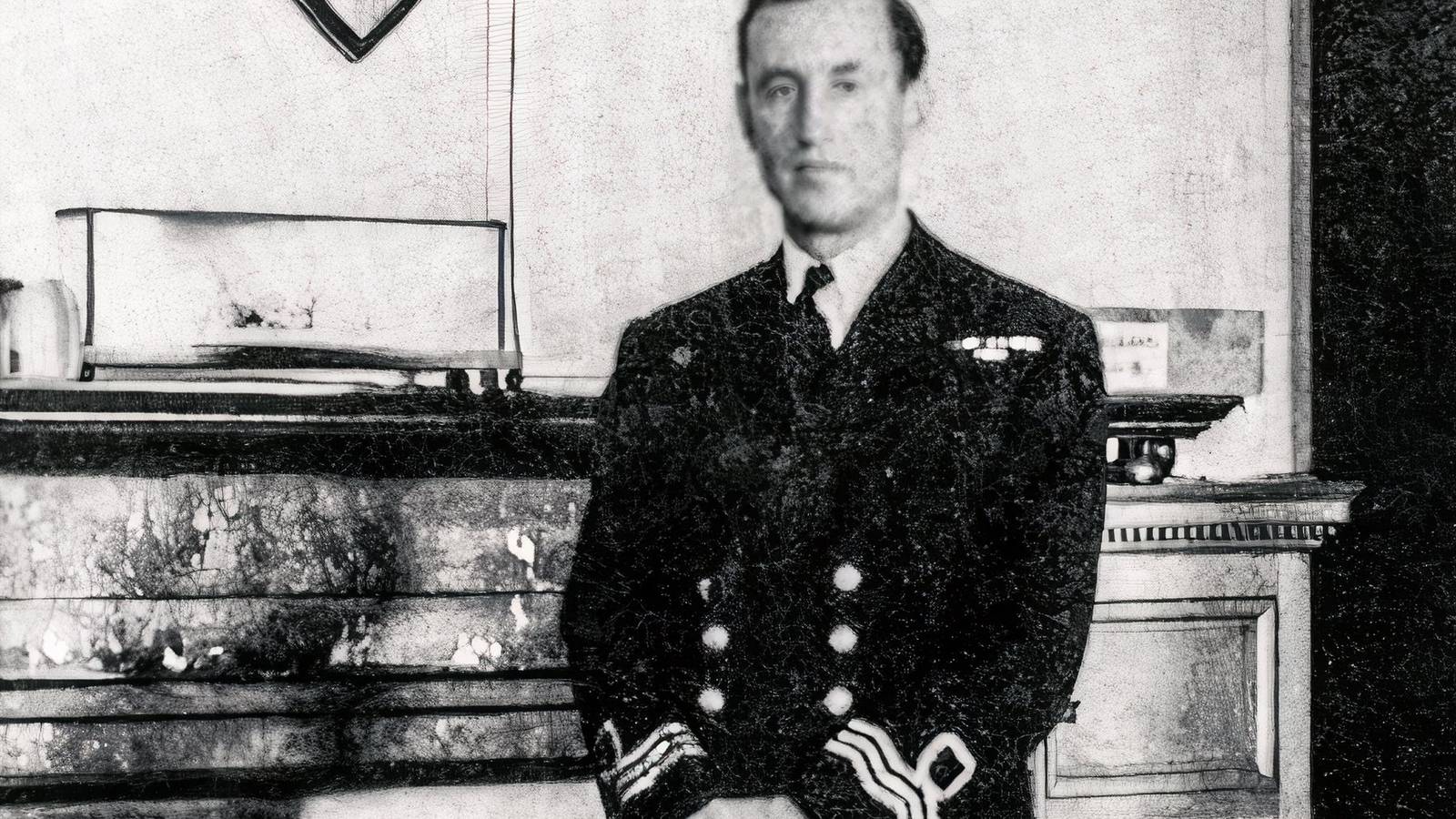
But Fleming’s own wartime story did not need much dressing up. Long before Bond became a global franchise, Fleming was Lt. Cmdr. I.L. Fleming of the Royal Naval Volunteer Reserve, working inside British naval intelligence.
In Ian Fleming’s Commandos, historian Nicholas Rankin describes Fleming as the founder of the unit known at different points as 30 Commando or 30 Assault Unit, created to seize Axis intelligence in North Africa, Italy and France before pulling off major intelligence coups in Germany in 1945.
30 Assault Unit Had a Different Job on D-Day
Operation Overlord’s assault phase, known as Operation Neptune, was built on a scale almost impossible to compress neatly.
Rankin writes that nearly 7,000 vessels transported, protected and supplied roughly 150,000 Allied troops who reached France on the first day. Overhead were 11,500 Allied aircraft.
By the time Neptune ended, 850,000 men, 148,000 vehicles, and 570,000 tons of stores had landed in France.
Inside that vast invasion machine, 30AU was “just a tiny part of this armada,” Rankin writes. Its mission was not to hold ground in the usual sense.
The unit was split into three forces with separate targets. Pikeforce, made up of Geoffrey Pike’s X Troop, landed on Juno Beach on D-Day and headed for the radar station at Douvres-la-Délivrande. Curtforce landed at Arromanches on Gold Beach on June 7. Woolforce, the main body of 30AU, landed on Utah Beach on June 10 with Cherbourg as its target.
GCHQ’s released files show that the intelligence targets were both broad and specific. The unit was told to recover codebooks, ciphers and documents related to German signals, radar and communications, along with Enigma-related wheels, junction boxes and settings, according to reporting by The Times, a U.K.-based publication.
Some instructions pointed the commandos toward individual objects. One GCHQ-cited order said secret books were believed to be kept in a light metal chest inside an office at U-boat pens, behind a door marked only with the name “Oberschreibersmaat Fritz Frank.”
Fleming’s Men Were Looking for Nazi Weapons
The target list was not limited to paper intelligence. The Times reported that Fleming’s orders also pointed the unit toward “new weapons or devices” the Germans might have been developing.
Rankin’s account shows what that looked like on the ground. After the landings, 30AU inspected a suspected V-1 flying bomb site near Neuilly-la-Forêt, about 15 miles beyond the American bridgehead at Omaha Beach.
The commandos found a dummy farmhouse concealing a semi-underground firing control room, with turf laid over concrete bases and sockets for portable launch ramps. Their notes and photographs were flown back to London by a RAF Hurricane that evening.

Near Valognes, Rankin writes, the unit examined a fueling point connected to the larger A4 rocket—known to the British as the V-2—and tested it for hydrogen peroxide. The first V-1 flying bombs hit London a week after D-Day, turning 30AU’s search for rocket-site evidence into something more urgent than battlefield curiosity.
The unit had been trained for that kind of work. Rankin writes that officers were taught what signals intelligence material to look for, including the habits of cipher clerks who hid useful scraps under blotters or in crevices.
Other ranks trained in demolitions, mines, booby traps, lock-picking, safe-blowing, street fighting and basic German document recognition.
Fleming Was Not Bond, but Bond Came From This World
Fleming was not storming every target himself. Rankin notes that Fleming’s job in naval intelligence meant he knew too much to be risked casually in the field.
Still, he originated the idea of an advanced intelligence unit, later called an intelligence assault unit, and his early Dieppe experiment sent Royal Marine commandos after German naval cipher machines, codebooks and secret documents.

That is the colder, stranger truth behind the Bond mythology. Fleming’s commandos were not chasing glamour; they were chasing files, machines, maps, radar equipment, rocket clues and whatever the Germans might leave behind in the retreat.
D-Day is usually remembered through beaches, airborne drops and hedgerow fighting. Fleming’s 30 Assault Unit shows another layer of the invasion: small teams moving through the smoke and wreckage, looking for secrets that could help shorten the war.
Read the full article here
5 Comments
Interesting update on Fleming’s 30AU Commandos Sought Nazi Secrets on D-Day. Looking forward to seeing how this develops.
Solid analysis. Will be watching this space.
Great insights on Defense. Thanks for sharing!
Good point. Watching closely.
I’ve been following this closely. Good to see the latest updates.