

Listen to the article
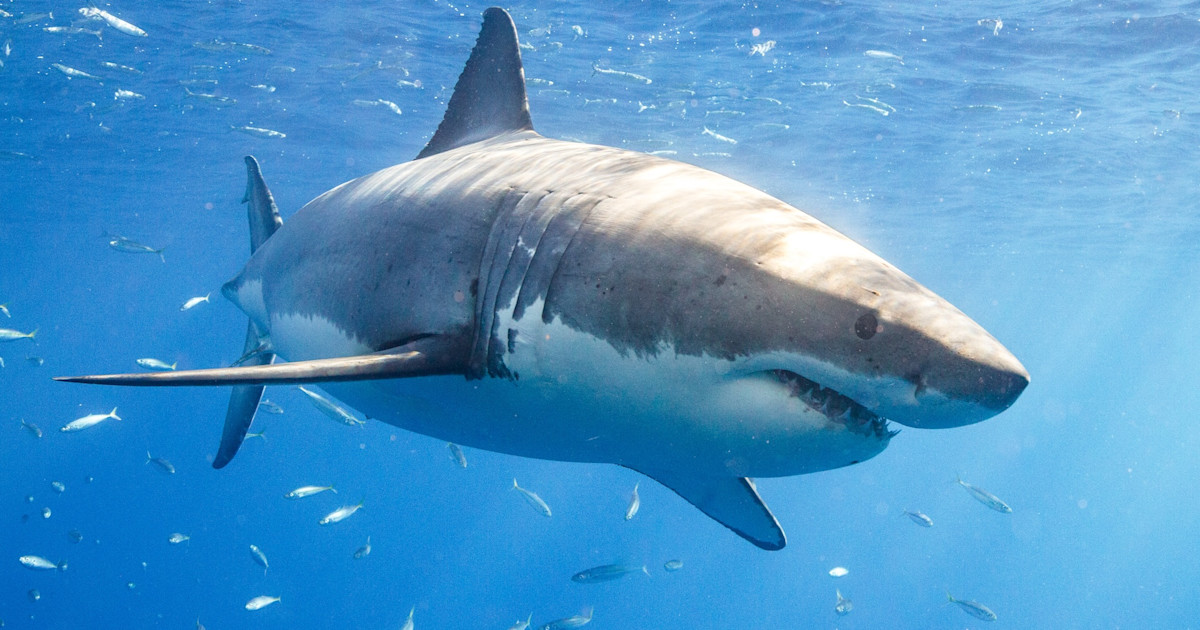
On Saturday, June 6, a spearfisherman identified as Daniel Turpin died from injuries sustained while diving off the Western Australian coast, about 250 miles southeast of Perth. The 35-year-old man reportedly had a run-in with a 15-foot great white while spearfishing with family members.
Turpin was rushed to shore and intercepted by paramedics; however, resuscitation proved unsuccessful. The location of the bite remains unspecified at this time.
Though details about this case continue to emerge, this is the third deadly shark attack within a three-week window in Australia–a statistically notable uptick in attacks compared to previous years. Unfortunately, all three events ended in fatalities.
The first incident occurred on May 16, when spearfisherman Steven Mattaboni was mauled by a great white believed to be 13 feet long. Mattaboni was diving on a reef near Rottnest Island, about 240 miles as the crow flies from the most recent attack. The shark apparently bit the diver’s legs. Mattaboni’s diving partners rescued him from the water and performed CPR while taking him to shore. Unfortunately, paramedics were unable to revive him.
A week later on May 24, a 39-year-old spearfisherman identified as Michael Jensz was bitten on the opposite side of the continent, near Cairns. Specifically, the group was diving Kennedy Shoal, a reef system within the Great Barrier Reef. Charter fishermen claim to have seen bull sharks in the vicinity the day of the attack.
Unlike most shark-related injuries, where humans are bitten in the arms or legs, Jensz was bitten on the head. Emergency responders at the boat ramp attempted but failed to resuscitate him.
According to the BBC, “Since records began in 1791, there have been almost 1,300 recorded shark attacks in Australia, with more than 260 of them resulting in death.” As of 2026, four Australians have died due to shark attacks. This is particularly concerning given the recent upward trend in fatal attacks, with five deaths recorded in 2025 and one in 2024.
While fatal shark attacks remain relatively uncommon, activities like spearfishing bring extra risks to saltwater divers. A speared, bloody, and panicked fish is a dinner bell for nearby sharks, and the silhouettes of divers can mimic those of large marine mammals such as seals or sea lions.
The International Shark Attack File (ISAF), the world’s leading scientific authority on shark attacks, breaks down attacks into two categories: “unprovoked bites” and “provoked bites.” An unprovoked incident means the human did not incite the shark in its natural habitat, while a provoked bite suggests a human initiated the confrontation by manhandling, feeding, or spearing near sharks. In 2025, the ISAF confirmed 65 unprovoked shark bites on humans and 29 provoked bites globally.
While most spearfishers aren’t intentionally provoking sharks, spearfishing naturally lends itself to human-shark interactions. The ISAF offers key advice for spearfishing in sharky waters. Always dive with a buddy or group. Quickly dispatch your catch by spiking the brain, as the commotion from a struggling fish attracts sharks faster than blood does. Avoid murky water and get your fish into the boat as soon as possible. If you encounter a curious shark, maintain eye contact and face it directly. Should it charge, target sensitive areas such as the eyes or gills.
MeatEater sends condolences to the friends and families affected by these events.
Read the full article here
6 Comments
Great insights on Hunting. Thanks for sharing!
Good point. Watching closely.
This is very helpful information. Appreciate the detailed analysis.
Interesting update on 3 Spearfishermen Dead After String of Shark Attacks in Australia. Looking forward to seeing how this develops.
Solid analysis. Will be watching this space.
I’ve been following this closely. Good to see the latest updates.