

Listen to the article
A new study finds that the federal government’s deployment of U.S. National Guard soldiers into Washington D.C. heavily reduced property crimes but had no real impact on murders and violent crime.
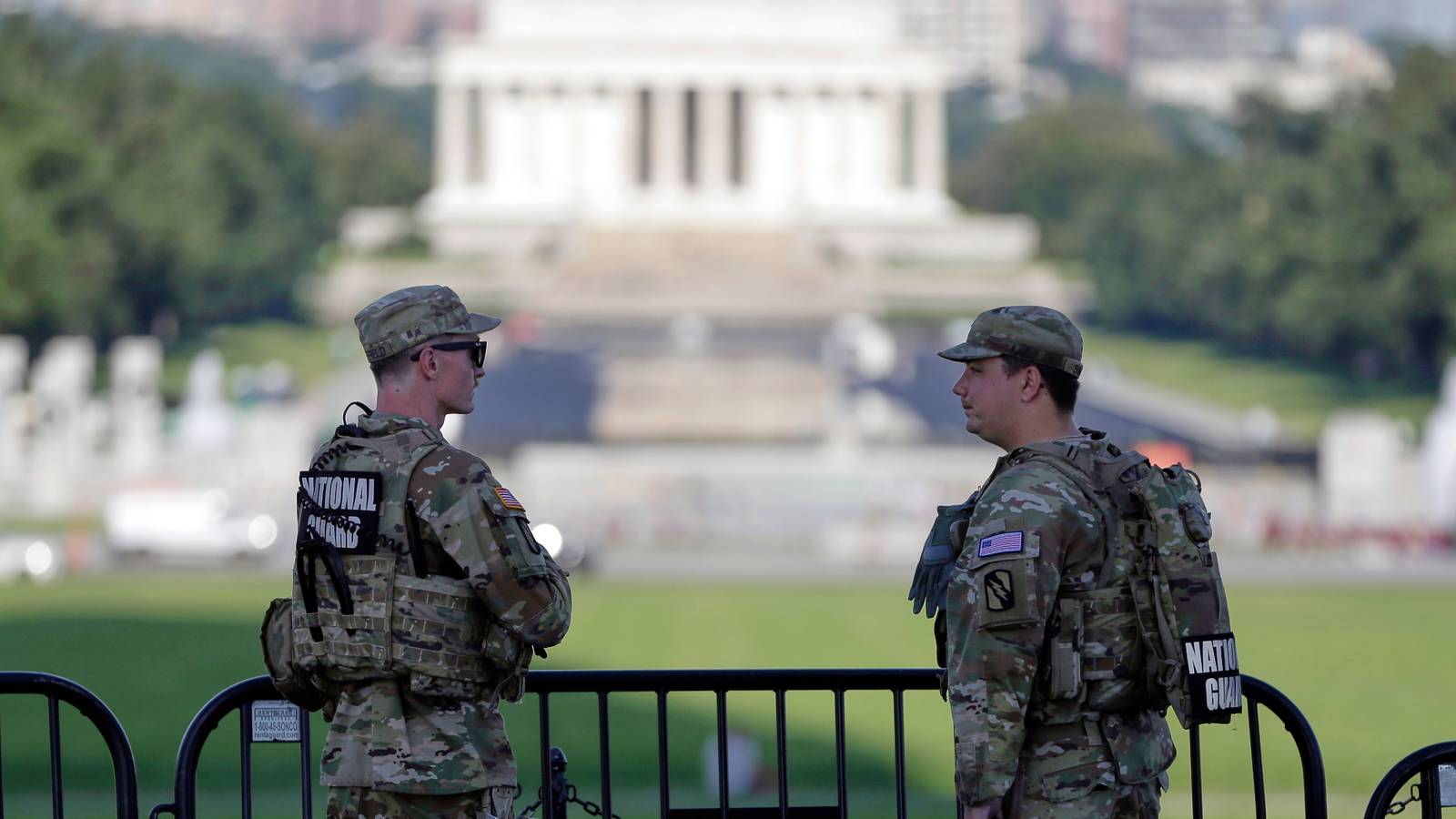
Thousands of National Guardsmen from across the country have been in the nation’s capital since August 2025, following orders from President Donald Trump to combat what he described as a crime problem in the District of Columbia. About two months into the deployment, a Joint Task Force (JTF) D.C. told Military.com that the Guard is “uniquely qualified” due to strong local ties, disciplined training, and the ability to integrate seamlessly with law enforcement agencies.
The extended deployment, which initially included roughly 2,500 troops, has remained ongoing and reports indicate that the number could as much as double in the days and weeks ahead as multiple major events are planned in the region to commemorate the nation’s 250th anniversary.
Whether the presence of such troops is making a pronounced difference in Washington depends on who you ask. The Trump administration, including the president, and its supporters have endorsed such efforts. On the legal side, the Campaign Legal Center filed an amicus brief in late May on behalf of 114 members of Congress who support litigation challenging the administration’s deployment.
On the criminal side, a recent study by the nonpartisan think tank Niskanen Center found that the troops’ deployment contributed to a 24% decrease in property crimes in D.C., saying such crime was “concentrated almost entirely in opportunistic property crimes” while adding that the Guard was not a substitute for Metropolitan Police (MPD) due to having the inability to arrest or operate independently.
The troops “were placed mostly in highly visible commercial, transit, and tourist areas rather than high-crime neighborhoods,” according to the study, “Washington, D.C.’s crime decline and its lessons for American policing,” published on May 28.
It relied on figures from the Congressional Budget Office (CBO) this calendar year, which suggest that the average daily cost per Guard member deployed to Washington was $607— the highest of any deployment city, which they said reflects D.C.’s elevated lodging and logistics costs in comparison to cities like Los Angeles that have also had troops present.
A deployment of roughly 2,000 personnel across the initial five-month period from August through December 2025 cost approximately $185 million.
In January, the CBO released a report estimating that upwards of $589 million had been spent by the Trump administration’s deployment of Guard soldiers into cities including Portland, Los Angeles, Chicago, Memphis, as well as Washington, D.C.
Parsing the Data
The Niskanen study also found that MPD’s deployment patterns didn’t change in response to the Guard’s presence, calling it “unlikely” that strategic coordination occurred. Rather, they argue that the Guard presence resulted in “a massive, sudden shock from the visible presence of uniformed military personnel on the streets of Washington almost overnight.”
“For crimes driven by opportunistic calculation, that visibility appears to have mattered,” the study summary describes. “For violent crime, which is less deterrable by patrol presence alone, it did not.”

Richard Hahn, senior manager for research and evidence in the Niskanen Center’s Criminal Justice Department, told Military.com that the center’s methodology behind the study involved theorizing what may have caused crime rates to fall, not just in Washington D.C. but across the U.S.
Since 2023, according to Niskanen, most categories of crime have fallen sharply—notably homicide and auto-related crimes. Homicides fell 21% between 2024 and 2025, approaching the lowest rate in 125 years, according to the Council on Criminal Justice (CCJ). Gun assaults dropped 22% and carjackings plummeted 43%.
All that being said, violent crime is now lower than it was before the COVID pandemic.
“It was really just trying to follow the data and being as transparent as possible about our assumptions when we suggested estimates about what the effect of the Guard or police might be,” Hahn said, stating that year-over-year comparisons of the Guard stripped out all the variation in crime that naturally occurs over the course of a year to achieve a causal effect.
Difference Between Local, Federal Law Enforcement
Hahn, a D.C. native, said the data more broadly reflects the differences between local law enforcement and troops like the National Guard.
Most National Guard troops are not trained like police officers, notably the type of routine patroling and enforcement conducted by police in Washington. And even though the troops in Washington were deployed as a justification to reduce crime, they have had various other tasks.
“As a D.C. resident, I see National Guard troops every day and see them doing a lot of stuff that’s not policing, that’s very constructive— traffic direction and securing federal buildings, but also things like beautification work in parks and neighborhoods, helping people who have medical emergencies and other types of problems,” Hahn said, comparing them to guardians who simply lack arrest power but can legally detain.

The Guard’s role and the crime data itself is not the fault of its own, he added. Rather, it is just how crime tends to unfold.
“Violent crimes tend to travel within social networks,” he said. “Think if you have a beef with somebody, or you’re afraid of somebody, and you’re not only motivated to threaten them or injure them but you also have a specific target. It’s not like you’re just looking for some opportunity to commit a theft or whatever.
“You have a specific crime that you want to commit against a specific person, and that sort of thing is not likely to be deterred by a bunch of uniformed National Guard troops, like on the [National] Mall. That type of crime is happening in places where the Guard probably was never deployed.”
These ingrained roles in various sects of law enforcement make some directly question the Guard’s presence, and whether it’s a responsible use of taxpayer dollars.
The Niskanen study estimated that it costs more than $600 per day to subsidize a Guard soldier, versus a little bit less than $400 per police officer.
Read the full article here
5 Comments
Great insights on Defense. Thanks for sharing!
Good point. Watching closely.
I’ve been following this closely. Good to see the latest updates.
Solid analysis. Will be watching this space.
Interesting update on National Guard $185 Million DC Surge Cut Property Crime 24% — Not Murders. Looking forward to seeing how this develops.