

Listen to the article
My dad hauled a beat-up old pop-up camper into the Virginia mountains every deer season. It wasn’t much more than a tent on wheels, just some canvas walls, a tiny two-burner stove, and barely enough room for two people to stand up. But after a hard day of climbing steep ridges and toughing out frigid conditions, it felt like a little slice of heaven. It had just enough room to peel out of wet clothes, warm up a meal, and then climb into sleeping bags on thin mattresses instead of the cold, hard ground.
That little camper didn’t need a list of luxury amenities to earn its keep. Neither does a good hunting camper. It just needs to provide a place to dry out, warm up, and recharge before doing it all again the next morning.
A Camper is a Mobile Base Camp
Every hunter becomes a mathematician when it comes to wake-up time. If legal shooting light starts at 6:10, and it takes 3 hours to drive to the property, that alarm clock is going off at an obscene hour. Add in a camper, and the equation totally changes.
Instead of stumbling out of bed at 2 a.m. and surviving on bad gas station coffee, you can haul all your gear down the night before, get a decent night’s sleep in the camper, and then step out the door and almost immediately start hunting.
The right camper can make a great year-round base camp. In the spring, you can park it on a ridgeline and chase big gobblers. In the summer, it can sit lakeside while you catch bass or trout. In the fall, it becomes deer camp. By winter, it’s keeping you warm between sits in a duck blind. And in the spaces between, the same camper can haul the whole family to a national park or beachside campground for vacation.
A camper also shrinks the map, bringing faraway destinations into more practical terms. A public land area that’s too far for just a weekend hunt becomes a lot more manageable. Those pristine trout streams you love no longer require expensive hotel stays. Places that felt out of reach or required a plane ticket and a ton of planning start looking a heckuva lot closer when you bring your own lodging.
The camper isn’t really about camping. It’s about being able to say “yes” to one more hunt, one more fishing trip, or one more outdoor adventure before Monday rolls back around.
Shopping For Your Mobile Base Camp
Most people shopping for a camper are charmed by the list of features. Slide-outs, spa-like bathrooms, smart TVs, and residential-style appliances sound fabulous on a showroom floor. Dealers lean into that. They’ll hype up big awnings and Bluetooth speakers. And those features are fine for people who pull into a KOA on Friday and head home by the end of the weekend. But none of that matters when you’re parked on a muddy two-track in November after you come off a six-mile hike through wet timber.
A hunting camper has to earn its keep in ways most weekend warriors never think about. You aren’t shopping for a weekend toy. You’re trying to build a mobile living quarter that can still function when conditions turn bad, and you’re only three days into a ten-day trip with no option to leave early. The checklist changes when you look at a camper that way.
Four-Season Capability
Most campers labeled four-season are really three-season rigs with good marketing. Hunters spend time outdoors in the worst weather of the year. Summer camping features are basically useless during a December duck hunt. Standout features become less about looks and tech and more about what happens when everything outside is cold and wet, and you’ve got a mountain of gear stacked next to the door.
Manufacturers like to throw around the term “four-season” pretty loosely. It isn’t a term that encompasses a list of minimum standards or features, so hunters really need to understand what they’re looking for. An enclosed underbelly, insulated tanks, protected waterlines, and double-pane windows are more important than extra cabinet space and leather upholstery.
Heat output matters too. A furnace that works fine at 40 degrees might struggle when the wind is pushing hard, and the temperature drops into the teens.
Ventilation is another thing you don’t want to overlook. Hunting in cold weather can produce its own kind of moisture, even when outside conditions are relatively dry. When it’s toasty inside and the temps outside aren’t, condensation can build up fast. Plus, wet wool, damp waders, and breath in a tight space will fog a camper fast. Without airflow, everything inside starts to feel wet even when it’s technically warm, and that makes it near impossible to dry out wet gloves, jackets, and socks so you can get back out before daylight.
The Right Kind of Storage
Every camper looks organized on a dealer lot when the cabinets are closed, the counters are clear, and there’s nothing on the floor. But things can get crazy fast the first time you stumble in from a hunt with muddy boots and four layers of clothes that smell like sweat and wet leaves.
Hunters don’t travel light, and even a short trip can turn into rolling piles of gun cases, backpack straps, dripping boots, and wet clothes. Storage that looked plenty big on the showroom floor fills up fast.
While cabinets are nice for pots, pans, and regular camping gear, exterior, pass-through storage is more practical for hunting. It keeps most of hunting’s clutter outside the living space. When it comes to usability, exterior storage trumps fancy cabinets every time. Hunters need open floor space to dry things out and stage gear without tripping over everything they own. Storage in a hunting camper isn’t about Marie Kondo organization. It’s about resetting fast so you don’t have to dig through gear to get out again the next morning.
If your favorite hunting partner is of the canine variety, make sure to factor in those storage needs. Dog food, kennels, wet towels, and a 70-pound retriever will take up more room than you think.
Features for Off-Grid Camping
Good hunting camps don’t typically come with electrical hook-ups and a campground host. Hunting tends to be better in places miles from the nearest gas station, and a hunting camper needs to adapt to that kind of camping. Features that can make off-grid camping feel more like home may not be a big sell for people who frequent RV parks more than public land pull-offs, but they can make all the difference when you’re hunting far from amenities.
The more capable your camper is away from standard campground hookups, the more places it can take you. Pay attention to water tank size, propane tank capacity, and battery capacity. How easily the set-up integrates with a generator or solar panels can also be important, depending on how much you’re willing to rough it.
Towing for the Hunt
Most campers look pretty manageable when they’re sitting on a level asphalt lot. But things can get hairy when you’re hauling that same camper down a narrow Forest Service switchback in the dark.
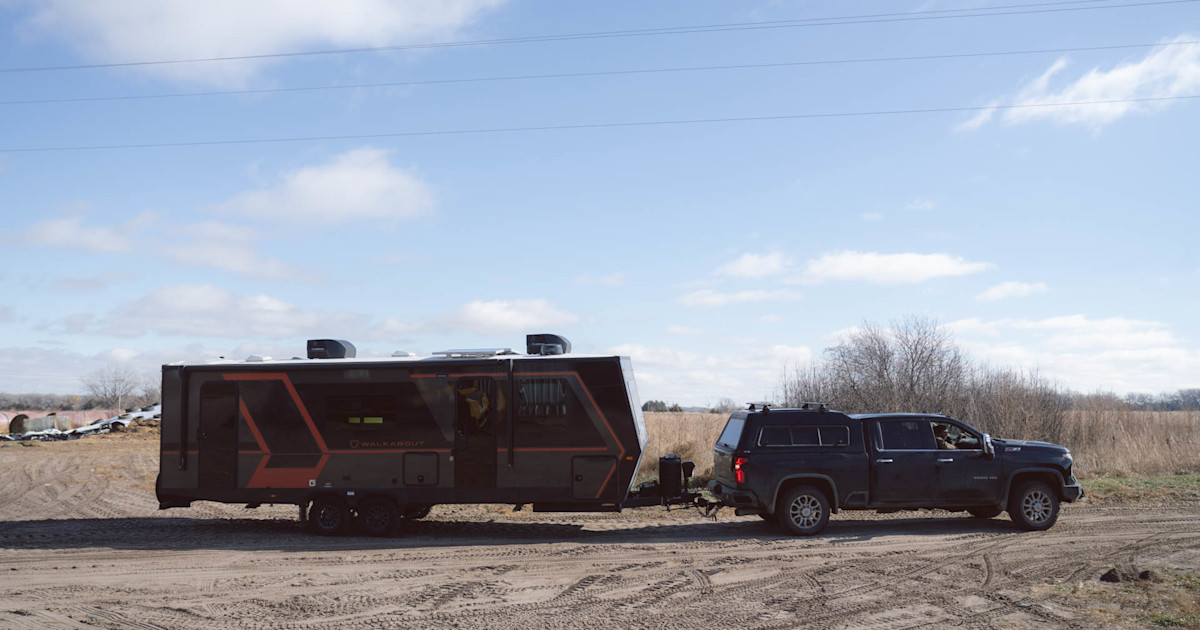
Before you buy, take a good, hard look at what your truck can handle. You don’t want to max out your truck’s towing capacity with the camper. Once you start adding up hunting gear, firearms, coolers, dogs, and camping supplies, those weight ratings really start to matter.
While space in a camper can feel like a primary determining factor, you don’t want more trailer than you can comfortably tow. A smaller, lighter camper will be easier on fuel and a lot less stressful once you turn off the blacktop and start dragging it down narrow, muddy backroads or up steep mountain grades.
Final Thoughts
Hunters don’t need a camper that turns heads at an I-80 KOA. They need one that works when everything else is hard. The best campers for hunting and fishing are the ones that let you come in, warm up, and crawl into bed so you can wake up and do it all over again.
That old pop-up my dad dragged into the Virginia mountains was far from fancy. But it did its job. It helped sandwich rough days between manageable nights and kept the hunt going longer than it could have otherwise.
Read the full article here
6 Comments
Great insights on Hunting. Thanks for sharing!
Interesting update on What to Look for in a Hunting Camper. Looking forward to seeing how this develops.
Solid analysis. Will be watching this space.
This is very helpful information. Appreciate the detailed analysis.
I’ve been following this closely. Good to see the latest updates.
Good point. Watching closely.