

Listen to the article
The shift from the older Army Physical Fitness Test (APFT), which tested only pushups, situps and a 2-mile run, to the new Army Fitness Test (AFT) reflects a bigger change in what “fit” means for soldiers. The new test is more comprehensive and tests more elements of fitness than just muscle stamina and endurance. Endurance still matters, of course, but the AFT asks a different question: Can you move fast, move loaded, and stay strong when the load gets heavy?
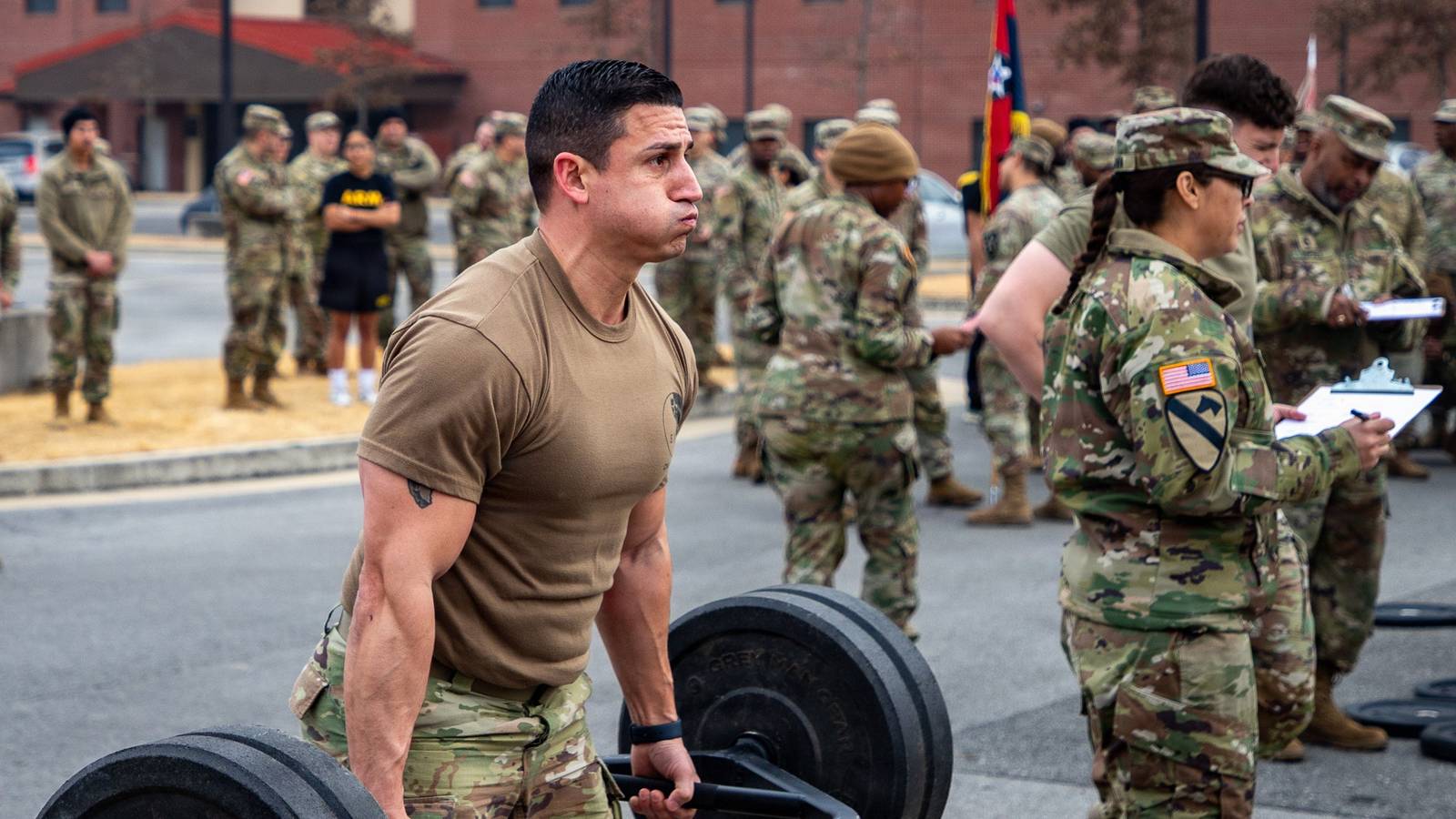
The 3-rep max hex bar deadlift and the sprint-drag-carry events of the AFT are direct ways to answer that question with a measurement. The difference in fitness emphasis over the past decade from a skinny runner to a strong runner with a powerful grip able to carry the load is steadily building a soldier who will be stronger and less injured from the challenges of the job. The strength built by this test will hopefully continue to create a retired soldier who is healthier and stronger in the decades that follow service.
That’s because tactical performance is not built on the ability to run forever. It is built on the ability to create power and force, manage the load (ruck or equipment), remain durable when the load gets heavy, and still run well. For certain jobs, a strong deadlift protects the lower back during rucking and equipment carries. Studies show that building strong legs and back muscles early on leads to greater durability and longevity throughout life. Having this event tested regularly will require consistent practice for improvement for all soldiers. This new focus on strength and power during other workouts can help us all build strong legs and backs during and after service. Keep lifting to stay strong and live longer.
The hex bar deadlift is especially useful for tactical athletes because it is easier to learn than many barbell variations. It allows beginner lifters to learn a more basic lift for the legs and glutes than the straight-bar hip-hinge movement. While it is good to learn both, the hex bar is a safer stepping stone for training first-time lifters. For runners or endurance-focused athletes, this matters even more. You are not trying to become a powerlifter. You simply brace your core, grab the bar, and lift the weight off the floor. This will build strength to absorb load, generate power, and avoid breaking when the job shifts from moving light and fast to moving heavy loads over unforgiving terrain.
While no exercise is without risk, the hex bar is easier to learn and targets the legs, hips, lower back, torso and grip all at once. A stronger posterior chain can help the body transfer force more efficiently, so the lower back doesn’t bear the full weight of any load in a ruck or other equipment being lifted and carried. Yes, you can do this lift incorrectly, so learning proper techniques from a coach is still needed for new lifters taking the AFT. In turn, a strong hex bar deadlift can help protect the lower back during rucking and body carries.
There is also a bigger argument for longevity here. Research shows that preserving or developing leg strength through heavy resistance training can have long-lasting benefits. Leg strength and grip are recognized as important markers of health and independent living in older adults. Strong legs and a strong back are not just useful for passing a test today. They help build a body that stays capable under stress for longer, which is the real meaning of tactical longevity.
The AFT deadlift is not just a test of who can lift the most weight from the floor. In a tactical environment, that matters because the job is done under fatigue, with gear, over distance, and with consequences. The 3-rep max hex bar deadlift reveals whether an athlete has built load-bearing strength and power, the kind of strength that supports the lower back, protects movement quality, and builds durability and longevity far beyond the test itself. Check out more information on the Military.com Fitness Section on the Army Fitness Test and several articles featuring workouts to help ace the test the next time you take it.
Read the full article here
6 Comments
Great insights on Defense. Thanks for sharing!
Solid analysis. Will be watching this space.
Interesting update on Why Maximum Strength Matters for Tactical Longevity. Looking forward to seeing how this develops.
I’ve been following this closely. Good to see the latest updates.
This is very helpful information. Appreciate the detailed analysis.
Good point. Watching closely.