

Listen to the article
During peak summer training and field exercises, heat stress injuries can pull Marines out of action faster than many expect. Cold-weather operations bring their own risks when units train or deploy in far-off northern lands or high terrain.
The Marine Corps moved on July 9 to give commanders sharper tools to spot problems early and keep more Marines healthy.
MARADMIN 311/26 replaces guidance last updated in 2015.
It delivers interim direction on training, monitoring conditions with wet-bulb globe temperature (WBGT) equipment, and rapid response when someone shows signs of trouble. The message stays in effect until the details move into the main safety order, MCO 5100.29C.
The update emphasizes risk management, documented training, local standing operating procedures, and clear reporting through the Risk Management Information system. Every commander and officer-in-charge now has explicit steps to reduce unnecessary injuries in both hot and cold environments.
Training and Preparation Requirements
All Marines who could face extreme heat or cold must receive training on causes, prevention, and treatment. Instruction covers WBGT index readings, work-rest cycles, flag warning systems, and wind chill factors. Units record attendance on rosters, and leaders can schedule refreshers before high-risk events.
Marines must show up acclimatized and equipped for the conditions. Commanders identify personnel with prior heat or cold injuries, certain medications, or supplements that increase risk and monitor them more closely. The goal is to catch issues before they become casualties.
Monitoring Conditions and Rapid Response
Units must build Standard Operating Procedures (SOPs) for operations in hot or cold weather. Those SOPs include how to operate and maintain WBGT meters per manufacturer guidance and how to share the current index and flag conditions with everyone on site. Installation commanders keep meters calibrated, take readings in at-risk areas, display flags, and make equipment available for loan to tenant units.
Trained observers watch for Marines falling behind. Units keep transport ready and notify their supporting military treatment facility of planned high-risk training or operations. Medical teams can then stage for fast intervention. Fluid replacement, rest breaks, and cooling or warming follow published guidelines.

Reporting Injuries and Building Better Data
Any suspected heat or cold injury requires evaluation by a health care provider. The unit safety representative enters the case into the Risk Management Information system. The Marine Corps also routes incidents through the disease reporting system. This creates a clearer picture of where and why injuries happen, so mitigation strategies can improve for the total force.
Leaders from NCOs upward must know the procedures and enforce buddy aid. If a Marine looks ill or unfit to continue, the immediate step is getting that individual to medical for assessment. The message makes this expectation explicit.

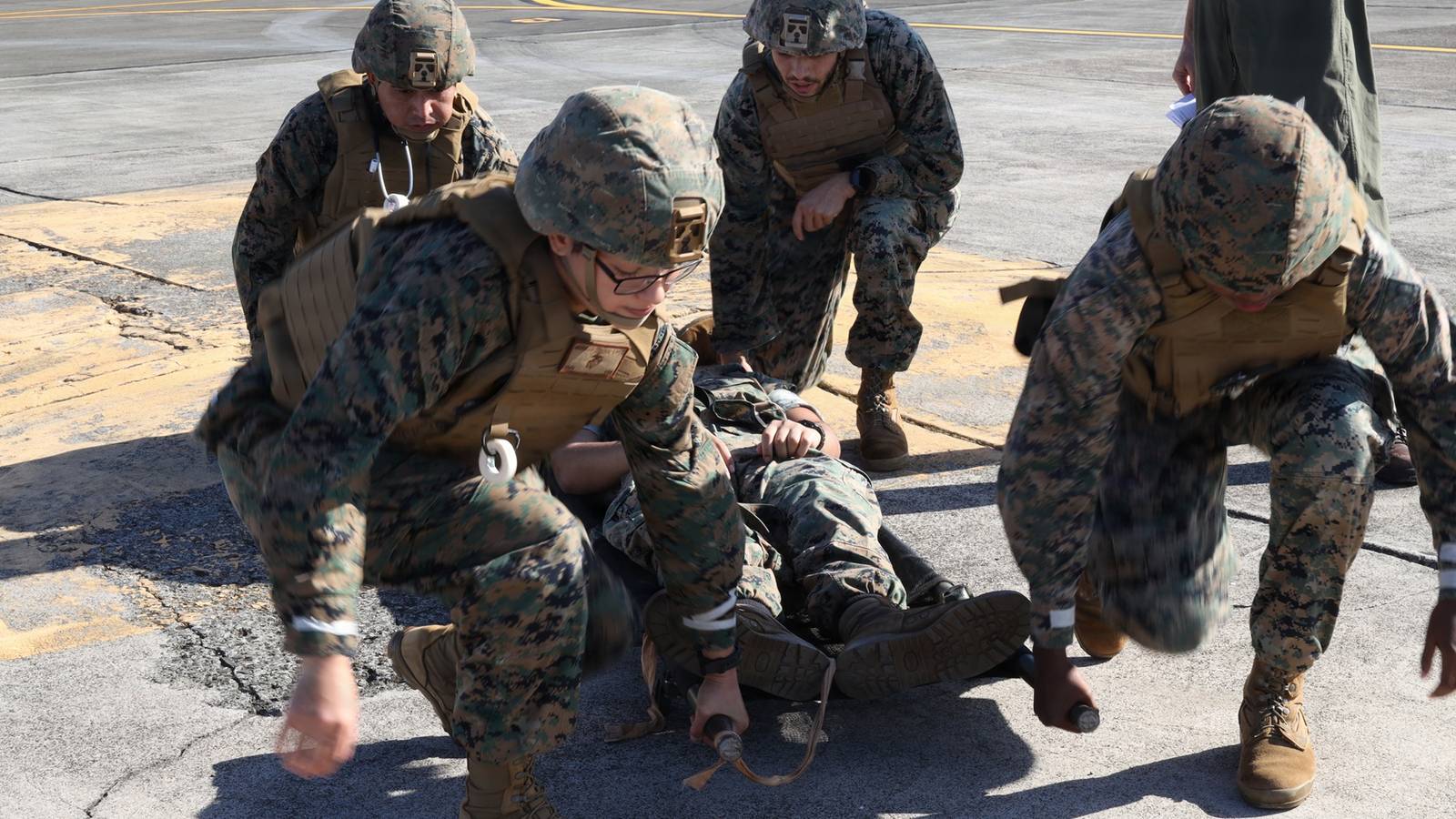
U.S. Navy Hospital Corpsman Third Class Max Krippner, with with 1st Battalion, 6th Marines currently forward deployed in the Indo-Pacific under 4th Marine Regiment, 3rd Marine Division as part of the Unit Deployment Program, treat a simulated casualty while participating in a mass casualty drill during the Jungle Medicine course at the Jungle Warfare Training Center, Okinawa, Japan, Nov. 5, 2025. (U.S. Marine Corps photo by Corporal Joaquin Dela Torre)
What the Change Means for Units and Readiness
The interim rules give small-unit leaders more precise direction than the 2015 version. Commanders now have a clearer checklist for training, equipment checks, and communication before heat flags rise or cold snaps hit. That reduces lost training days and keeps squads and platoons at full strength during critical windows.
These steps fit into the Marine Corps’ broader work to strengthen readiness across evolving mission sets and environments. Ongoing Force Design efforts show how the service continues adapting its approach to training and operations. Updated prevention rules support that same push by protecting the Marines who execute the mission.
Commanders should review MARADMIN 311/26 immediately, brief their teams, and align local plans with the new requirements. The guidance makes prevention more actionable. Units that put it into practice will lose fewer Marines to preventable injuries and build stronger habits.
Read the full article here
6 Comments
Interesting update on Marine Corps Officially Issues New Rules to Prevent Heat and Cold Injuries. Looking forward to seeing how this develops.
This is very helpful information. Appreciate the detailed analysis.
I’ve been following this closely. Good to see the latest updates.
Good point. Watching closely.
Great insights on Defense. Thanks for sharing!
Solid analysis. Will be watching this space.