

Listen to the article
A veteran who served in the Iraq War has detailed his daily life difficulties roughly two decades after a near-fatal attack led to a traumatic brain injury (TBI).
J.P. Moszer, who served in the U.S. Army and North Dakota National Guard, survived a rocket blast in October 2007 while serving in Baghdad in the midst of the Iraq War, leaving left him with injuries including memory loss. The attack took place at a market base Moszer had visited to buy Diet Coke. He also sustained injuries to his shoulder, hip, knee and foot.
According to government data, some 1.5 million Americans served in Iraq between 2003 and 2011. More than 30,000 were wounded in the fighting, while 4,500 lost their lives. A TBI occurs when a sudden blow to the head causes damage to the brain.
“I don’t remember anything for several months,” Moszer, a Rockport, Texas, veteran, told local Corpus Christi affiliate KRIS 6 News last week.
“The brain tissue actually sheared,” he added. “I couldn’t walk. I couldn’t talk. I couldn’t do math. I couldn’t tie my shoes. I didn’t know my wife.”
More than 430,000 service members have been diagnosed with TBI since 2000, according to the Department of Defense. Those who have the condition served in numerous conflicts, including the Iraq war.
Moszer said that he would have phone conversations with his wife but could not remember her.
“She would talk to me on the phone [and say], ‘Do you remember me? Do you remember I’m your wife?’” he said. “And I was like, ‘Nope, I’m not married.’”
Litany of Symptoms
Moszer said the first thing he remembered from his normal life was his dog, Lindy, who his wife Leslie mentioned during one of their phone conversations.
That represented the first stage of his recovery. Moszer eventually regained memories of his wife.
However, he still suffers from chronic vertigo caused by nerve damage as well as apraxia, a neurological condition that affects motor planning and spatial processing.

Last week, the Army announced what one official described as the “single most important advancement” in detecting TBIs.
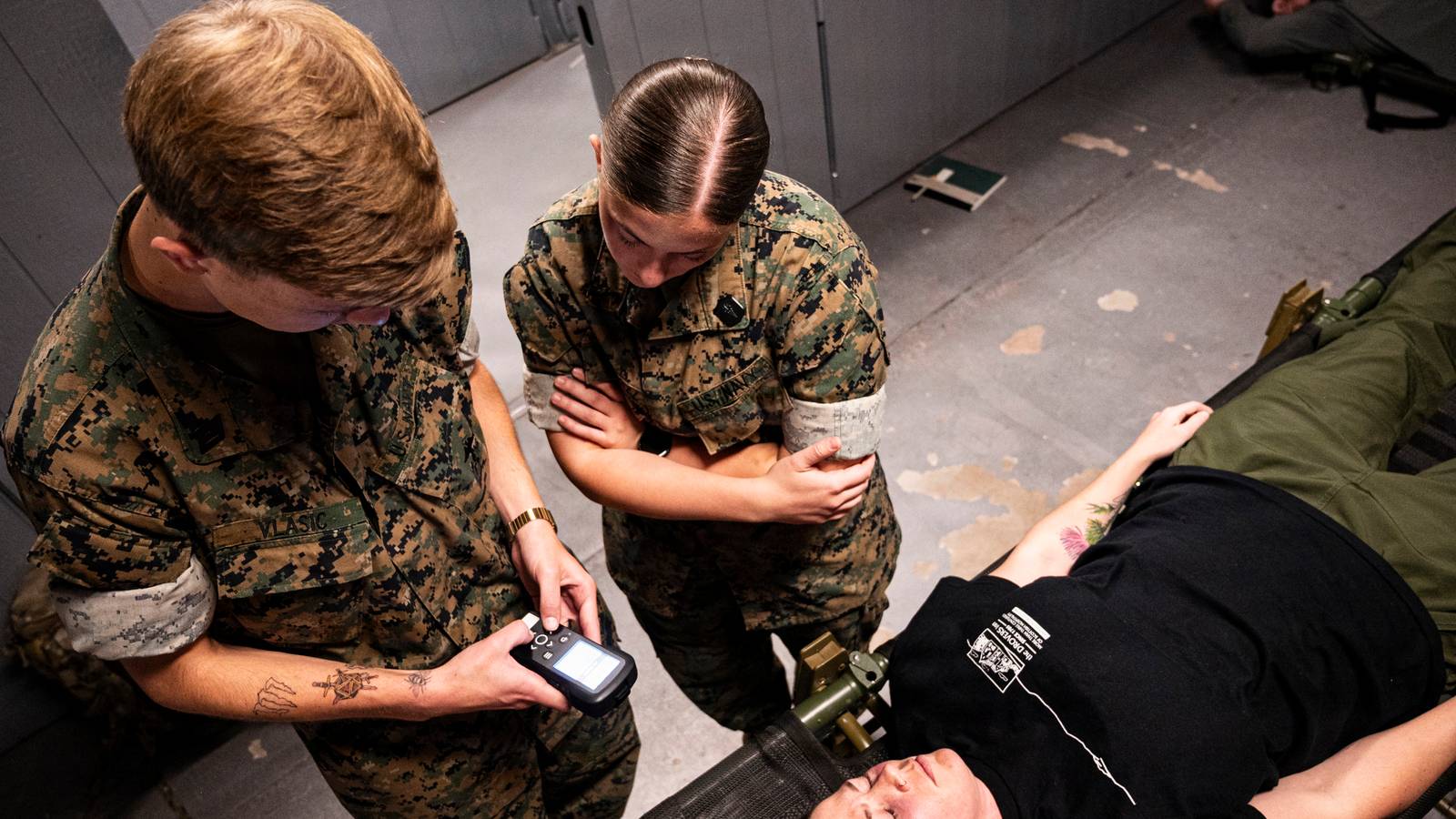
The new handheld diagnostic device, i-STAT Alinity, is being fielded by U.S. Army medical leaders in Europe and uses a blood sample to detect biomarkers in the brain that are released when an injury occurs. Discovering neural damage can occur in less than 15 minutes.
After he left the Army, Moszer went back to school to get a master’s degree. He now volunteers with the Good Samaritan’s food pantry near his home on the Texas Coast.
“When I leave this earth,” he said, “I’m just a small-town boy from North Dakota that made a positive impact on the world. I didn’t do it for recognition or self-promotion. I did it because I love this country.”
Read the full article here
6 Comments
This is very helpful information. Appreciate the detailed analysis.
Great insights on Defense. Thanks for sharing!
Good point. Watching closely.
Interesting update on Army Veteran Details Recurring Issues Associated with TBI Sustained in Iraq War. Looking forward to seeing how this develops.
I’ve been following this closely. Good to see the latest updates.
Solid analysis. Will be watching this space.