

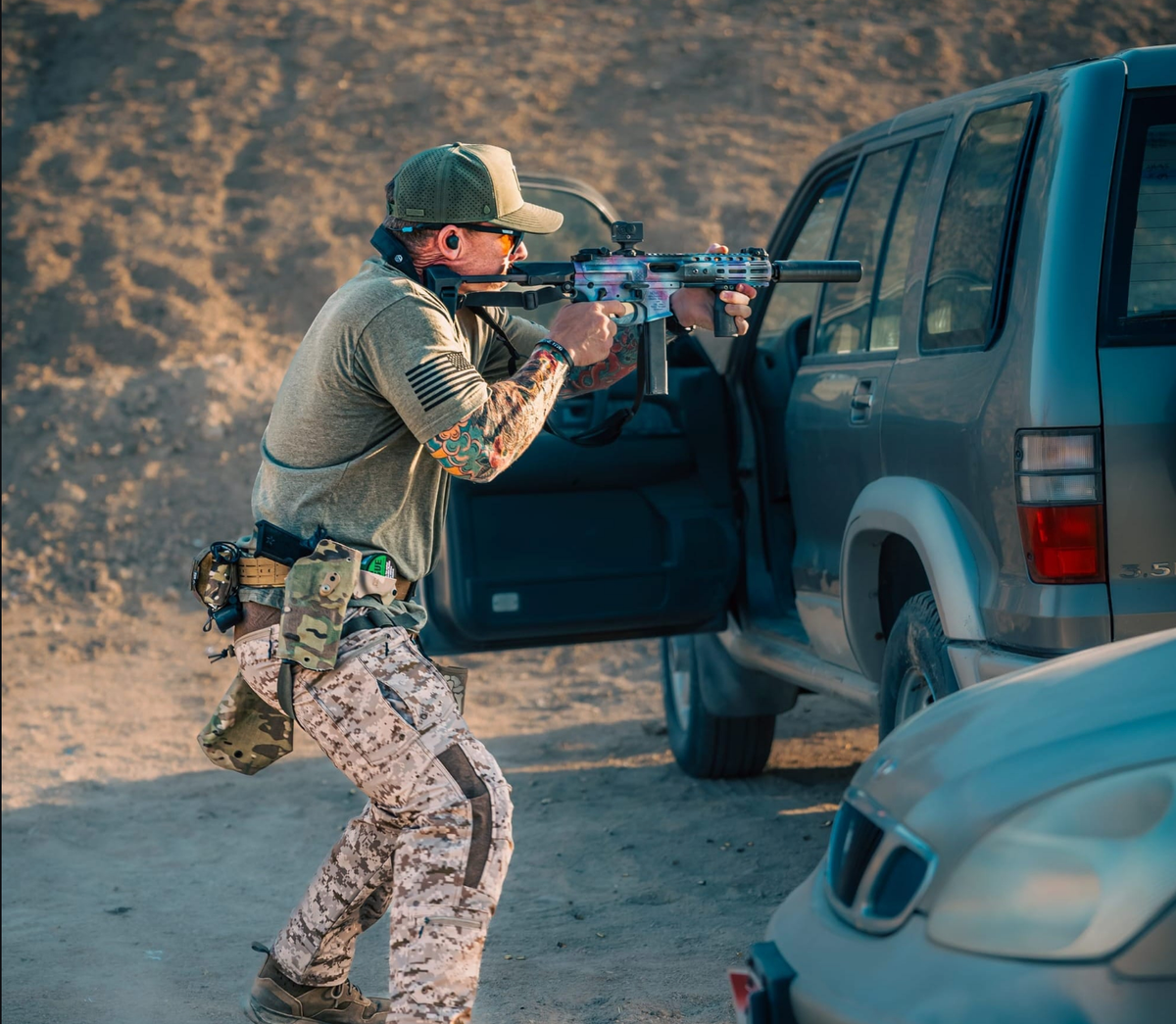
Listen to the article
Fundamentals Series — Part 7
Over the last six articles, we’ve covered the core fundamentals of shooting: grip, trigger control, and vision.
These skills are first learned under ideal conditions. We stand still, eliminate unnecessary variables, and focus on placing rounds exactly where we intend them to go. This is marksmanship.
Marksmanship teaches us the fundamentals.
Practical shooting challenges us to apply those same fundamentals under increasingly realistic conditions.
The goal isn’t to replace marksmanship. The goal is to build upon it.
At Valiance Firearms Training (VFT), practical shooting usually begins by introducing manageable amounts of stress. First, we ask students to increase their shooting cadence while maintaining the same fundamentals. Then, as soon as movement can be introduced safely, we begin introducing purposeful movement.
The Problem We Commonly See
Whether someone is learning the fundamentals for the first time or refining them after years of shooting, we often find that almost all of their training has taken place from a stationary position.
Many people proudly tell us they’ve “shot all their lives,” and that’s often true. They’ve spent years hunting, target shooting, or practicing from a stationary firing line. But for many, their training has remained almost entirely within the world of marksmanship.
They’ve simply never been introduced to practical shooting.
Once those fundamentals begin to come together, movement is often treated as an advanced skill that gets postponed until much later, or never introduced at all. Eventually, when movement is introduced, it feels like an entirely new skill.
The fundamentals haven’t changed.
The conditions have.
We believe that’s a missed opportunity.
Practical shooting isn’t a destination reserved for experienced shooters, it’s a progression that should begin early in a shooter’s development, whenever it can be introduced safely.
The Tip: Introduce Movement Early
At VFT, we don’t believe movement should be reserved for advanced shooters.
Instead, we believe it should become a natural part of a shooter’s development from the very beginning.
That doesn’t mean handing a brand-new shooter a complex movement drill.
It means introducing movement progressively and with proper coaching, allowing students to build confidence while continuing to reinforce the same fundamentals they’ve already developed.
At VFT, one of the principles we continually reinforce is that growth happens outside our comfort zone. Becoming comfortable being uncomfortable is part of the learning process, not only in shooting, but in every area of life. That philosophy shapes how we train.
We don’t wait until shooters feel completely comfortable before introducing movement. We introduce movement progressively so that becoming comfortable is part of the learning process.
We often find that our newer shooters are capable of far more than they realize. With proper coaching, clear expectations, and a safe progression, they’re able to step outside their comfort zone much earlier than they ever expected.
That doesn’t mean pushing someone beyond their ability. It means helping them discover that their ability is often greater than their confidence.
Time after time, students finish a drill saying, “I didn’t think I could do that.”
Those early successes build confidence that carries into every aspect of their shooting. Once they’ve experienced that they can safely move, process information, and make accurate hits under increasing levels of stress, movement no longer feels intimidating, it simply becomes another skill they’ve learned.
That doesn’t necessarily mean shooting while moving right away.
In fact, many of our newer shooters begin by moving to a position before engaging the target. This allows them to safely build confidence with movement while still taking a stable shot.
As they become more comfortable, we begin introducing shooting while moving, requiring them to maintain the same grip, trigger control, and visual discipline they’ve been developing throughout this series.
Both skills matter.
Moving to a position prepares shooters to move with purpose.
Shooting while moving prepares them to apply those same fundamentals when stopping isn’t the best option.
The important thing is that movement isn’t delayed until some arbitrary point in the future. It’s introduced early, progresses naturally, and grows alongside every other fundamental.
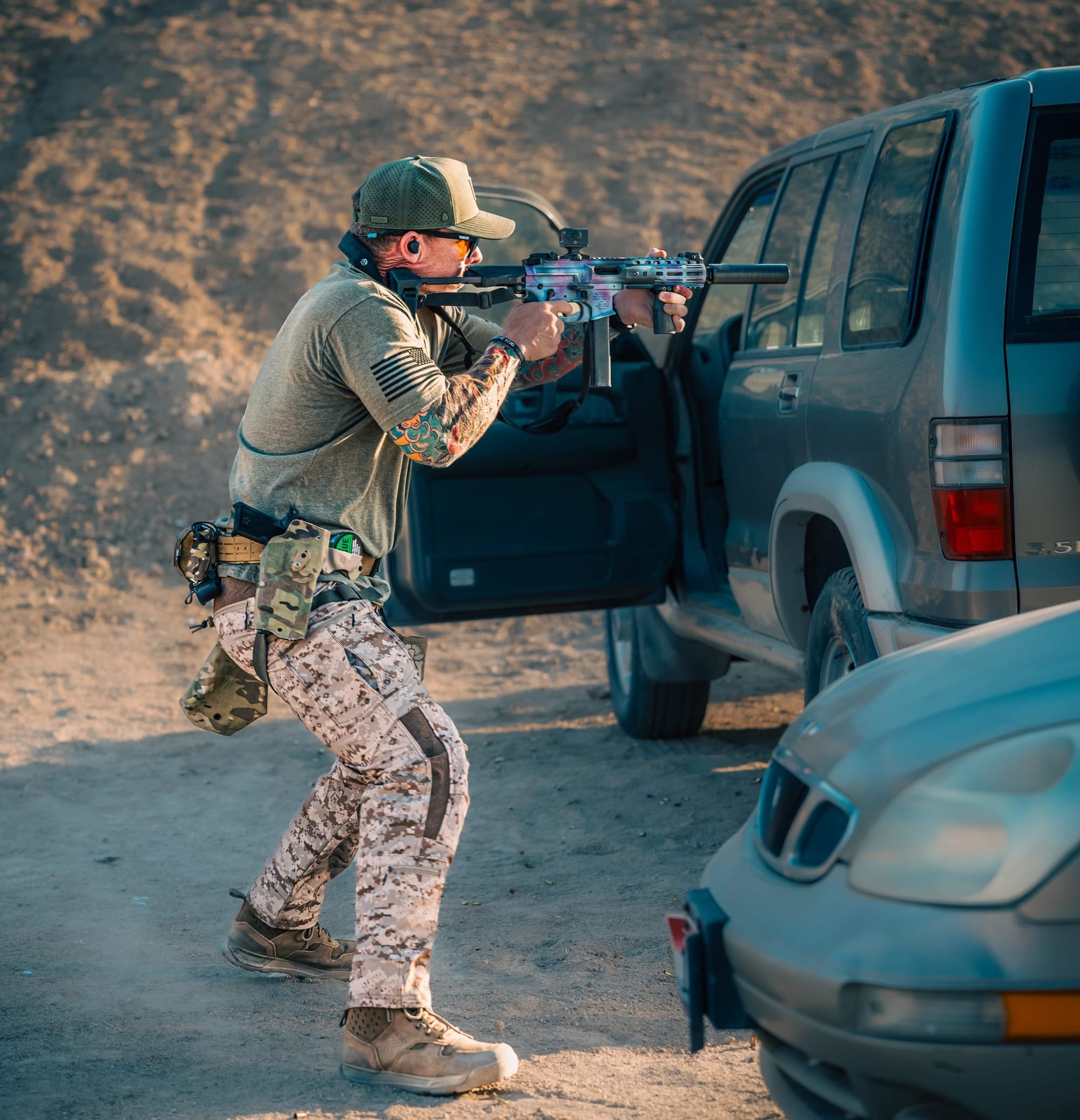
Drill Highlight: The Box Drill
In the previous article, we introduced the Box Drill as a way to develop efficient vision. The same drill also serves as one of our favorite tools for introducing movement because it naturally progresses with the shooter’s experience. Shooters engage multiple targets while moving in a box pattern (forward, left, backward, and right) ultimately returning to their starting position.
For newer shooters, the drill often emphasizes moving to each corner of the box before engaging the target. This builds confidence with movement while reinforcing safe gun handling and solid marksmanship.
As skill and comfort improve, the same drill evolves into shooting while moving along each side of the box, forcing the shooter to maintain those same fundamentals without the stability of a stationary position.
The drill grows with the shooter because the lesson evolves.
Early on, it teaches confidence in movement.
Later, it reinforces the ability to apply sound fundamentals under increasingly realistic conditions.
The Bigger Picture
Marksmanship teaches the fundamentals.
Practical shooting proves them.
Grip.
Trigger control.
Vision.
None of those fundamentals change simply because your feet begin moving.
Movement simply asks a new question:
Can you still apply those same fundamentals when the conditions become more realistic?
At VFT, we believe that question should be asked early and answered often.
The goal has never been to get students moving for the sake of movement. The goal is to build capable, confident shooters who can apply sound fundamentals when the conditions are no longer perfect. By introducing practical shooting early, and progressing it safely, we’ve found that students grow faster, gain confidence sooner, and discover they’re capable of far more than they initially believed.
Having ammo available and ready removes friction from training and allows you to spend more time refining these skills. Ammo Squared makes it easy to stay stocked so your training sessions are always ready to execute.
Stack your ammo.
Train with intent.
Repeat the process.
Read the full article here
5 Comments
Great insights on Defense. Thanks for sharing!
I’ve been following this closely. Good to see the latest updates.
Good point. Watching closely.
This is very helpful information. Appreciate the detailed analysis.
Interesting update on Movement: Bridging the Gap Between Marksmanship and Practical Shooting. Looking forward to seeing how this develops.