

Listen to the article
The Army has activated a new psychological operations company focused on Africa, expanding the military’s ability to influence foreign audiences as terrorist organizations and governments compete for support across the continent.
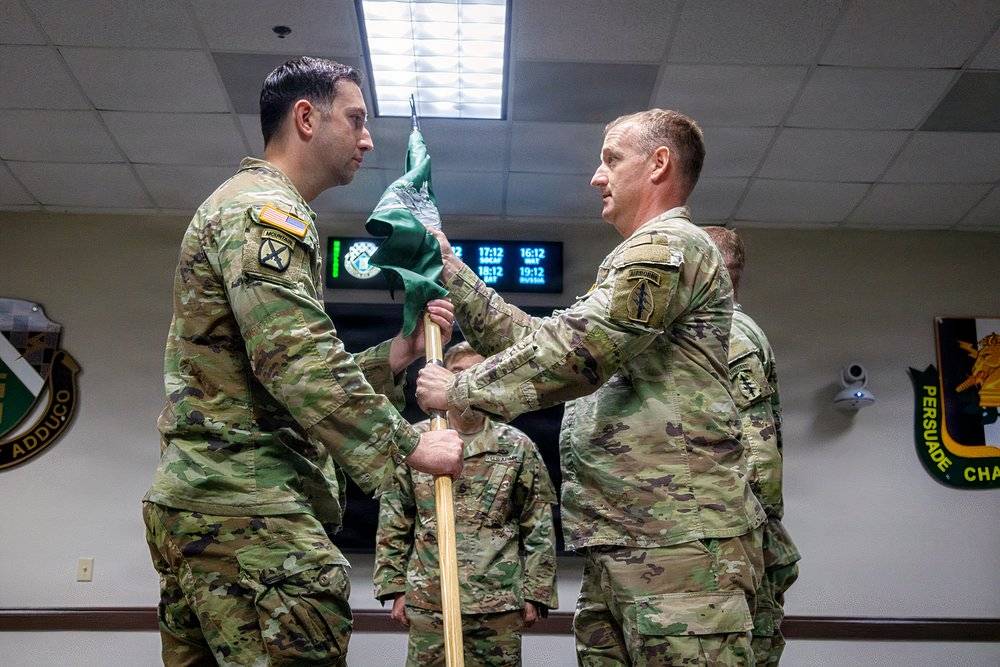
Delta Company, 7th Psychological Operations Battalion, was activated July 15 at Fort Bragg, North Carolina. Known as “Drongo Company,” the unit will conduct missions supporting U.S. Africa Command and prepare for operations in contested environments.
Drongo Company Joins an Africa-Focused Battalion
The new company falls under the 7th Psychological Operations Battalion, which is assigned to the 3rd Special Forces Group. Both organizations have an established regional focus on Africa.
Capt. Richard Koch became the company’s first commander, while 1st Sgt. Joshua T. Libro became its senior enlisted leader.
The company’s nickname comes from the drongo, an African bird known for imitating warning calls and using deception to drive other animals away from food. The Army selected the name to reflect the unit’s focus on influencing perceptions and behavior.
PSYOP Is Designed to Influence, Not Merely Inform
Psychological operations use selected information and communications to affect the emotions, reasoning and behavior of foreign governments, organizations, groups and individuals. PSYOP soldiers deliver targeted messages through broadcasts, print, digital media and direct engagement with foreign audiences.
The mission is not only an effort to counter adversarial propaganda. The new unit will also create and distribute persuasive messages intended to change how selected audiences think or act.
The Army’s own historical account notes that the military has previously called the function “combat propaganda” and “psychological warfare,” although it now generally uses the term PSYOP.
The distinction between propaganda and psychological operations often depends on who is describing the activity. AFRICOM presents its campaigns as truthful, lawful efforts supporting U.S. security objectives, while adversaries or skeptical audiences may characterize the same work as American propaganda.
AFRICOM says its psychological operations follow U.S. law and Defense Department policy and are not directed at people in the United States. That restriction addresses the intended audience, not whether Americans could encounter material after it appears online.
Africa’s Information Battles Are Expanding
AFRICOM says its campaigns seek to reduce recruitment and public support for al-Qaida, ISIS and their various branches, Boko Haram, Jama’at Nusrat al-Islam wal-Muslimin and any affiliates. Other missions may encourage fighters to surrender, support reintegration programs and discourage communities from assisting armed organizations.
The command also uses psychological operations in competition with foreign governments. AFRICOM says its West Africa activities include efforts to disrupt what it describes as “malign influence.”
Russia and China have expanded their political, economic and security activities across Africa, while extremist groups use local grievances and online communications to recruit members and undermine governments.
AFRICOM commander Gen. Dagvin Anderson told Congress in May that terrorism, foreign influence and economic competition are creating increasingly difficult security conditions.
Anderson also said the U.S. regional posture has declined by about 75% over the past decade, contributing to intelligence gaps. A smaller physical presence increases the value of tools that can reach audiences through mobile phones, broadcasts and local partners without requiring large numbers of American troops.
Credibility Will Determine the Unit’s Reach
Drongo Company’s effectiveness will depend on more than its ability to produce messages. Its soldiers will need regional and cultural knowledge, language skills, accurate intelligence and credible African partners capable of reaching communities that may distrust communications associated with the U.S. military.
Previous Army accounts of psychological operations in Africa have emphasized that foreign soldiers often struggle to influence communities whose languages, cultures and experiences they do not share. Those accounts describe relationships with local partners as essential to producing lasting changes in behavior.
The new company gives AFRICOM additional personnel for an information contest that extends beyond conventional battlefields. Its success will depend on whether targeted audiences consider its messages credible, not merely on whether the Army can distribute them.
Read the full article here
6 Comments
I’ve been following this closely. Good to see the latest updates.
Interesting update on Army Officially Activates New Psychological Operations Unit for Africa. Looking forward to seeing how this develops.
This is very helpful information. Appreciate the detailed analysis.
Good point. Watching closely.
Great insights on Defense. Thanks for sharing!
Solid analysis. Will be watching this space.