

Listen to the article
A year ago, the Army did something it had never done before: It commissioned four of the most senior technology executives in the country as lieutenant colonels, allowed them to bypass the standard training pipeline, and told them to help modernize the force part-time while keeping their day jobs at Meta, Palantir and OpenAI. On June 10, the Army added three more.
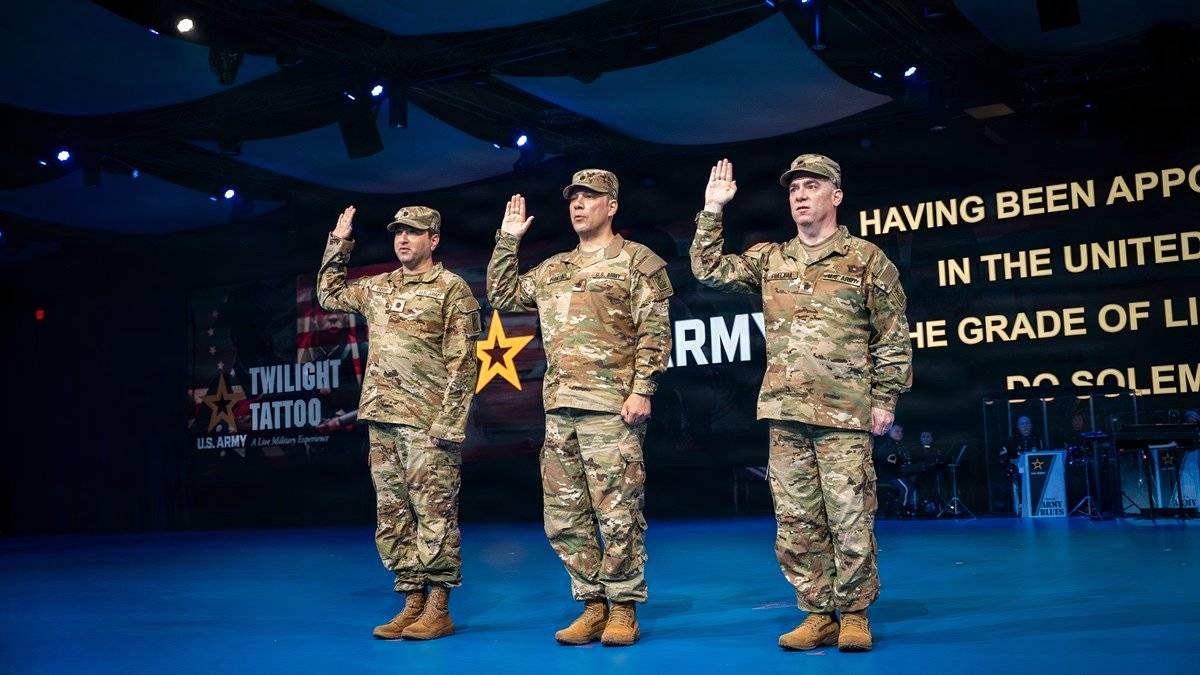
The unit is called Detachment 201, officially the Army’s Executive Innovation Corps. Its second cohort commissioned during a ceremony at Joint Base Myer-Henderson Hall, Virginia, timed to the Army’s 251st birthday celebration in June. The new officers are:
- Dane Knecht, chief technology officer of Cloudflare
- Sam Pallura, managing director and chief technology officer of Sutter Hill Ventures
- Serkan Piantino, co-founder of Facebook AI Research and former vice president of products at Reddit
What Detachment 201 Actually Is
Detachment 201 is a specialized Army Reserve unit built specifically to pull senior civilian tech talent into the Army without requiring them to leave their private-sector jobs. Officers serve part-time as strategic advisers, working directly with Army leadership on modernization problems the service says it cannot solve fast enough on its own. The Army has described the goal plainly: Bridge the gap between Silicon Valley innovation speed and military acquisition speed, which have historically moved at very different paces.
To make that possible, the Army overhauled its Direct Commissioning Program, cutting the onboarding timeline for this kind of lateral entry from more than 18 months down to roughly six. That change is what makes it possible for a sitting CTO to become a lieutenant colonel without putting a corporate career on hold for a year and a half.
What the First Cohort Has Actually Done
The inaugural class, commissioned in June 2025, brought in:
- Shyam Sankar of Palantir
- Andrew “Boz” Bosworth of Meta
- Bob McGrew, formerly of OpenAI and now an advisor at Thinking Machines Lab
- Kevin Weil, OpenAI’s former chief product officer
Read More: VA Is Adding Virtual Reality to Primary Care: What It Does and How It Works
According to the Army, their work over the past year has touched three specific areas: munitions supply chain data analysis, investment strategy for the Army’s organic industrial base, and foundational strategy work on autonomous systems and counter-drone technology.
That’s a notably concrete list for a program that, at launch, drew criticism for being vague about what these officers would actually do day to day. Whether the results match the ambition of putting some of the most highly compensated technologists in the country into uniform is still an open question, but the Army is at least now pointing to specific workstreams rather than general goodwill.
What the New Officers Said About Joining
“I was drawn to Detachment 201 because it’s a unique opportunity to apply private-sector technical expertise to national defense challenges. I’m excited to contribute to helping the Army innovate and maintain a strategic advantage,” said Kneckt of Cloudfare.
Pallura of Sutter Hill Ventures said the Army’s pressing challenges “require leaders who can evaluate a technical architecture in the morning and advise a general in the afternoon.”
The evolving character of warfare means the military “must rapidly adapt to new domains and prepare for continued technological change,” according to Piantino of Facebook AI Research. “Those who have the experience to contribute to that mission have a duty to offer their service.”
The Question That Hasn’t Gone Away
When the first cohort was commissioned, questions were raised about conflicts of interest — specifically, whether tech executives holding leadership roles at companies that do or could do business with the Defense Department should be advising the Army on modernization while remaining employed by those same companies. The four original officers did not recuse themselves from their companies’ dealings with the Pentagon at the time of commissioning.
That structural tension hasn’t resolved with the second cohort. Cloudflare, Sutter Hill Ventures and Meta AI research are all companies with plausible current or future defense-adjacent business lines. The Army has not detailed what, if any, additional ethics screening or recusal requirements apply to the new officers beyond the standard conflict-of-interest disclosures required of any commissioned officer.
It’s also unclear whether the new officers, like the first cohort, will be exempt from standard fitness testing and the full direct commissioning course requirements, a detail that drew attention when the program launched, given the officers hold the relatively senior rank of lieutenant colonel despite no prior military service.
Why It Matters Beyond the Novelty
It’s easy to read Detachment 201 as a publicity exercise — tech billionaires playing soldier for a photo op. The Army’s own accounting of the first cohort’s work suggests something more specific is actually happening: real input on munitions supply chains and autonomous systems strategy, areas where the Pentagon has openly acknowledged it is behind and trying to catch up quickly, particularly as lessons from the war in Ukraine reshape how the U.S. thinks about drone warfare and industrial capacity.
Whether that translates into meaningfully faster modernization, or simply gives a handful of already-influential tech executives another lever inside the Pentagon, is likely to remain a live debate as the unit grows. For now, the Army’s bet is that the model works well enough to keep expanding it.
Read the full article here
6 Comments
This is very helpful information. Appreciate the detailed analysis.
Solid analysis. Will be watching this space.
Great insights on Defense. Thanks for sharing!
Good point. Watching closely.
I’ve been following this closely. Good to see the latest updates.
Interesting update on The Army’s Silicon Valley Reserve Unit Got 3 More Tech Executives. Looking forward to seeing how this develops.