

Listen to the article
Thinsulate gloves are a go-to solution for staying warm in winter – without the bulk. But what exactly makes Thinsulate so effective, and how do you choose the right gram weight?
3M Thinsulate is one of the most popular glove insulations on the market. Its ultra-fine microfibers trap more air than traditional insulation, giving you excellent warmth while keeping gloves thin, flexible, and easy to work in.
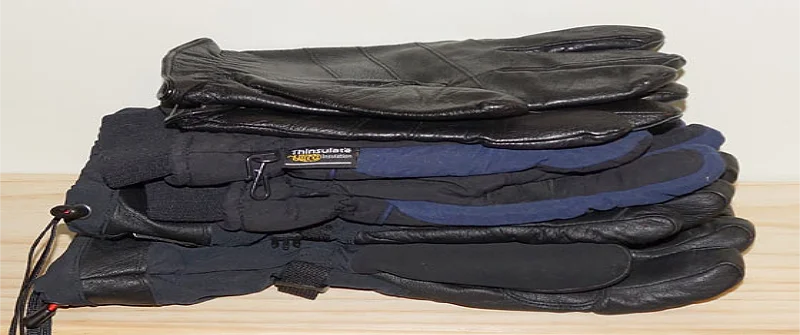
Over the years (too many to admit), I’ve worn many pairs of gloves with different Thinsulate weights. 40 gram, 70–80 gram, 100 gram, and the heavier 150–200 gram options. Each performs differently depending on temperature and activity level.
If you’ve ever wondered how Thinsulate works, how the warmth scale breaks down, or what temperatures each gram rating is suited for, this guide lays it all out.
And since 40-gram Thinsulate gloves are one of the most common everyday choices, we’ll start there.
Contents (Jump to a Section)
As an Amazon Associate I earn from qualifying purchases.
(no extra cost) Thank you
40 Gram Thinsulate Gloves – Temperature Rating & Uses
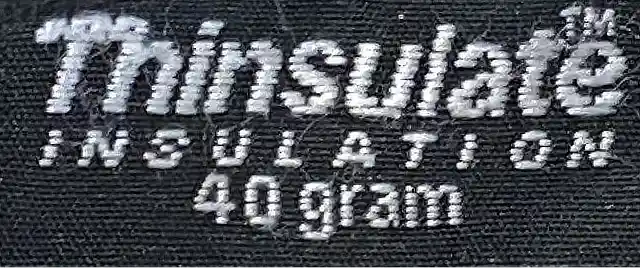
40-gram Thinsulate is one of the most popular insulation weights because it strikes a great balance between warmth and dexterity. The fibers are extremely thin, allowing manufacturers to make gloves that stay flexible and low-profile while still providing meaningful insulation.
Typical Temperature Range (40g Thinsulate)
40-gram Thinsulate gloves are generally comfortable in the 35°F to 55°F range, depending on your activity level. They’re ideal for cool to moderately cold days, or for situations where your hands are actively working and naturally generating heat.
Best Uses for 40g Thinsulate Gloves:
- Everyday driving gloves
- Dress gloves for cool weather
- Light-duty or moderate-weather work gloves
- Outdoor chores where finger control matters
- High-activity winter tasks where heavier gloves get too warm
Because the microfiber insulation is so efficient, 40g gloves remain thin and agile. This makes them perfect for tasks requiring precision and finger dexterity. Something bulkier 100g or 200g gloves can’t deliver.
If you often find heavier winter gloves too warm, or you’re frequently switching between outdoor tasks and indoor environments, 40-gram Thinsulate is an excellent “all-around” choice.
In short: 40-gram Thinsulate is ideal for cool to moderately cold weather where warmth matters—but dexterity still counts.
If you’re trying to decide whether 40 gram Thinsulate gloves are warm enough for your needs… read my real-world example:
Real-World Example
Recently Mrs. J and I went to an NFL night game here in New England – late November, about 38°F at kickoff. Between tailgating and the full game, we were outdoors for nearly six hours. I wore my 40-gram Thinsulate gloves (they had my Patriots logo, so of course I had to wear them).
But here’s the thing: they weren’t warm enough.
Because I wasn’t doing much – mostly sitting, standing – my hands weren’t generating any extra heat. That’s the downside of low activity levels in cold weather: even a glove “rated” for that temperature can feel insufficient.
Bottom line:
A 40-gram glove can work in the mid-30s if you’re active, but if you’re mostly stationary, you may need 70–80g or even 100g to stay comfortable. Temperature ratings are always influenced by what you’re doing (or not doing).
By the way, Mrs. J was wearing 100 gram gloves and she was fine.
This example shows how activity level matters more than the temperature printed on the label.
“If you also struggle keeping your hands warm, you might like my article on Hand Warmers for Winter Kits.”
Hand Warmers For My Winter Survival Kit
3M Thinsulate Warmth Scale For Gloves
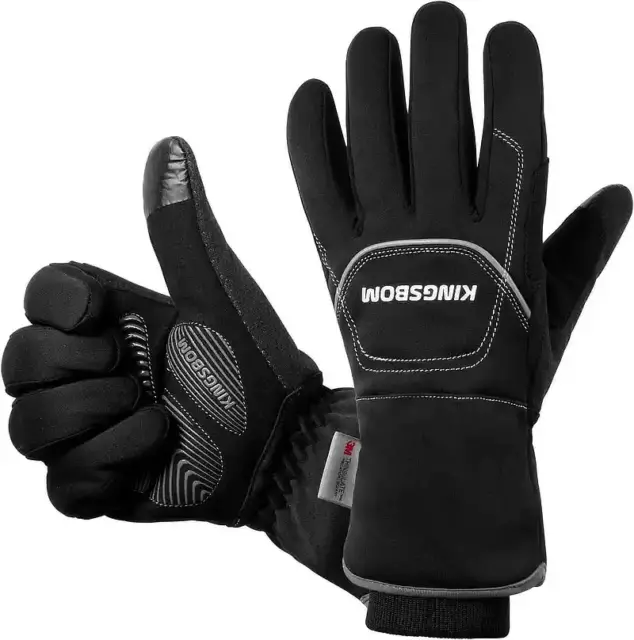
Best-selling 40-Gram Thinsulate Work Gloves on Amazon:
→ Browse All Choices of 40-gram Glove Options on Amazon
Be sure to check the descriptions to verify the 40-gram weight.
Thinsulate Warmth / Temperature Rating Chart
| Thinsulate Weight | Activity Level | Approx Temp Range |
|---|---|---|
| 40 gram | High activity / everyday wear | 35°F–55°F |
| 70–80 gram | Moderate activity | 20°F–40°F |
| 100 gram | Light–moderate activity | 0°F–30°F |
| 150–200 gram | Very light activity / extreme cold | -20°F–10°F |
The gram weight refers to grams per square meter of insulation. The higher the gram weight, the more it insulates and the warmer you are.
Generally comfortable between 35°F and 55°F, depending on activity level.
Yes, but best for cool to moderately cold conditions…
Yes, for high-activity winter use; not for deep-cold or low activity.
40g Thinsulate is lighter, thinner, and better for cool to moderately cold temperatures where dexterity and finger movement matter.
100g Thinsulate is thicker and significantly warmer, suited for colder conditions or low-activity situations.
In short: 40g = flexibility for mild cold; 100g = more warmth for colder weather.
3M Thinsulate Temperature Rating Guideline
Your activity level significantly affects how warm a glove feels. Higher activity keeps blood circulating, so you can use lighter insulation. Low activity demands heavier insulation. For that reason, I keep gloves in multiple Thinsulate weights—from 40g up to 200g—depending on the weather and what I’m doing.
- 40 grams for high activity levels in moderately cold weather, or lower activity levels in cool to only moderate cold conditions.
- 70 grams for moderate activity levels, cold conditions.
- 100 grams for light to moderate activity levels in very cold conditions.
- 200 grams for very light activity levels in very cold conditions.
I have a few pairs of 100 gram Thinsulate gloves for very cold weather. Work gloves, and general purpose.
If I’m using my snowblower during a very cold day, 100 gram gloves are usually okay. My hands and body aren’t doing much, so that ‘warmth scale’ is reasonable.
Now let’s say during the same very cold day I’m wearing the same 100 gram Thinsulate work gloves. I’m out there working, cutting firewood, and hauling or stacking. It’s likely that those gloves might get too warm as my hands heat up from strenuous activity. So it might be more comfortable to drop down to a pair of 40 gram work gloves. It all depends. If you can find 70-gram work gloves, that’s a sweet spot too.
Get the idea? It all depends on your activity level.
The following are highly popular 70-gram Thinsulate work gloves. Wells Lamont FX3 Insulated Synthetic Leather Winter Work Gloves – Warm 3M Thinsulate, Fleece-Lined, Touchscreen – Water-Resistant, Reinforced Palm, Adjustable Wrist.
100 Gram Thinsulate Gloves
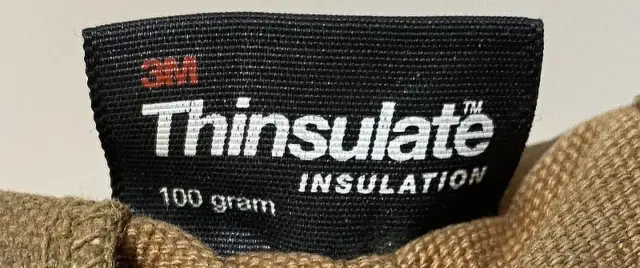
100-gram Thinsulate offers a strong step up in warmth compared to 40g, while still keeping gloves reasonably flexible. This weight is ideal for cold winter conditions.
These are my general-purpose “go-to” gloves for outdoor winter cold-weather activity around the homestead here in northern New Hampshire. I have a variety of pairs and styles, depending on what I’m doing.
I also have a 200-gram pair (see below) for those periods below 0 degrees, and/or for snowmobiling.
Best for:
- Cold-weather outdoor chores
- Light to moderate activity
- Work that needs durability more than dexterity
- Temperatures roughly 0°F–30°F depending on activity level
The most popular-selling 100-gram Thinsulate gloves on Amazon:
200 gram Thinsulate Gloves
200-gram Thinsulate is designed for extreme cold and low activity levels. Often marketed as “-30°F” or “arctic” gloves, this weight is ideal for deep-winter work and snow sports.
By far, THE most popular 200-gram Thinsulate gloves on Amazon…

Youngstown 200-gram Thinsulate gloves are perfect for construction, utilities, freezer work, plumbing, snow clearing, skiing, snowboarding, ice fishing, and other snow-related activities.
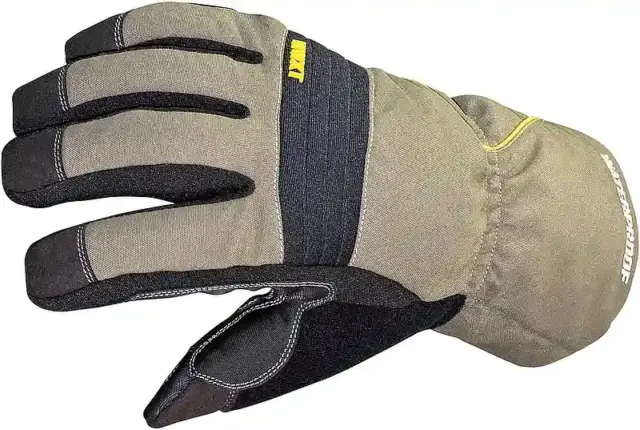
Another pair of highly popular 200-gram Thinsulate gloves:
Gloves AND Mittens Together
If you’re looking for the best way to keep your hands warm in very cold weather, it’s tough to beat good mittens. Gloves will work up to a point. But well insulated mittens (at least in my experience) will be nice and warm.
Mittens work well for extended cold periods. Mittens worn over gloves is quite effective, though you will lose dexterity. But in this way, you could pull off your mittens while using your gloves for a task, and then put your mittens back on..
The mittens would have to be big enough to fit over the gloves. The glove would have to be small enough to fit inside the mitten. Example.. Merino wool glove liners slipped inside a larger pair of Thinsulate insulated mittens.
For example, you might choose the following two mittens:
- Minus33 Merino Wool Glove Liners (amzn)
- OZERO 150-gram Thinsulate Mittens (amzn). Note these mittens are very good by themselves too!
If you do it this way, get well fitting (or snug) liners and larger mittens so they pair up well together.
→ See All Thinsulate Mittens on Amazon
→ Search Merino Wool Glove Liners on Amazon
Tip: I also use hand warmers inside my gloves (on the palm) if I’m going to be outside for a long time in very cold weather.
What is Thinsulate?
Thinsulate has unique microfibers. They are very fine fibers that trap air molecules between them.
The more air that a material traps in a given space‚ the better it insulates you from the cold outside air.
The fibers in Thinsulate insulation are finer than the fibers used in most other types. Such as synthetic or natural insulation.
Thinsulate traps more air in less space. This makes Thinsulate insulation a better insulator.
It is breathable, moisture-resistant, and washable. It preserves warmth, even when compressed.
How small are Thinsulate fibers? They are approximately 0.00059 inches (15 micrometers) thin. That’s five times thinner than traditional polyester fibers.
Thinsulate™ is considered “the warmest thin apparel insulation” available. In fact, when equal thicknesses are compared, it provides about 1½ times the warmth of down and about twice the warmth of other high-loft insulation materials.
-Wikipedia
Read related articles:
Warmest Blanket For Winter | Wool or Fleece?
Indoor Humidity Level During Winter | What’s Best?
Read the full article here
12 Comments
The author’s real-world example of wearing 40-gram Thinsulate gloves to an NFL night game highlights the importance of considering activity level when choosing glove insulation, a crucial factor often overlooked.
For high-activity winter tasks, I find that 40-gram Thinsulate gloves are perfect because they don’t get too warm, allowing me to maintain dexterity and comfort throughout.
I’m curious about the difference in performance between 40-gram and 70-80 gram Thinsulate gloves, are they significantly warmer or is the difference negligible?
From what I’ve read, the 70-80 gram options offer more warmth but at the cost of slightly reduced dexterity, it really depends on your specific needs.
I’m surprised that 40-gram Thinsulate gloves are generally comfortable in the 35°F to 55°F range, I would have thought they’d be suitable for colder temperatures given their insulation properties.
I’ve had experiences similar to the author’s where 40-gram Thinsulate gloves weren’t warm enough, especially when I’m not actively generating heat through physical activity, does anyone else find this to be the case?
Yes, I’ve found that if I’m just standing or sitting for long periods, even with 40g Thinsulate gloves, my hands can still get quite cold.
I appreciate how the article breaks down the uses for 40g Thinsulate gloves, such as everyday driving gloves or light-duty work gloves, it’s helpful to know the specific applications where they excel.
The ultra-fine microfibers in Thinsulate gloves that trap more air than traditional insulation are what make them so effective, it’s impressive how such a thin material can provide meaningful warmth.
The mention of 3M Thinsulate being one of the most popular glove insulations on the market makes me wonder about other insulation types and how they compare in terms of warmth and flexibility.
The fact that 40g Thinsulate gloves are ideal for cool to moderately cold days makes them perfect for my outdoor chores, I’ll have to consider getting a pair for better finger control.
The comparison between 40g and 100g or 200g gloves is interesting, I’ve always thought that thicker gloves would be warmer but it seems that’s not always the case when dexterity is a factor.