

Listen to the article
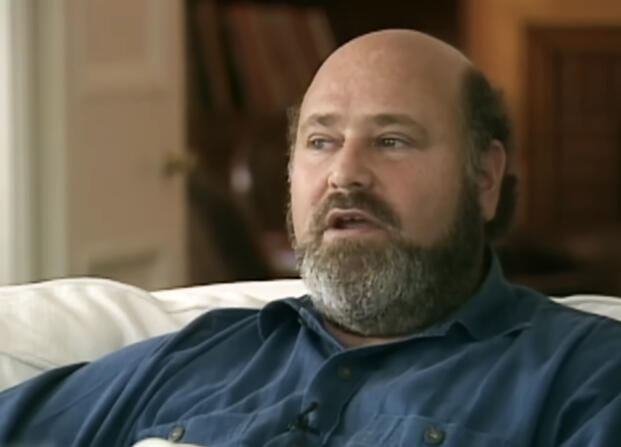
Rob Reiner spent half a century teaching America how to talk about itself; that’s why the news out of Brentwood last week has landed with such force. Tragically, Reiner, 78, and his wife, photographer Michele Singer Reiner, 70, were found dead at their home on Sunday, Dec. 14, 2025. Their son, Nick Reiner, 32, has been arrested and charged with two counts of first-degree murder, according to the Los Angeles County District Attorney’s office. The medical examiner ruled the deaths homicides caused by multiple sharp-force injuries.
The case is progressing rapidly through the court system, partly due to the involvement of one of the most recognizable names in American entertainment. Nick Reiner appeared in court on December 17 but did not enter a plea. An arraignment has been scheduled for January 7, 2026.
The facts around the case are stark, but Reiner’s life’s work is anything but.
For many viewers, his name often triggers a specific cinematic memory: A Few Good Men, the 1992 courtroom drama that turned duty, discipline, and institutional loyalty into a pop-cultural shorthand. The film’s dialogue is still likely quoted in barracks, offices, dorm rooms, and family arguments decades later, partly because it captures a tension everyone can recognize instantly: the gap between what an institution says it is and what it does when it thinks no one is watching.
Still, focusing on that single title understates the scope of Reiner’s impact. He didn’t just direct hits. He helped write the national vocabulary for romance, friendship, ego, courage, and truth.
The Quick Rundown of Reiner’s Cultural Reach
- A TV character that became a cultural shorthand: Michael “Meathead” Stivic on All in the Family helped define political, generational, and class friction on American television.
- A director with absurd range: This Is Spinal Tap (1984), Stand By Me (1986), The Princess Bride (1987), When Harry Met Sally (1989), Misery (1990), A Few Good Men (1992).
- A working actor who kept popping up in the modern era: Bob Day (Jess’s dad) on New Girl, Max Belfort in The Wolf of Wall Street, plus his unforgettable mock-documentarian presence as Marty DiBergi in Spinal Tap.
- Lines and phrases that escaped their movies and joined the national vocabulary: “It goes to 11,” “As you wish…,” “I’ll have what she’s having,” “You can’t handle the truth,” and “bucket list.”
The Résumé That Reads Like a Syllabus
Reiner’s career has a neat way of resisting categories. He wasn’t “the comedy guy” or “the thriller guy” or “the prestige drama guy.” He was the rare director who could move between tones without losing the audience or the actors.
In one run, he delivered:
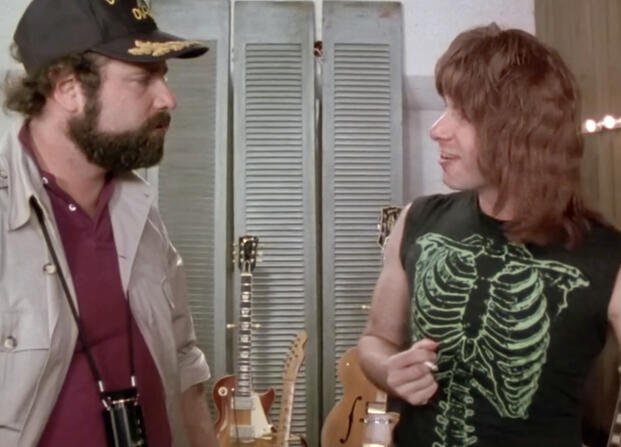
- This Is Spinal Tap (1984), the mockumentary that paved the way for the likes of The Office and Parks and Rec. It used the form for comedy in a way no other film or show had up to that point.
- Stand By Me (1986), a coming-of-age story that explores childhood fear and the class ache beneath boyhood adventure.
- The Princess Bride (1987) is a fairy tale that functions as a parody, a romance, and a work of folklore all at once.
- When Harry Met Sally (1989) is a romantic comedy built around conversation as a form of combat, and it became the standard for the genre.
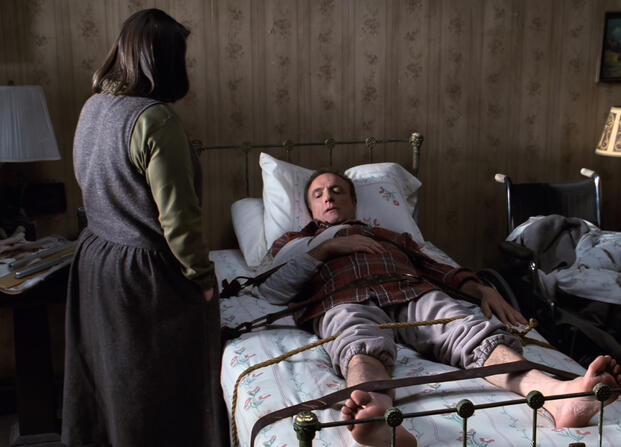
- Misery (1990) is a thriller that treats obsession as a form of captivity. Still, even after three decades, it is one of the best Stephen King adaptations ever made.
- A Few Good Men (1992) is a legal drama that made moral conflict feel physical.
NPR’s retrospective put it plainly: Reiner “made a virtue of virtuosity,” toggling across genres in a way few mainstream directors ever manage.
But the more revealing pattern isn’t the variety. It’s what he did inside that variety.
Reiner’s movies treat language like action. A sentence can be a shield or a knife. A joke can be a confession. A repeated phrase can become a kind of oath. That’s why his lines didn’t stay put.
“It goes to 11.”
“As you wish.”
“I’ll have what she’s having.”
“You can’t handle the truth.”
“Bucket list.”
You can say any one of those to a room of strangers and watch heads nod in recognition. That’s a different kind of success than opening-weekend numbers. It’s cultural permanence.
Before the Director, the “Meathead”
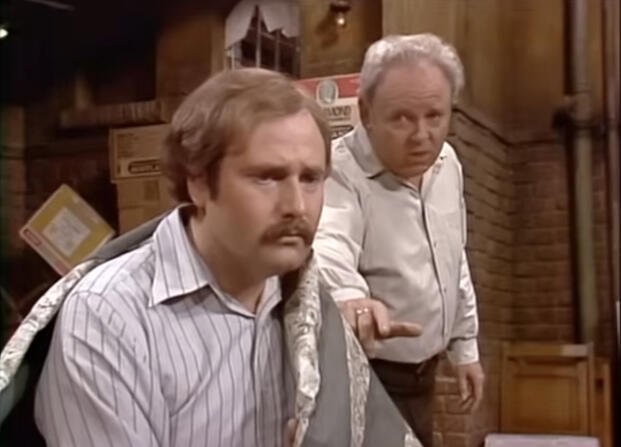
Reiner first became nationally recognizable as Michael “Meathead” Stivic on All in the Family, the liberal son-in-law who sparred with Archie Bunker and helped turn family sitcoms into public arguments. The nickname “Meathead” became its own shorthand: not just for one character, but for a particular brand of generational friction that the country has been replaying ever since.
In military families, that tension can take on extra voltage: tradition versus dissent, deference versus debate, chain-of-command thinking versus civilian argument culture. Reiner didn’t invent those divides, but he played them in front of America at a moment when television was learning how to risk discomfort in prime time.
Then he did something many actors struggle to pull off. He outgrew the persona without disowning it, shifting from being the guy in the argument to the guy shaping the entire conversation.

The Director Who Built Templates
Plenty of directors make good movies. Fewer make movies that become templates other filmmakers keep borrowing, sometimes without realizing it.
This Is Spinal Tap didn’t just parody rock culture. It taught comedy a new structure: the documentary format as the joke engine. “It goes to 11” survives because it captures human self-importance so cleanly it doesn’t need context.
Stand By Me helped define modern coming-of-age storytelling by refusing the safe version of nostalgia. The boys are funny, yes. They’re also scared, poor, grieving, and trying to understand how quickly the world stops protecting you.
The Princess Bride is the rare film that can be quoted at a wedding and at a midnight screening, often by the same people. “As you wish” became a private language for devotion because it translates love into choice and action, not speeches. (It’s tenderness without syrup.)

When Harry Met Sally gave romantic comedy its adult brain. The jokes land, but so do the questions: How much of what we call love is timing? How much is fear? How much is performance? And then it hands you a punchline that became a national reflex: “I’ll have what she’s having.”
Misery is often remembered for its set pieces, but its deeper horror is control. It’s a story about creative work, yes, and also about what it feels like to have your life shrink to the size of someone else’s mood.
And then there’s A Few Good Men.

Why A Few Good Men Still Echoes in Military-Adjacent Culture
Reiner’s film is about the Marines, but its real subject is the institution: how it defines loyalty, how it protects itself, how it decides which truths are acceptable and which ones are too costly.
The film also performed a trick that’s both useful and dangerous. It made the military legible to civilians through entertainment and, for many, became a reference point for discussing the military, whether or not it maps cleanly onto real life. That’s what cultural touchstones do: they start as stories, then become shortcuts.
In other words, Reiner didn’t just make a movie people liked, but helped create the way millions of people talk about duty and truth when they’re not sure how else to say it.
The Later Years, Still Chasing Big American Themes
Even outside his most famous stretch, Reiner kept circling questions about power, morality, and the stories the country tells about itself.
The American President treated politics as a romantic fantasy, but also understood leadership as a performance under constant pressure.
Ghosts of Mississippi returned to justice and legacy, tracing how long violence echoes.
The Bucket List helped popularize a phrase that now appears everywhere, from self-help culture to deployment goals.
Late in his career, Reiner was still making work that argued comedy mattered, not as fluff, but as craft.
You can debate the highs and lows of any long filmography. The throughline is harder to miss: Reiner was drawn to stories where people wrestle with conscience, identity, and the weight of choices.
The Bucket List (2007) Official Trailer
The Quiet Metric of Legacy: The Quotes That Survive
Awards and box office totals are easy to tally. The stranger measure is repetition.
Say “bucket list,” and people feel a little tug of urgency.
Say “as you wish,” and it lands like a promise.
Say “it goes to 11,” and you’re not just quoting a joke, you’re naming the impulse behind it: the need to feel exceptional, even if we have to invent the scale.
And “You can’t handle the truth” has become a cultural Rorschach test. Sometimes it means reality is harsh. Sometimes it means someone is lying. Sometimes it’s simply the fastest way to turn an argument into theater.
Reiner’s death, and the circumstances surrounding it, have left Hollywood and the public stunned. Authorities have not yet laid out a complete narrative in open court, and reporting has raised questions about Nick Reiner’s mental health history as the case proceeds.

What is already clear is the size of the absence. Reiner’s work is still everywhere: in the movies people reach for when they need comfort, in the scenes they replay when they need a jolt, and in the lines they keep borrowing when they want to sound brave, romantic, or unflinchingly honest.
That’s the rarest kind of cultural impact.
Story Continues
Read the full article here
21 Comments
The concept of a ‘bucket list’ is another phrase that has entered our vocabulary thanks to Rob Reiner’s films, symbolizing the human desire to experience and achieve certain things before we die.
I’m skeptical about the speed of the court case, given that Nick Reiner appeared in court on December 17 but did not enter a plea, and an arraignment has been scheduled for January 7, 2026, which seems relatively quick.
The involvement of a high-profile name like Reiner might be contributing to the rapid progression of the case, but it’s still important to ensure justice is served without undue influence.
This Is Spinal Tap, directed by Rob Reiner, not only invented a new kind of comedy but also gave us the iconic line ‘It goes to 11’, which has become a cultural shorthand for excess and extravagance.
Rob Reiner’s film A Few Good Men is still widely quoted today, with lines like ‘You can’t handle the truth’ becoming a part of the national vocabulary, highlighting the tension between institutional ideals and reality.
Reiner’s impact on popular culture is evident in the way his films’ quotes and references are used in everyday conversation, in family arguments, or in discussions about loyalty, truth, and institutional accountability.
The phrase ‘I’ll have what she’s having’ from When Harry Met Sally is another example of how Reiner’s films have contributed to the national vocabulary, often capturing moments of humor, truth, and connection.
It’s fascinating to consider how Rob Reiner’s films, such as Stand By Me, have explored themes of friendship, courage, and coming of age, leaving a lasting impact on how we talk about and understand these concepts.
The death of Rob Reiner and his wife Michele Singer Reiner is a shock, especially given the circumstances of their murder and the involvement of their son Nick, who has been charged with two counts of first-degree murder.
The variety in Rob Reiner’s filmography is impressive, ranging from The Princess Bride to Misery, showcasing his ability to move between tones without losing his audience, a rare talent in the film industry.
The fact that Rob Reiner could move between directing films like The Princess Bride and A Few Good Men, which are so different in tone and subject matter, is a testament to his skill and creative range.
The line ‘As you wish’ from The Princess Bride has become a romantic cliché, but it’s a testament to Reiner’s ability to craft moments that resonate deeply with audiences and become part of the cultural fabric.
It’s tragic that the news of Rob Reiner’s death has come in such a shocking manner, given the charges against his son, but it’s also an opportunity to reflect on Reiner’s contributions to film and television, and how his work continues to influence us.
Given the breadth of his work, from comedy to drama, Rob Reiner’s legacy is not just about the films he made, but about the way those films made us think, feel, and talk about ourselves and our society.
Reiner’s role in The Wolf of Wall Street as Max Belfort and his appearances in New Girl and other modern shows demonstrate his enduring presence in the entertainment industry, even beyond his directing career.
The legacy of Rob Reiner, as seen through his films and TV shows, is complex and multifaceted, reflecting his interest in exploring the human condition through various genres and stories.
Rob Reiner’s impact on American television is also noteworthy, particularly through his character Michael ‘Meathead’ Stivic on All in the Family, which helped define political and generational friction on TV.
Rob Reiner’s ability to skewer rock-star ego in This Is Spinal Tap and then go on to direct films like Misery, which explores the darker side of fandom, shows his versatility and willingness to challenge his audiences.
This versatility is part of what makes his body of work so compelling and influential, as he tackled a wide range of subjects and genres.
The fact that Rob Reiner’s son Nick collaborated with him on the semi-biographical film ‘Being Charley’ about his time in rehab and battles with substance abuse adds a poignant layer to the tragedy of their situation.
It’s a reminder that even in families with significant creative output and public success, personal struggles can be very real and devastating.