

Listen to the article
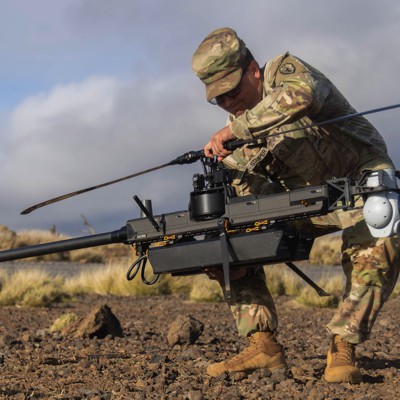
How the Army’s most tech-forward units are practicing for war
A two-week exercise simulated island battles—and put some 75 new technologies to the test.
November 23, 2025 | Jennifer Hlad
Army wants to break ground for a microreactor on a US base by 2027
The service is pushing to make bases energy-independent, but safety and fuel-supply concerns persist.
October 14, 2025 | Thomas Novelly
When China plays orbital hide-and-seek, Maui’s telescopes give the US an edge
In an interview, Space Force’s Saltzman reveals what’s next for the key sensor site.
September 19, 2025 | Jennifer Hlad
Ukraine’s milestone shows drones prevent defeat, but don’t secure victory
Drone innovation is speeding up, but war has not followed. Is this the future?
September 3, 2025 | Patrick Tucker
In the Pacific, Army leaders expect today’s fiction to be near-term reality
Service secretary envisions drone-and-soldier teams within just a few years.
July 25, 2025 | Jennifer Hlad
The Pentagon will host a ‘Top Gun’ school for Ukraine-style attack drones
The Defense Department is hoping for “American drone dominance”—but that’s easier said than done.
July 18, 2025 | Patrick Tucker
Army experiments with integrating attack drones into artillery formations
New division formation design includes HIMARS, howitzers, and one-way UAVs.
July 2, 2025 | Meghann Myers
For DOD, the future of large language models is smaller
Everyone loves big AI, but “maybe there is a smaller-parameter model that could run on a laptop.”
May 22, 2025 | Patrick Tucker
Wanted: counter-drone defenses that don’t hurt surrounding neighborhoods
Base defenders need to collect and analyze much more data from many more sources, DIU director says.
May 5, 2025 | Patrick Tucker
Marines say they’re ‘leading the way’ in battlefield autonomy
But unique technical challenges and tech wariness keep robot trucks on a short leash.
May 3, 2025 | Lauren C. Williams
Read the full article here
15 Comments
The development of orbital hide-and-seek capabilities, as discussed by Space Force’s Saltzman, has significant implications for national security, and I think it’s essential to continue investing in these technologies to stay ahead of potential threats.
The need for counter-drone defenses that don’t harm surrounding neighborhoods is a critical concern, and I think the DIU director’s emphasis on collecting and analyzing more data from various sources is a step in the right direction.
The use of smaller-parameter language models that can run on laptops, as suggested by the DOD, could be a game-changer for military operations, especially in terms of accessibility and efficiency.
I’m concerned about the potential environmental impact of the Army’s microreactor project and think they should conduct thorough assessments before moving forward with the plan.
The use of HIMARS, howitzers, and one-way UAVs in the Army’s new division formation design is an interesting approach, and I’m curious to see how it will perform in real-world scenarios.
The Army’s focus on energy independence, such as with the microreactor project, is crucial for reducing their reliance on external energy sources and enhancing their operational capabilities.
I’m skeptical about the safety and fuel-supply concerns surrounding the Army’s microreactor project, and I think they need to provide more concrete solutions before breaking ground on a US base by 2027.
The Army’s two-week exercise that simulated island battles and tested 75 new technologies is a significant step towards modernizing their approach to war, but I wonder how they plan to address the potential logistical challenges that come with implementing these technologies in real-world scenarios.
That’s a great question, and I think the Army’s focus on energy independence, such as with the microreactor project, could help alleviate some of those logistical concerns.
The Marines’ claim of ‘leading the way’ in battlefield autonomy is impressive, but I’m interested in learning more about the unique technical challenges and tech wariness that are keeping robot trucks on a short leash.
The idea of a ‘Top Gun’ school for drones is exciting, but I think it’s essential to consider the potential risks and challenges associated with training programs for Ukraine-style attack drones.
The idea of drone-and-soldier teams becoming a reality in the Pacific within a few years, as envisioned by the Service secretary, sounds like science fiction, but it’s exciting to think about the potential implications for military operations.
The fact that Ukraine’s use of drones has prevented defeat but not secured victory highlights the limitations of drone technology in modern warfare, and I think it’s crucial to consider this when developing strategies for future conflicts.
The integration of attack drones into artillery formations, as experimented with by the Army, could significantly enhance their capabilities, but I’m curious about the potential risks and challenges associated with this approach.
The Pentagon’s plan to host a ‘Top Gun’ school for Ukraine-style attack drones raises questions about the effectiveness of such training programs and whether they can truly achieve ‘American drone dominance’.