

Listen to the article
U.S. forces are enforcing what the White House calls a maritime “quarantine” around Venezuela, launching warships, aircraft and Marines into the Caribbean as President Donald Trump orders an aggressive crackdown on oil tankers tied to Venezuelan President Nicolás Maduro.
The new posture, launched this week, marks the most expansive maritime enforcement action of Trump’s presidency. U.S. officials familiar with planning said roughly 15,000 personnel are positioned across the Caribbean and Gulf of Mexico, though the Pentagon has not released exact figures. Officials, who have stopped short of calling it a blockade, said ships will be stopped and cargo will be checked, with sanctioned fuel unable to traverse waters.
A carrier strike group, F-35s and Coast Guard cutters are postured to interdict tankers, restrict oil exports and pressure Maduro’s government. The campaign overlaps with Trump’s push for a shipbuilding expansion, signaling the administration may fuse sanctions enforcement with a buildup of larger surface combatants and firepower at sea.
The Coast Guard declined to comment to Military.com on enforcement thresholds or boarding criteria. Military.com reached out to the Pentagon and the Navy for comment on deployment authorities and coordination, the former referring questions to the Navy. Military.com also reached out to U.S. Southern Command (SOUTHCOM) for comment and has requested updated force totals and duration.
Officials in Caracas and Washington are bracing for confrontation. Earlier deployments sent Marine units within a few miles of Venezuela’s coast as Maduro’s Russian-armed forces shifted to wartime alert, highlighting how quickly any clash at sea could spill over onto land and complicate planning for U.S. commanders.
The Line Is Drawn
U.S. forces appear to be operating under existing sanctions enforcement authorities and standard maritime law that allows boarding when vessels are suspected of concealing origin or violating international reporting rules. The Pentagon has not detailed guidance governing this mission.
Protocols are intended to disrupt what Washington calls “illicit” tanker actions that use flag spoofing, shell company registries, and ship-to-ship transfers to move fuel—a pressure campaign that risks diplomatic friction if a boarding is challenged or a foreign crew resists inspection.
Defense officials say the posture relies on layered surveillance involving aircraft track hull numbers and AIS signals. Cutters move in for approach and Navy assets stand off to deter interference by foreign escorts.
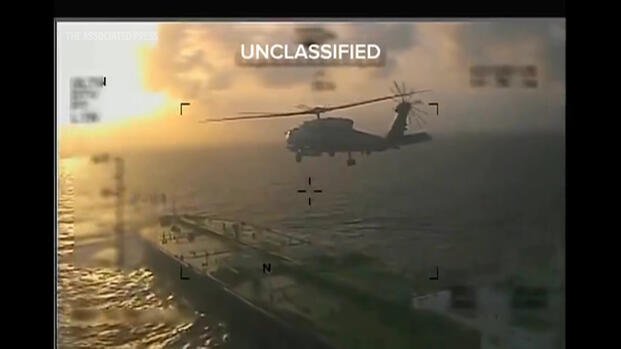
The Pentagon has not confirmed rules for escalation if a tanker refuses, redirects or requests help from another nation’s military.
Trump aides have framed U.S. military interjections a necessary escalations to cut off revenue they say funds corruption networks tied to Maduro.
Sanctions on Venezuela’s state oil firm PDVSA have intensified since 2019, according to U.S. Treasury enforcement notices, while the Trump administration has argued that maritime enforcement is the only viable pressure left to change behavior.
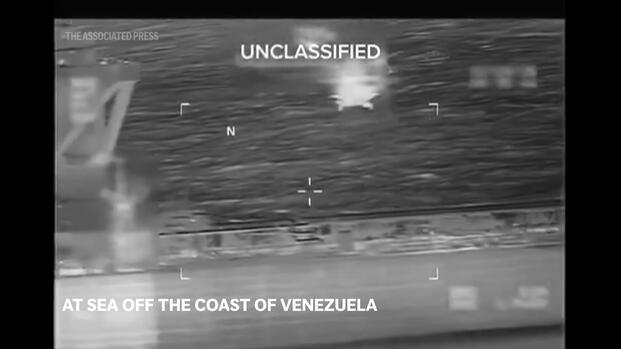
Earlier waves in the current crackdown saw Trump order a halt to sanctioned tankers bound for Venezuela. U.S. forces stopped multiple oil and merchant vessels off the coast as part of a broader effort to tighten the flow of fuel and revenue into Maduro’s homeland.
Economists said a price spike or redirected tanker traffic could hit Caribbean importers and U.S. Gulf states first. Brazil and Mexico may seek workarounds or new bilateral arrangements not fully aligned with Washington, raising longer-term diplomatic challenges.
The Venezuelan Embassy in Washington did not respond. Military.com reached out to the United Nations for comment.
Steel, Sanctions and Sea Power
Trump linked the maritime campaign to a broader shipbuilding surge that would accelerate procurement of larger surface combatants and support vessels, including fleet oilers and expeditionary transport docks that could sustain prolonged interdiction missions.
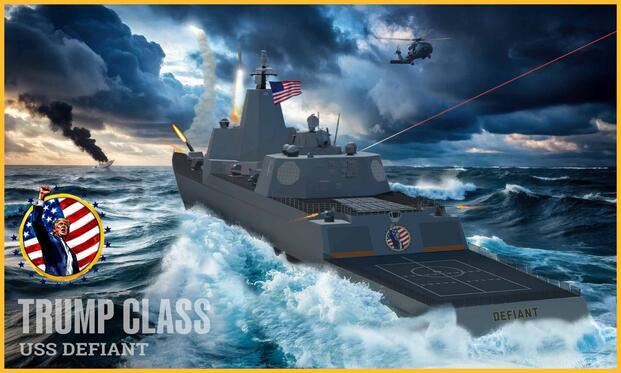
The president said new capacity is required to project power from the Caribbean to the Pacific without relying on short-notice repositioning. Navy planners have already floated concepts for a Trump-class battleship-style large surface combatant and tied new funding to industrial partnerships that blend traditional shipbuilding with artificial intelligence and advanced combat systems, signaling that the current posture may be a first test of a more muscular vision for sea power.
Budget documents for the initiative have not been released. It is unclear whether lawmakers on the House and Senate Armed Services committees have been briefed on deployment requirements, cost projections or how the administration intends to pay for accelerated procurement. Military.com has requested clarification.
The administration has not said whether the Caribbean posture is a proof of concept for a larger blueprint: build the fleet, police the hemisphere and pressure adversaries at sea before they reach deep water.
Venezuelan officials in state media remarks accused Washington of piracy and illegal interference in sovereign commerce.

They warned that “any hostile act will be interpreted as aggression” but have not disclosed military plans or confirmed whether naval assets are on alert. Officials claimed the crackdown is proof the U.S. intends to “strangle” the economy and destabilize the regime rather than pressure reforms.
Filing formal complaints would allow Venezuela to contest boardings and interdictions without risking an armed confrontation on the water. Legal experts have noted that Venezuela’s crisis, maritime standoffs and drug-transit allegations already sit at a volatile intersection of sovereignty claims, sanctions policies, and the law of the sea.
Story Continues
Read the full article here
14 Comments
The fact that the Coast Guard declined to comment on enforcement thresholds or boarding criteria suggests that there may be some uncertainty or controversy surrounding the rules of engagement for this operation.
The fact that Maduro’s Russian-armed forces have shifted to wartime alert highlights the potential for this situation to escalate quickly, and I’m concerned about the potential consequences for regional stability.
The use of layered surveillance involving aircraft tracking hull numbers and AIS signals to monitor tanker movements is an interesting approach, but I’m concerned about the potential for errors or misidentification of vessels.
The involvement of US Southern Command (SOUTHCOM) in this operation suggests that the US is taking a comprehensive approach to enforcing sanctions, but I wonder how this will affect relations with other countries in the region.
I’d like to know more about the role of the Marines in this operation, particularly given that they have been deployed within a few miles of Venezuela’s coast in the past.
The fact that the Pentagon has not released exact figures on the number of personnel deployed or detailed guidance governing this mission raises questions about transparency and accountability in this operation.
The deployment of a carrier strike group to the Caribbean is a significant show of force, and I wonder how this will be perceived by other countries in the region, particularly those with their own maritime interests.
The deployment of 15,000 personnel across the Caribbean and Gulf of Mexico marks a significant escalation in the US’s efforts to enforce sanctions on Venezuelan oil tankers, and I’m curious to know how this will impact the regional economy.
It’s likely to have a substantial impact, given that Venezuela’s oil exports are a crucial part of their economy, and this blockade could exacerbate their existing economic crisis.
I’m skeptical about the effectiveness of this maritime quarantine, given that ships can use flag spoofing, shell company registries, and ship-to-ship transfers to evade detection, as mentioned in the article.
The use of F-35s and Coast Guard cutters to interdict tankers and restrict oil exports raises concerns about the potential for military conflict, especially if Maduro’s government resists these efforts.
The article mentions that the campaign overlaps with Trump’s push for a shipbuilding expansion, which suggests that this operation may be part of a broader strategy to increase US military presence in the region.
The article mentions that Trump aides have framed the US military interjections as necessary to cut off revenue that funds corruption networks tied to Maduro, but I’d like to know more about the evidence supporting this claim.
I’m concerned about the potential for diplomatic friction if a boarding is challenged or a foreign crew resists inspection, as this could lead to a wider conflict involving other countries.