

Listen to the article
For nearly 45 years of training, I have heard conflicting information about reaching failure when lifting weights or even doing calisthenics. Either you push until you fail, or you avoid failure by leaving that last rep undone. Throughout my years of coaching and training on my own, the subject of pushing to failure (or beyond) with heavier weights or higher reps has been either the goal or something to avoid. A new scientific study helps us settle the debate, but both options still have a place in training.
Depending on what decade you started training, the concept of fatigue during strength training often carries either a negative connotation or is encouraged. Many lifters worry either that pushing themselves too hard will hinder their progress or that they won’t see progress until they fail on their last rep of a set. However, this fear of failure may be holding them back from maximizing gains; or pushing failure could be affecting energy levels for later tactical applications. Athletes involved in multiple sports or tactical training for various physical activities do need to pay careful attention to fatigue, as it can affect their overall performance and ability to juggle different training demands. For these individuals, missing out on some muscle growth is a reasonable trade-off for broader tactical athletic development.
The Role of Fatigue in Maximizing Muscle Growth
Many start to lift weights to get stronger and bigger muscles. If your primary goal is to build muscle, steering clear of training methods just because they generate more fatigue is counterproductive. The idea that fatigue is the main limiting factor in muscle growth is not supported by research. In fact, studies consistently show that higher training volumes and sets performed close to failure lead to greater gains. Avoiding these effective strategies out of fear of fatigue could mean missing out on significant progress. Success when dealing with failure in workouts requires the active pursuit of recovery. This means that how you eat, drink, sleep and rest the remainder of your day will matter, as the stress you create in the gym, in life, and at work all need to be managed through proper recovery methods. In other words, the gym may not be the stress ruining your gains; your overall lack of recovery may be.
Recent Research: Training to Failure and Its Effects
A recent study titled “Influence of Proximity to Failure, Relative Intensity, and Volume after Resistance Training” sheds light on how training close to failure affects muscle growth and strength. The researchers found that sets performed near muscular failure, regardless of relative intensity, produce superior hypertrophy and strength adaptations compared to less challenging sets. Moreover, higher training volumes (weights or calisthenics), when managed appropriately, do not necessarily lead to negative outcomes if recovery is prioritized. This evidence suggests that lifters should not shy away from pushing themselves if they monitor their recovery and adjust training loads as needed.
Practical Advice for Lifters and the Tactical Athlete
Take a Deload
If you start to feel rundown or notice a drop in gym performance over a week or two, it’s wise to temporarily reduce your training intensity and volume. You need a deload week. Taking an easier week allows your body to recover and prepares you to return to hard training with renewed energy.
Limit Failure Workouts Per Week
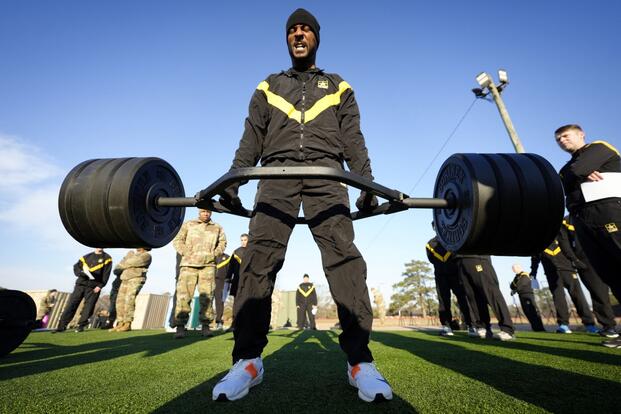
You may not want to push the failure mark every set of your workouts. In fact, you may wish to limit failing to a single day per week, or perhaps to the last set of the workout, especially if lifting heavy. If your goal is to get stronger with a 3-rep max (3RM) for the deadlift test, increase the weight to a level where three reps would be a new personal best; save it for the last set of the day. Or you can have a day each week when you replicate the Army Fitness Test (for instance) and self-test the events in order, striving for new personal bests. This makes you stronger, helping you feel the weight and attempt heavier weights that may fail (or not).
Calisthenics Fitness Test
High-volume workouts are key to improving two-minute calisthenics fitness tests such as pushups and max reps of pullups. You can accumulate high volumes through multiple sub-failure sets, but you should also push your perceived limits and see failure on some of the later sets in the workout. Workouts such as the Pyramid, Super Set and Max Rep Set, spread throughout the week, help you pace yourself with both max-effort and sub-max-effort sets. Try them in a sample training week.
Recovery is Key
When you are pushing failure in weight and repetitions, recovery must be an intentional process that is not neglected. If you are in a tactical profession or have a manual labor job, you need to be even stricter with your recovery (sleep, nutrition, hydration, rest); otherwise, overtraining and negative results in the gym and your work life can occur.
Whether you are training for strength, bigger muscles, or muscle stamina, fatigue should not be feared but managed smartly. To unlock greater results, those whose main objective is muscle growth or strength should embrace heavier weights or higher reps and push themselves to new levels by flirting with failure. By paying attention to signs of overtraining and making timely adjustments, both lifters and tactical athletes can continue progressing without compromising their health or performance.
Want to Learn More About Military Life?
Whether you’re thinking of joining the military, looking for fitness and basic training tips, or keeping up with military life and benefits, Military.com has you covered. Subscribe to Military.com to have military news, updates and resources delivered directly to your inbox.
Story Continues
Read the full article here
17 Comments
The study ‘Influence of Proximity to Failure, Relative Intensity, and Volume after Resistance Training’ provides valuable insights into the benefits of training close to failure for muscle growth and strength.
I’m excited to apply the findings of this study to my own training, and I’m curious to see how it will impact my progress and overall performance.
The fact that higher training volumes and sets performed close to failure lead to greater gains is a game-changer for my workout routine, I’ll definitely be incorporating this into my training.
The importance of recovery in managing stress and avoiding negative outcomes from high-intensity training cannot be overstated, it’s not just about the gym but also about lifestyle choices.
I’m curious about how the findings of this study apply to athletes involved in multiple sports or tactical training, where managing fatigue is crucial for overall performance.
I’m concerned that the emphasis on training to failure might lead to overtraining and injury if not managed properly, especially for those new to strength training.
The article highlights the importance of balancing training intensity with recovery, which is essential for avoiding burnout and maintaining progress over time.
I’ve always been skeptical about pushing myself to failure, but the evidence suggests that it’s necessary for maximizing muscle growth, as long as recovery is prioritized.
The idea that fatigue is the main limiting factor in muscle growth is not supported by research, which is surprising given the common concern about overexertion in strength training.
I’ve found that proper recovery methods, such as adequate sleep and nutrition, can mitigate the negative effects of fatigue and allow for more intense training.
The fact that higher training volumes do not necessarily lead to negative outcomes if recovery is prioritized is a relief, as I’ve been worried about overdoing it with my workouts.
I’ve found that active pursuit of recovery, including proper nutrition and rest, is crucial for maximizing gains and avoiding fatigue, it’s not just about the training itself but also about how you recover.
The role of fatigue in maximizing muscle growth is complex, and it’s interesting to see how different training methods can be used to achieve specific goals, whether it’s muscle growth or overall athletic development.
The study’s findings on the superiority of sets performed near muscular failure for hypertrophy and strength adaptations are consistent with my own experiences, I’ve seen significant gains from this type of training.
The concept of fatigue during strength training has evolved over the decades, and it’s interesting to see how our understanding of its role in muscle growth has changed.
The study’s results have implications for the design of training programs, suggesting that coaches and athletes should focus on incorporating sets performed close to failure for optimal muscle growth and strength.
The importance of managing stress and prioritizing recovery cannot be overstated, as it affects not just muscle growth but also overall well-being and performance in other areas of life.