
Listen to the article
The first year of the second Trump administration has included major changes across the U.S. military that have reverberated on a global scale, leaving open many questions of what’s in store domestically and overseas. Lines have been drawn among active-duty members and veterans.
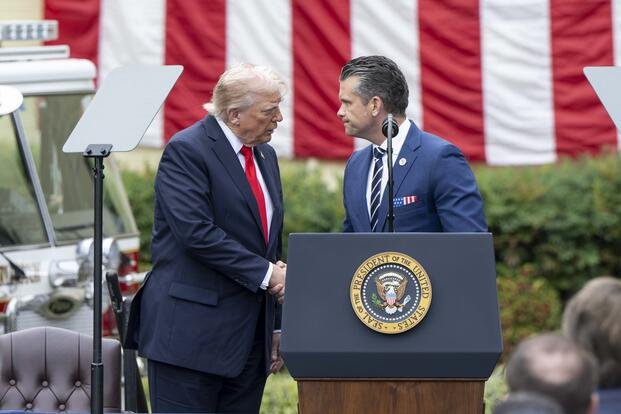
President Donald Trump has taken executive ownership in his second term, issuing a record-high 26 orders on his first day of office. Executive orders signed that day and in the weeks and months since have had overarching effects across the military, broadening the policies and aspirations of a more stringent Pentagon helmed by Defense Secretary Pete Hegseth—who has advocated for a more aggressive, military-ready armed forces via a “warrior ethos” decree.
The administration has made efforts undoing previous Biden-era policies related to concluding diversity, equity and inclusion (DEI) policies, minimizing transgender service members’ participation, reinstating service members who were discharged for refusing the COVID-19 vaccine, developing an American “Golden Dome” defense system mirroring that of Israel, boosting weapons and defense acquisition including a more deliberate, long-term strategy towards the utilization of artificial intelligence, and most recently providing active-duty members with one-time, tax-free “Warrior Dividend” payments.
Military.com spoke with multiple military veterans on how they view the first approximate 12 months of so-called Trump 2.0, with some advocating for the “peace through strength” agenda and a more cohesive strategy regarding adversaries like Russia. Others expressed concern over the administration’s flippancy regarding traditional rules and norms.
Trump’s ‘Extremely Dangerous’ Russia-Ukraine Play
Jeffrey Fischer, a former U.S. Air Force colonel with over 30 years’ experience and who served in seven combat tours in Iraq, Afghanistan and the Balkans, is most concerned about the Trump administration’s foreign policy positions regarding Russia and Ukraine.
Fischer, who lives in Europe, told Military.com that “a good number” of Trump’s policies are what he campaigned on during the last presidential cycle. New or adjusted policies are more common than not in new presidential administrations, Fischer said, adding that Hegseth “has energized the lower ranks, sharing a bond with them few of his predecessors could muster.”
“That has remedied recruiting challenges,” Fischer said. “It also appears there is a renewed focus on combat capability.”
But Fischer, the onetime defense official at the U.S. Embassy in Kosovo, said his “biggest surprise” thus far is Trump’s relationship with both Russia and Poland.
“The negatives, however, perhaps outweigh the positives,” Fischer said. “Warming to Russia is an extremely dangerous policy. Not one officer or diplomat I know disagrees.
“Turning a cold shoulder to a decades-long alliance like NATO is mindboggling. This also hurts the U.S. financially as well, as the policy strains U.S. defense firm sales to Europe—a significant aspect of the U.S. economy. … As with most Americans, I am hopeful the Trump administration pivots away from Russia and begins a strategic and decisive support for Ukraine.”
Polls in recent months have revealed high percentages of pessimism on Americans’ behalf regarding a conclusion to the Russia-Ukraine war that has raged since February 2022. A Gallup survey in August showed roughly 3-in-10 U.S. respondents having skepticism towards a peaceful conclusion.
Simultaneously, more Americans than not want the U.S. to continue to provide foreign aid to Ukraine. A Quinnipiac University poll of registered voters published Dec. 17 showed Trump underwater on the Russia-Ukraine conflict, with 35% approval and 55% disapproval. Of those surveyed, 48% of respondents said Trump was cozying up too much to Russia.
When it comes to U.S. aid, numbers have increased on a bipartisan basis. A majority of Democrats and Republicans, approximately 62% overall, want the U.S. to send more weapons to Ukraine in coming weeks/months, according to the most recent Reagan National Defense Survey released earlier this month.
“While I do believe China poses risk, I believe the adage, ‘An alligator in your boat is more dangerous than one on shore,’” Fischer said. “The ongoing Russian conflict is far more important to U.S. interests than China right now.
“Russia is engaged in combat with a nation that the U.S. offered assurances to in 1994. … If that war engages NATO allies, I am uncertain if the U.S. honors its Article V commitments. That scenario would be catastrophic for both western and democratic societies.”
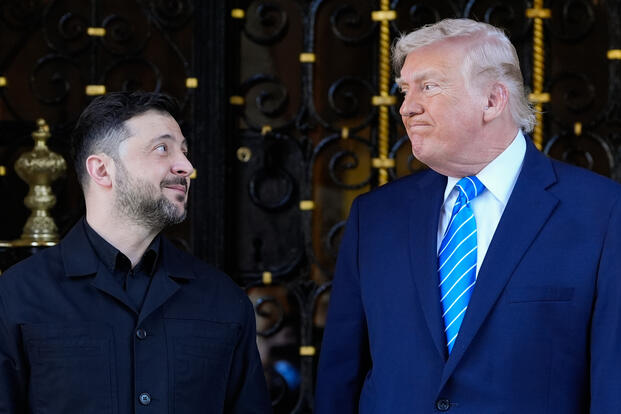
On Dec. 26, it was announced that Trump and Ukrainian President Volodymyr Zelensky were expected to meet over the weekend to further discuss a potential ceasefire and post-war peace plan.
Shift From ‘Woke Ideology’
U.S. Air Force veteran Anthony McCool served nine years, from 1985-1994, including during Desert Storm and Desert Shield. The self-described conservative lauded the current administration’s changes made across the military.
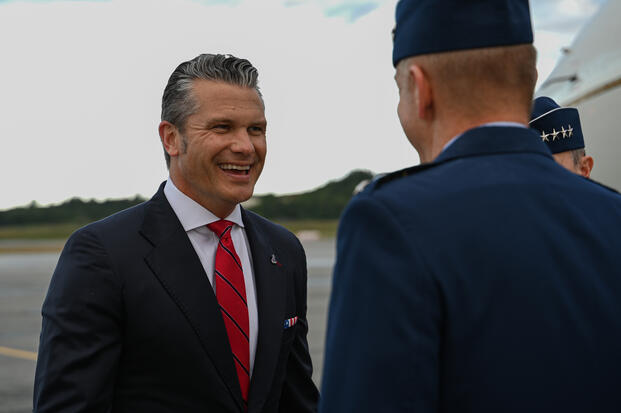
“I didn’t know much about [Hegseth],” McCool told Military.com. “He worked results [that] were long overdue. [I] loved the generals meeting [in September, at Quantico]—meet the standards or get out. They should have done this in the ‘90s. Woke ideology is a cancer.”
He was also strongly supportive of the current U.S. military activities revolving around Venezuela, notably the strikes on alleged narco-trafficking vessels in the Caribbean.
McCool called it “great target practice for our military, a huge step in the right direction,” adding that congressional oversight into the widely reported “double tap” months ago is “a woke witch hunt.”
Asked to compare the current administration with the Biden administration, McCool said Trump and company “actually want to do the right thing.”
“They are also not afraid to do and say it,” he said, adding that generals’ tenures should be capped at 40 years and that term limits should be put in place for Washington lawmakers.

Input from 100,000 Service Members
The policies being integrated into the Pentagon are a cause for alarm due to blatant efforts to further gray the lines between separation of church and state within the military, according to Air Force veteran and Military Religious Freedom Foundation (MRFF) founder Mikey Weinstein.
MRFF, founded in 2004, has represented more than 100,000 clients with myriad military backgrounds. That has included 95% of clientele who are either Protestant or Roman Catholic, and to a smaller extent Mormon or Eastern Orthodox. MRFF has clients with decades of singular military experience, including presently within the Department of Defense.
Weinstein told Military.com that MRFF also represents about 18% of all Muslims in the U.S. military in addition to others with faith-based or non-faith backgrounds including atheists, agnostics, secularists, humanists, Jews, Buddhists, Hindus, Native American spiritualists, and even 24 different varieties of Baptists.
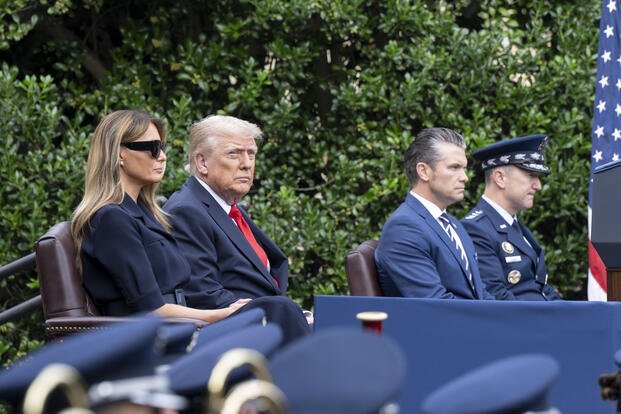
He said that since Trump began his second term, MRFF has seen roughly a tripling in its average number of new clientele compared to previous years. That is due to multiple factors or “atomic bombs,” as Weinstein described.
One of those so-called bombs occurred on Feb. 21, when Trump fired the chairman of the Joint Chiefs of Staff, C.Q. Brown, chief of Naval Operations, Adm. Lisa Franchetti, and the vice chief of staff of the Air Force, Gen. Jim Slife. That same evening, Hegseth cut “TJAGS”—the top two uniformed lawyers of the Air Force and Army (referred to as “TJAGs”), Lt. Gen. Charles L. Plummer and LTG Gen. Joseph B. Berger III, respectively—without advance notice.
“Most of them did not fit the mold that Hegseth and Trump want, which is a straight, white, fundamentalist, Christian nationalist male. … Firing the top TJAGs was a shock,” Weinstein said, adding that his level of concern of the U.S. military previously was “at about 8.2 or 8.3” on a 10-point scale but now resides “around 16.”
Other concerns expressed by MRFF clients have included religious-based services, notably Jesus prayer services. Countless active-duty members, according to correspondence shared with Military.com, have reached out over weeks and months to Weinstein’s organization requesting help in these dubious religion-based situations.
“This [Hegseth] is the Secretary of Defense, who fancies himself the Secretary of War, conducting these praise services in uniform during duty hours in the largest auditorium in the Pentagon,” Weinstein said. “This sent shockwaves through the military. Most of our clients are Christians looking at us going, ‘Are you kidding me?’”
He added that they’ve had at least 150 reach-outs from every military installation, sometimes on naval vessels, of commanders doing the same thing regarding prayer services. Other concerns have reportedly related to “outing” service members who may not be part of the MAGA movement.
“There is no existence of unit cohesion, you know, good order, morale, discipline,” Weinstein said. “They don’t exist. And if you don’t have that, you don’t have lethality. And if you don’t have lethality, you don’t have an armed forces that’s worth a s***. That’s where we are.”
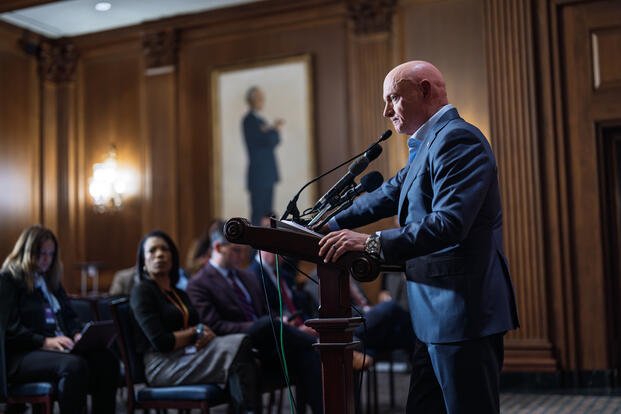
He also sharply criticized the situation surrounding U.S. Sen. Mark Kelly, who along with a handful of other Democrats reminded servicemembers that they have a legal obligation to refuse unlawful orders. Earlier this month, the Pentagon’s formal command investigation escalated beyond the preliminary inquiry initially announced in November.
“We’re going to chronicle and expose it, and we’re going to make sure we preserve it.”
The larger MRFF has become, and the more vitriolic the political rhetoric across the nation, the more threats Weinstein has received.
“Our windows have been shot out and we’ve had animals sacrificed in front of our house, and swastikas painted on our house,” he said. “Recently, we had our mailbox smeared with feces. We get threats by telephone every day. That’s just regular for us.
“It’s amped up because of the things that are going on. But we’re going to chronicle and expose it, and we’re going to make sure we preserve it. … If we get back away from this madness, we can come back against those that perpetrated it under our U.S. Constitution and get justice.”
Story Continues
Read the full article here
29 Comments
The ‘Warrior Dividend’ payments are a nice gesture, but I’m not sure they will have a significant impact on retention and recruitment, especially given the other challenges facing the military, such as personnel shortages and equipment modernization.
It’s a step in the right direction, but we need to address the underlying issues to ensure the long-term health and effectiveness of the military.
The Trump administration’s efforts to boost weapons and defense acquisition are a significant development, but I’m concerned about the potential consequences of a more aggressive military posture and the impact on global stability.
We need to ensure that our military strategy is aligned with our diplomatic efforts and that we’re not creating unnecessary tensions or conflicts.
The development of an American ‘Golden Dome’ defense system, mirroring that of Israel, is a significant undertaking, and I’m curious to know more about the potential benefits and challenges of implementing such a system.
Jeffrey Fischer’s concern about Trump’s relationship with Russia and Poland is well-founded, given the geopolitical implications of such alliances and the potential consequences for global stability.
It’s also worth considering how this will affect our relationships with other European nations and the potential for a unified response to security threats.
I’m intrigued by the idea of a more cohesive strategy regarding adversaries like Russia, and I think it’s essential to develop a comprehensive approach that takes into account multiple factors, including diplomacy, economics, and military posture.
I’m interested in learning more about the potential benefits and drawbacks of the ‘Golden Dome’ defense system and how it will be integrated into our existing military infrastructure.
The emphasis on artificial intelligence in the military is a forward-thinking strategy, but it’s crucial to ensure that its development and implementation are carefully considered to avoid potential pitfalls and ensure that it aligns with our values and objectives.
The Trump administration’s foreign policy positions regarding Russia and Ukraine are concerning, and I think we need to be cautious about the potential consequences of a more aggressive approach, especially given the historical context and the potential for escalation.
We should prioritize diplomatic efforts to de-escalate tensions and find a peaceful resolution to the conflict.
The fact that President Trump has taken executive ownership of the military in his second term is a significant development, and I’m curious to see how this will play out in terms of policy and decision-making.
The focus on combat capability is a welcome development, but it’s crucial to ensure that it’s balanced with other essential aspects of military readiness, such as logistics, intelligence, and personnel management.
The fact that Defense Secretary Pete Hegseth has energized the lower ranks and shared a bond with them is a positive development, but it’s essential to ensure that this enthusiasm translates into tangible results and improved outcomes for the military and the nation.
The introduction of the ‘Warrior Dividend’ payments to active-duty members is an interesting development, but I wonder how this will be received by veterans who have been discharged or are no longer active, and whether it will have a significant impact on retention and recruitment.
The record-high 26 executive orders signed by President Trump on his first day of office have raised questions about the implications of such a significant change in the military, particularly with regards to the ‘warrior ethos’ decree advocated by Defense Secretary Pete Hegseth.
Jeffrey Fischer’s experience in seven combat tours is impressive, and his insights on the Trump administration’s policies are valuable, especially given his perspective as a former defense official at the U.S. Embassy in Kosovo.
The emphasis on a more deliberate, long-term strategy towards the utilization of artificial intelligence is a welcome development, and I think it’s essential to ensure that we’re investing in the right technologies and capabilities to maintain our competitive edge.
The introduction of new policies and the adjustment of existing ones are common in new presidential administrations, but I’m not sure that the Trump administration’s approach is the right one, especially given the potential consequences for global stability and security.
We need to consider the long-term implications of these policies and ensure that they align with our values and objectives.
The ‘peace through strength’ agenda is a familiar concept, but I’m skeptical about its effectiveness in today’s complex geopolitical landscape, and I think we need to consider a more nuanced approach that takes into account the diversity of threats and challenges we face.
A more nuanced approach might involve a combination of military strength, diplomacy, and economic leverage to achieve our objectives.
I’m concerned about the Trump administration’s efforts to undo previous Biden-era policies related to diversity, equity, and inclusion, as well as minimizing transgender service members’ participation, and how this will impact the overall morale and effectiveness of the military.
The impact on morale is a crucial aspect to consider, especially given the emphasis on a more aggressive military posture.
The focus on combat capability and the development of new technologies, such as the ‘Golden Dome’ defense system, are significant developments, and I’m curious to see how they will be integrated into our existing military infrastructure and how they will impact our overall military posture.
The concept of ‘peace through strength’ is a familiar one, but I’m not convinced that it’s the most effective approach, especially given the complexity of modern conflicts and the need for a more nuanced and multifaceted strategy.
The reinstatement of service members who were discharged for refusing the COVID-19 vaccine is a contentious issue, and I’m not sure it’s the right decision, especially considering the potential health risks and the importance of maintaining a healthy and ready force.
It’s a complex issue, but ultimately, the decision should prioritize the well-being and safety of all service members.