

Listen to the article
Greg Pryer was used to experiencing on-the-job trauma.
Pryer had followed a stint in the Marine Corps with a career as a New York City police officer. On the beat in the nation’s largest city was grueling enough. Then came the horrors of Sept. 11, 2001.
Pryer turned to the bottle to cope with PTSD from military service and the terrorist attacks. Following retirement from the NYPD in 2015, he started drinking heavily. He missed the camaraderie and sense of purpose that four years in the Marine Corps and a lengthy law enforcement career provided. He dove deeper into alcohol to fill the void.
“I went from being a veteran and being in law enforcement, over 20 years of really having an obvious purpose, and retirement somewhat stripped me of my identity,” Pryer told CNN.com. “All I had, in a way, was my alcohol to deal with it.”
Then something happened to the former police sergeant that he thought would never happen – he started committing crimes.
In 2019, he was arrested for DWI and a weapons violation. Three years later, he faced another weapons charge. Having to face a judge in Long Island’s Suffolk County Courthouse was a sad, surreal moment for Pryor. Certainly, he had spent time in courtrooms before as a police officer, but never as the person being charged with a crime.
The moment crystalized how much alcohol and depression had ruined his life.
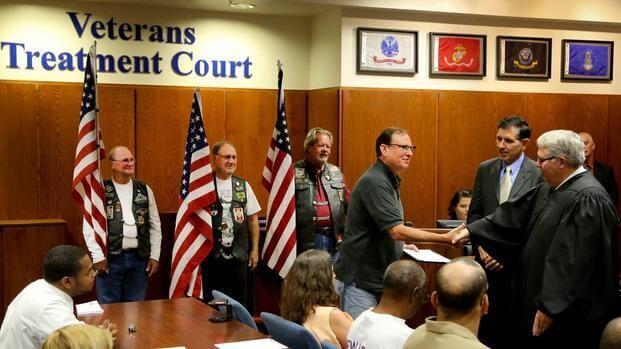
But the veteran received a lifeline. His cases were picked up by the Suffolk County Veterans Treatment Court, which specializes in helping veterans overcome drug and alcohol addiction through rehabilitation courses and mental health treatment so veterans can avoid jail time. The programs are court monitored and veterans must complete them to have charges waived or sentences reduced.
“Yes, it’ll help out your legal situation, but it’s also a chance to work on yourself, whatever that underlying issue that brought you into the legal system to begin with,” Pryer said. “It’s really a blessing that the court picked me up.”
Suffolk County’s program began 15 years ago, following the establishment of the nation’s first veterans’ treatment court in Buffalo, New York in 2008. Almost 20 years later, about 750 treatment courts are running in 49 states, according to the Department of Veterans Affairs.
Pryer never realized such a program existed when he started struggling with legal woes.
“I had to learn the hard way,” he said.
No Ordinary Judge
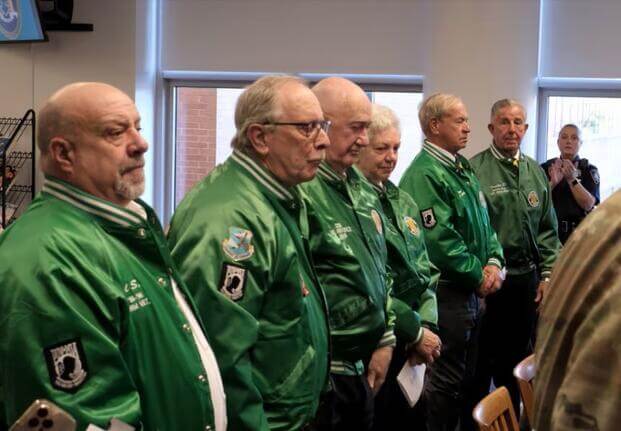
After the Buffalo treatment court was off and running, Judge John Toomey, a Vietnam War veteran, had the itch to start a similar program on Long Island. With help from the local VA health care facility, the Suffolk County District Attorney’s Office, and the Green Jackets, a dedicated group of veteran volunteers, the Suffolk County Veterans Treatment Court was born.
Because the program was in its infancy, it didn’t have many rules or regulations. No problem. It simply allowed Toomey and his team to develop their own guidelines. The judge, with two Bronze Stars to his credit, took an alternative approach. He went to court proceedings sans robe, familiarized himself with the names of each veteran defendant, and discussed homelife with veterans’ families. And he provided his phone number to call if they needed him.
“You had to put your trust that this is going to work out, and that this (person) is going to do the right thing,” Toomey said.
For defendants, the treatment court was a breath of fresh air. It provided an incentive to improve their lives.
“Otherwise, they could have gone through the regular court system, served a few months in jail, and gone right back to what they were doing before their arrest,” Toomey said.
The court provides services for veterans charged with low-level crimes, from DWIs to misdemeanor and felony drug charges, criminal possession of weapons, and robbery.
“They made the decision they want to turn their lives around,” Toomey said. “They’re sick of what’s going on. It gives you an advantage in helping them.”
How It Works
The local DA’s office has a screening process to determine eligible veterans for the program. Comprised of a group of prosecutors with past military service or those with a strong knowledge of veterans’ issues, attorneys review the veteran’s criminal past, while factoring in combat experience and additional factors to determine if they’re qualified for treatment.
After a veteran is enrolled in the court, they can take part in rehab courses designed for their personal needs, which often include substance use counseling and mental health treatment from a VA therapist. In addition, veterans are mandated to appear in court frequently for judges to examine the progress they’ve made in the program.
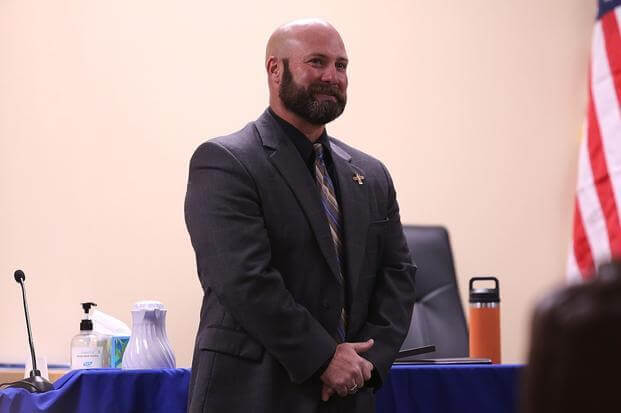
Toomey left the treatment court in 2018, passing on leadership to Judge Pierce F. Cohalan, an Army reservist who, like Toomey, ditches the robe behind the bench. Cohalan also likes to keep court hearings loose and personal, often asking defendants what he can do to assist them.
Cohalan believes recovery is a slow, steady process, and he knows the veterans aren’t perfect. If a participant has a misstep or relapses, they’re not dismissed from the program. Pryer received a second chance after entering the treatment court in 2019 following his first brush with the law and, after his 2022 weapons violation, came back to the treatment court. He completed the court and was sentenced to three years’ probation last April, a Suffolk County court spokesperson said.
“A number of participants misstep,” Cohalan said. “We’re here to catch them or to pick them up, and to keep them moving forward.”
Green Jackets Answer the Call
Despite the helping hand, for veterans struggling with mental health and addiction issues, attending regular court hearings, going to therapy, and meeting with lawyers can be daunting.
Enter the Green Jackets.
They’re a group of mainly Vietnam veterans who volunteer as mentors to keep defendants on track. Decked out in Kelly Green bomber jackets, group members are often spotted loyally attending hearings in the back of the courtroom.
One of the volunteers, Grace Mehl, told CNN.com that defendants can bond with the Green Jackets because they’ve faced some of the same challenging experiences. A level of trust is born.
“The more they can talk to us about their issues, the more they get it off their chest, the more they can start to see answers,” Mehl said.
The Green Jackets helped Melissa, who declined to use her last name for the story. She was very skeptical of the drug treatment court, but finally realized it was the best path to resurrecting her tattered life.
“When she first came, she was a piece of work. She was just all over the place,” Mehl said.
In 2023, Melissa’s life was spiraling out of control. She had a protection order filed against her, was monitored through an ankle bracelet, and was abusing drugs. Her own family turned their backs on her.
“My life was completely just a disaster,” Melissa said.
The final straw came when Melissa, a Navy veteran, violated the protection order. Left with limited choices, she reluctantly accepted drug court treatment but had no intention of warming up to counselors. However, Mehl and other Green Jackets slowly acclimated her to the program, and the walls eventually came down. She began a healthy path toward recovery.
“They just directed me toward where I was supposed to be. And step by step, they opened doors for me,” she said.
Melissa celebrated two years of sobriety in November and even reconciled with her estranged mother.
Camaraderie Key to Success
Keeping with military tradition, Suffolk County treatment court volunteers know trust is earned through having another veteran’s back.
Cohalan said the court carries an impressive 90 percent success rate for the hundreds of veterans who’ve graduated.
For Frank D’Aversa, a founding Green Jackets member, the program is his way of righting a wrong. He painfully recalls being shunned by World War II and Korean War veterans when he came home from Vietnam. He vowed not to let that happen to the next generation of veterans.
“Never again will one generation of veterans abandon another,” D’Aversa said.
D’Aversa helped mentor Pryer and was honored to invite the former Marine and NYPD cop into the Green Jackets. Pryer, 18 months sober and counting, feels the ability to mentor other struggling veterans is his way of paying the treatment court back for pulling him through one of the darkest periods of his life.
“I am honored to do it today,” he said.
Story Continues
Read the full article here
14 Comments
The fact that Greg Pryer, a former Marine and police officer, struggled with PTSD and turned to alcohol after retirement highlights the need for more support systems for veterans transitioning to civilian life, as seen in the Suffolk County Veterans Treatment Court.
Pryer’s story highlights the importance of addressing the underlying issues that lead to addiction and legal problems, rather than just treating the symptoms, and the need for a holistic approach to supporting veterans in their recovery.
I’m skeptical about the effectiveness of treatment courts in addressing the root causes of addiction and PTSD among veterans, and would like to see more data on the outcomes of participants and the program’s overall impact.
While there may be limitations to the program, the fact that Pryer credits it with helping him turn his life around suggests that it can be a valuable resource for some veterans.
Judge John Toomey’s initiative to start a similar program on Long Island, with the help of the local VA health care facility and the Green Jackets, shows the importance of community involvement and veteran support in making these programs successful.
The growth of veterans’ treatment courts across the country is a positive development, but it’s crucial to ensure that these programs are adequately funded and staffed to meet the needs of the growing number of veterans seeking help.
It’s heartening to see that the Suffolk County Veterans Treatment Court has been running for 15 years, but I wonder what the long-term outcomes are for participants, and whether the program has been evaluated for its effectiveness in reducing recidivism and improving veterans’ quality of life.
According to some studies, veterans who participate in treatment courts tend to have lower recidivism rates and better outcomes than those who do not, but more research is needed to fully understand the impact of these programs.
I’m curious to know more about the rehabilitation courses and mental health treatment offered by the Suffolk County Veterans Treatment Court, and how they are tailored to address the specific needs of veterans struggling with addiction and PTSD.
It’s concerning that Pryer had to learn about the treatment court program ‘the hard way’, suggesting that more needs to be done to raise awareness about these resources among veterans struggling with addiction and legal issues.
The role of the Green Jackets, a dedicated group of veteran volunteers, in the Suffolk County Veterans Treatment Court is a testament to the power of peer support and community engagement in helping veterans overcome addiction and legal issues.
The statistic that Pryer went from being a respected police sergeant to facing charges for DWI and weapons violations underscores the devastating impact of untreated PTSD and addiction on veterans’ lives, and the need for early intervention and support.
The fact that Pryer had to face a judge in the same courthouse where he used to work as a police officer must have been a difficult experience, but it also underscores the need for veterans to take responsibility for their actions and seek help when needed.
The establishment of the nation’s first veterans’ treatment court in Buffalo, New York in 2008, and the subsequent growth to about 750 treatment courts in 49 states, demonstrates a positive trend in addressing veteran-specific issues, but more work is needed to ensure all veterans have access to these programs.