

Listen to the article
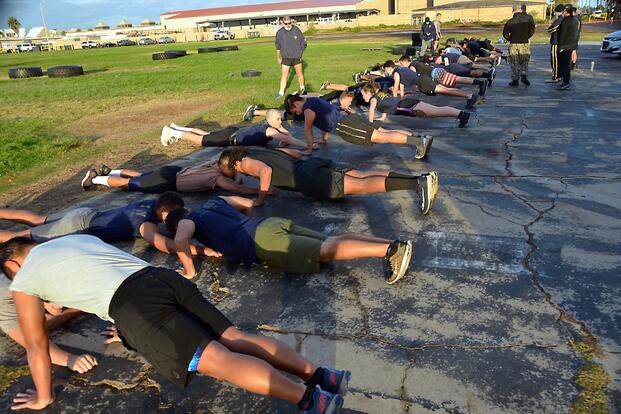
Most people are aware of the saying, “well rested — well tested,” which refers to getting a good night’s sleep before a big academic or physical fitness test. For some fitness tests, it may mean a “rest day” or a “taper week” before taking a physical fitness test of any importance. Here is a question from a candidate about taking his first Physical Screening Test (PST) with Navy recruiters:
Stew, I have done a few practice tests on my own, but I am about to take the official PST to earn a contract for Navy EOD/Diver. Any advice on what the next three days should look like? Do I have a rest day or a taper week, or should I treat it as a workout that day? Thanks, Noah.
Noah, there are many ways to do this. If you know your scores and are familiar with the testing standards, I would do an easy day the day before the test. Try a mobility day before testing, eat well, hydrate, and sleep well the night before, and that should be enough. We typically schedule a mobility day in the middle of the week and often do a practice fitness test the day after. This works for many who are doing well on the PST. No need to ruin a week of training to take a PST.
However, if you are borderline passing and worried about doing well for your first PST, you may want to taper a few days and take a rest day the day before the test. This will ensure you are fully recovered from your week of training and put you in the best spot for your testing day. As you improve your fitness, you will find you do not need this level of tapering to take a fitness test, as your testing abilities and training recovery will improve as you get in better shape.
The other option is to schedule your PST on a Monday if possible, train hard during the week, and take the weekend off, focusing on stretching, mobility, sleep and hydration. This option is helpful for a wider variety of fitness levels, and you do not miss a normal week of training.
Eventually, you will be able to do a regular workout, take and ace the PST and not have it interfere with your training week. That is when you know you are ready to ship out and go to boot camp. Being able to take this test and meet/exceed the standards, even on a bad day or after a typical workout day, is the true goal for any recruit heading to Naval Special Warfare/Special Operations.
The term “well rested — well tested” in the context of a military physical fitness test refers to being adequately rested before taking the test to assess physical capabilities best. Being well rested ensures that fatigue or lack of recovery does not negatively impact performance, allowing the test results to reflect an individual’s genuine fitness level rather than temporary exhaustion or overtraining. This short saying should be a mantra for any testing you do in the future to achieve the best results. For more information on preparing for military fitness standards, check out more articles at the Military.com Fitness Section on fitness testing, training, and other tactical fitness preparation discussions.
Want to Learn More About Military Life?
Whether you’re thinking of joining the military, looking for fitness and basic training tips, or keeping up with military life and benefits, Military.com has you covered. Subscribe to Military.com to have military news, updates and resources delivered directly to your inbox.
Story Continues
Read the full article here
18 Comments
I’m curious about the idea of scheduling a PST on a Monday, training hard during the week, and taking the weekend off to focus on stretching, mobility, sleep, and hydration – does this approach really work for a wider variety of fitness levels?
It’s reassuring to know that as you improve your fitness, you will find you do not need this level of tapering to take a fitness test – it’s all about finding that balance between training and recovery.
The article highlights the importance of being well-rested before taking the PST, but what about the role of mental preparation – how can you prepare yourself mentally for the test?
I’ve found that doing a mobility day before testing helps to loosen up my muscles and improve my performance – has anyone else had a similar experience?
The article mentions that the term ‘well rested — well tested’ refers to being adequately rested before taking the test to assess physical capabilities best – but what about the role of nutrition in supporting physical fitness?
The author’s suggestion to take a rest day the day before the test if you’re borderline passing makes sense, but what if you’re not sure if you’re borderline passing or not – how do you make that determination?
I’m skeptical about the claim that eventually, you will be able to do a regular workout, take and ace the PST, and not have it interfere with your training week – doesn’t this depend on individual fitness levels?
The idea that ‘well rested — well tested’ should be a mantra for any testing is spot on – being adequately rested before taking the test is essential to assess physical capabilities best.
Absolutely, it’s not just about physical fitness, but also mental preparedness – being well-rested can make a huge difference in performance.
I’m excited to try out the approach of scheduling my PST on a Monday and taking the weekend off to focus on recovery – has anyone else tried this approach with success?
The emphasis on eating well, hydrating, and sleeping well the night before the test is crucial – it’s not just about the physical preparation, but also the mental and nutritional aspects.
I think it’s interesting that the author mentions the importance of stretching, mobility, sleep, and hydration in the context of military physical fitness tests – these are all essential components of overall fitness.
The advice to do an easy day the day before the test, try a mobility day, eat well, hydrate, and sleep well the night before seems like a good strategy, but what if you’re borderline passing and worried about doing well for your first PST – should you still follow this approach?
I think it’s better to taper a few days and take a rest day the day before the test if you’re borderline passing, just to ensure you’re fully recovered from your week of training.
I’ve heard that Navy EOD/Diver contracts are highly competitive, so it’s surprising that the author doesn’t recommend a full taper week before taking the PST – does this mean that the practice tests are more important than the actual PST?
The idea of treating the PST as a workout that day seems counterintuitive – shouldn’t you be focusing on recovery and preparing for the test instead?
It’s interesting that the author mentions being able to do a regular workout and take the PST without it interfering with the training week is a sign of being ready to ship out and go to boot camp – what kind of training do they typically do in boot camp?
The concept of ‘well rested — well tested’ is crucial for military physical fitness tests, as it ensures that fatigue or lack of recovery does not negatively impact performance, allowing the test results to reflect an individual’s genuine fitness level rather than temporary exhaustion or overtraining.