
Listen to the article
After spending more than a decade in the Army, both in active duty and the National Guard, Oregon native Nick Rinn chose a unique career path most people wouldn’t even consider.
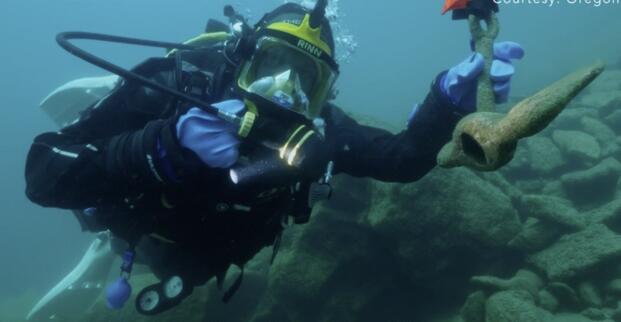
He became an underwater rescue diver recovering bodies.
Rinn, who grew up in North Bend, Oregon, served two years in the Army on active duty, then another nine years in the Army National Guard in Bend. In 2002, he provided security for the Winter Olympics in Salt Lake City.
From an early age, Rinn’s carried a deep passion for underwater recovery. In 1987, at age 13, Rinn became a certified scuba diver. After his time in the military, Rinn developed the Oregon Rescue Divers, a nonprofit 501(c)3 organization deployed to various underwater recovery missions.
The Army veteran has traveled across the country, assisting with several search and recovery teams to find missing people and vehicles. Rinn, along with a team of four volunteer divers, specialize in underwater criminal investigation, along with search, rescue and recovery work.
While the job can be extremely rewarding, body recovery in emergency situations can also be emotionally draining for Finn and his crew.
“Are there certain things that we do that a lot of people probably wouldn’t want to do? And they shouldn’t have to,” Rinn told Central Oregon Daily. “Body recovery is a unique form of using your scuba diving skills and it’s definitely not for everybody.
“What keeps me able to continue to focus on that is that I tell myself, you know, I have to see that, so others don’t have to.”
Olympic Security Chance of a Lifetime
Rinn has always loved Central Oregon and decided to plant roots there after leaving the Army. Following graduation from Mountain View High School in 1992, he chose the Army with aspirations to be a construction equipment operator.
Rinn completed basic training at Fort Leonard Wood, Missouri, followed by advanced schooling with the Army Corps of Engineers. For two years, he was stationed in Fort Stewart, Georgia.
“It was a good experience,” Rinn said. “You got paid to train and work and kind of get dirty and blow stuff up, you know? It was kind of a fun time.”
In 1996, he left active duty and returned to Bend. But Rinn wasn’t finished with military service. He walked into the Bend Armory and joined the 1249th Engineer Battalion. He spent nine years in the National Guard serving in the same unit.
“During that time, I had the honor to volunteer to go do security at the 2002 Winter Olympics in Salt Lake City, Utah,” Rinn said. “That was pretty close to right after 9/11 and so the world was on alert, especially our country. High security.”
Rinn’s unit conducted perimeter security around Seven Peaks Arena, which hosted women’s hockey events, for about two weeks before the Olympics. After the Games began, the unit switched to gate entrance duty, working the magnetometers, checking people as they entered the arena.
“All the spectators and everybody that comes into the event, we were basically there to run them through just like airport security, make sure nobody got in with any weapons or anything that could harm anybody inside there,” Rinn said.

Working at the Olympics was a rare opportunity he couldn’t pass up.
“You think about it, how often do they have Olympic Games here in the United States, let alone that close to your hometown?” he said.
Rinn ended his military career in 2004 after sustaining a back injury on duty.
Diving to Recover Bodies
Most people assume, based on what Rinn does now, that he was an ace scuba diver in the Army. That was not the case. While he became certified as a young teenager, he really didn’t pursue it as a career until years later.
“I didn’t know anybody that was a scuba diver, so I didn’t really get to do it until, one year as an electrician, I had an apprentice that was assigned to me and he had recently gotten certified, had all his own gear,” Rinn said. “He took me out to Cultus Lake (in Central Oregon) and then I started getting into it a little bit more.”
But Rinn felt that to fully commit to scuba diving and rescue missions, he needed more education and training. He took Advanced Open Water and Rescue Diver courses, becoming a scuba instructor, which opened the door to underwater criminal investigation.
“That took lots of different training and lots of experiences of traveling around the United States,” he said.
After a while, Rinn decided to stick closer to home, founding Oregon Rescue Divers in Bend. The divers help law enforcement agencies, fire and rescue squads and local municipalities in “anything aquatic emergency related.”
What’s the most difficult part of finding and recovering bodies from the water? Having to face families who lost loved ones.
“That’s tougher than anything you’re going to find out there, because you got to remember, even though you don’t know this person, it’s somebody’s person,” Rinn said. “And then you finally do find the person, and they say thank you for sticking it out while nobody else was here to do that. I think that’s what hits home, and that’s what makes me feel really good about what we do as a team and being there for the families from the start to the finish is, is huge for them.”
Read the full article here
23 Comments
The article mentions that Rinn became a certified scuba diver at 13, but I’m curious about how he got interested in scuba diving in the first place – was there a particular experience or person that sparked his passion?
I’m curious about the process of becoming a certified scuba diver at the age of 13, as Rinn did in 1987 – what kind of training and dedication does it require at such a young age?
Nick Rinn’s experience in the Army, including his time in the National Guard, seems to have prepared him well for his role as an underwater rescue diver, particularly in high-pressure situations like the 2002 Winter Olympics in Salt Lake City.
The fact that Rinn’s unit was responsible for gate entrance duty and working the magnetometers during the Olympics suggests that they played a critical role in ensuring the safety and security of attendees.
I’m skeptical about the effectiveness of a nonprofit organization like Oregon Rescue Divers in terms of funding and resources – how do they manage to deploy to various underwater recovery missions across the country?
According to the article, Oregon Rescue Divers is a 501(c)3 organization, which means they are eligible for tax-deductible donations and may have access to grants and other funding opportunities.
It’s interesting that Rinn chose to plant roots in Central Oregon after leaving the Army – what is it about this region that drew him to stay and establish his organization there?
Rinn’s experience providing security for the Winter Olympics in 2002, particularly in the context of heightened security post-9/11, must have been intense – I’d like to hear more about what that was like.
I’m concerned about the potential risks and hazards associated with underwater rescue and recovery work – what kind of safety protocols and precautions does Rinn and his team take to minimize their risks?
I’m curious about the types of support systems and resources that are available to Rinn and his team – do they have access to counseling or other forms of support to cope with the emotional demands of their work?
It’s impressive that Rinn has been able to balance his work as an underwater rescue diver with his commitment to his community – how does he see his work with Oregon Rescue Divers contributing to the larger good?
Rinn’s experience in the Army Corps of Engineers must have given him a strong foundation in skills like construction and equipment operation – how has he adapted those skills to his work as an underwater rescue diver?
Rinn’s statement that ‘I have to see that, so others don’t have to’ is a powerful motivator for his work in body recovery – it’s clear that his experiences in the Army have given him a unique perspective on the importance of this work.
I’m impressed by Rinn’s dedication to his work, but I worry about the potential long-term effects of repeated exposure to traumatic situations – does he have any support systems in place to cope with the emotional demands of his job?
Rinn’s experience in the National Guard, including his time in the 1249th Engineer Battalion, must have given him valuable experience and training – how has he applied those skills to his work with Oregon Rescue Divers?
The fact that Rinn and his team of four volunteer divers specialize in underwater criminal investigation, search, rescue, and recovery work is impressive, but I wonder how they handle the emotional toll of body recovery in emergency situations.
Rinn’s story is a powerful reminder of the importance of perseverance and dedication – it’s clear that he has faced challenges and overcome obstacles to pursue his passion for underwater rescue and recovery.
I’d like to know more about the types of underwater recovery missions that Rinn and his team have been deployed to – are they typically responding to natural disasters, accidents, or other types of incidents?
Rinn’s story highlights the diverse range of careers and experiences that are possible for veterans after they leave the military – it’s inspiring to see him using his skills to make a difference in his community.
It’s clear that Rinn’s work with Oregon Rescue Divers is driven by a sense of purpose and duty – I admire his commitment to using his skills to help others, even in difficult and challenging situations.
The fact that Rinn’s unit conducted perimeter security around Seven Peaks Arena during the Olympics is a testament to the importance of their role in ensuring public safety during large events.
Rinn’s story is an inspiration to anyone who has ever considered a career in a field like underwater rescue and recovery – it’s clear that he is passionate about his work and dedicated to making a difference.
I’d like to hear more about the process of searching for and recovering missing people and vehicles – what kind of techniques and technologies do Rinn and his team use to locate and retrieve them?