

Listen to the article
Army troops from the 29th Chemical Decontamination Company backed several trucks onto LST-353 at 3:08 p.m. on May 21, 1944. The soldiers were moving 4.2-inch mortar ammunition from a smaller craft onto the ship’s elevator. None had received training in handling explosives.
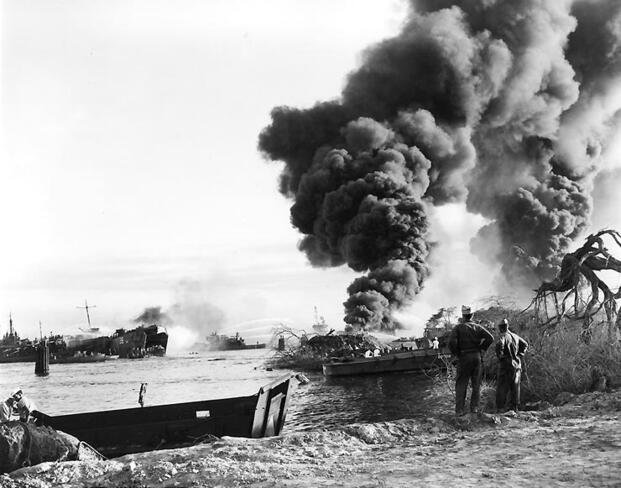
The sudden blast killed everyone near the bow. No witnesses survived to explain what triggered the detonation. A fireball erupted from the ship’s forward section. Burning debris showered across West Loch at Pearl Harbor. Within three minutes, gasoline drums ignited on neighboring vessels. The chain reaction was catastrophic.
Official casualty figures list 163 dead and 396 wounded. There is ongoing debate about those numbers. Some estimate over 1,000 were killed. The Navy’s move to keep the incident secret ensured it remained relatively unknown to the public, even to this day.
The Pacific War
The impending Operation Forager demanded a rushed loading schedule. American planners needed the Mariana Islands by mid-1944. Saipan sat 1,500 miles from Tokyo. Capturing it would place the new B-29 Superfortress bomber within striking range of Japanese cities. The entire strategic bombing campaign against Japan hinged on securing these islands.
More than 300 ships and 300,000 personnel prepared for the invasion, with many stopping at Pearl Harbor before moving across the Pacific. The assault on Saipan was scheduled for June 15. Every LST carried critical supplies for the 2nd and 4th Marine Divisions.
West Loch’s staging area crammed 34 LSTs into a confined space. Twenty-nine ships moored beam-to-beam at six berths. The vessels nested in groups of six or seven, their bows tied together in star formations. Each LST carried roughly 90 drums of high-octane gasoline. Ammunition of various types filled the decks. The ships also held 200,000 gallons of fuel in their tanks.
The 29th Chemical Decontamination Company’s primary mission involved decontaminating personnel and equipment after chemical attacks. The segregated unit mostly handled manual labor assignments. That Sunday afternoon, approximately 100 enlisted men and one officer from the company worked aboard LST-353 unloading mortar rounds.
Tech 5 James Caldwell stooped to pick up an ammunition box when he noticed a bright yellow flame. A deafening noise followed. The explosion hurled him away from the elevator. Private James R. Cleveland described being thrown into the air inside the landing craft. Metal fragments flew up with him. When he hit the deck, flames surrounded everything.
“I could see fire all around, just nothing but fire all around me,” Cleveland said later. “I thought I was dead.”
Tech 5 Clarence Henry Morgan witnessed a massive fireball rise from LST-353 from a nearby vessel. The blast killed countless soldiers and sailors instantly. Those who survived the initial explosion jumped into the water. Fire spread across the harbor’s surface as burning oil spread the flames across the water.
The Explosions
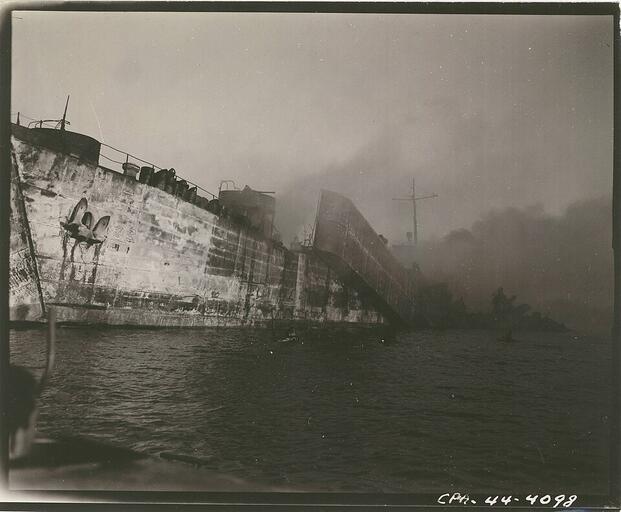
The second explosion struck three minutes later at 3:11 p.m. Gasoline drums on multiple ships detonated simultaneously. Flames engulfed men and machinery across the staging area. Burning fragments rained down throughout West Loch. Harbor surface fires spread as more fuel leaked from the damaged vessels.
Eleven wooden buildings on shore exploded. Vehicles flipped over. Twenty buildings sustained damage. Within minutes, 200 men had been blown into the water. Some LSTs further from the initial blast managed to organize damage control parties. Others closer to Tare 8 began sinking immediately.
Crews fought to cast off mooring lines. Heat prevented many from reaching the forward cables. Some inexperienced crews abandoned ship immediately. Others stayed aboard trying to save their vessels. One burning LST rammed into a pier, setting another ship ablaze.
The third and largest explosion sent burning debris over a 1,000-yard radius. Windows shook 15 miles away. A mushroom cloud rose above the harbor. The blast created showers of burning metal and shrapnel. Service members running on shore died when shrapnel struck them.
LST-39 drifted toward other berthing areas. Tugs rushed in despite continuous explosions. Fire boats arrived from Honolulu Harbor, 14 miles away. Small landing craft pulled survivors from the smoke-filled waters while flames continued spreading.
The cargo ship Joseph B. Francis sat at the ammunition depot unloading 350 tons of explosives. A phosphorous shell landed on her deck and detonated. The crew extinguished the fire. The shell reignited minutes later. They fought it again. Burning LSTs drifted toward the depot. The wrecks stopped 500 feet away.
A final explosion occurred at 10:30 p.m. Several ships continued burning through the night. LST-39 caught fire again at 7:39 p.m. LST-480 reignited at 1:30 a.m. By 8:00 a.m. on May 22, all fires were either contained or extinguished. Some ships burned for days afterward.
The Losses at West Loch
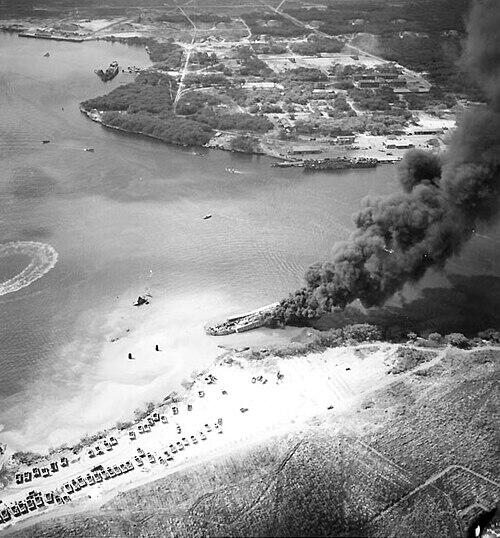
The Navy’s official count of 163 killed and 396 wounded has been debated ever since. Lieutenant Phil Kierl from LST-480 wrote that reports circulated at the time placing total casualties above 2,000. Pharmacist’s Mate 2nd Class William C. Johnson of LST-69 managed to send an uncensored letter home days after the disaster. He estimated over 1,000 men lost.
Nearly one-third of the 163 documented and confirmed casualties came from the 29th Chemical Decontamination Company. The segregated unit lost approximately 58 men. The exact number remains uncertain. The Naval Board of Inquiry’s report did not include a complete roster of Army casualties. Marine Corps losses may have ranged between 80 and 300 dead. Scattered records and the rapid departure for Saipan made precise accounting impossible.
Six LSTs sank completely. LST-353, LST-39, LST-43, LST-69, LST-179, and LST-480 all went down. Four additional LSTs suffered damage too severe to make the invasion. Three smaller landing craft were destroyed along with 17 amphibious tractors and eight 155mm howitzers.
Eleven harbor tugs sustained damage during firefighting operations. The tugs Osceola, Hoga, and Geronimo, the net tender Tamaha, the chartered tug Mikioi, and smaller yard tugs all suffered casualties or equipment damage while battling the flames.
Despite the losses, reserve LSTs appeared within days. The invasion fleet departed Pearl Harbor only one day behind schedule. The ships reached Saipan in time for the June 15 assault. The campaign proceeded as planned.

The Investigation
A Naval Board of Inquiry under Rear Admiral John F. Shafroth Jr. convened the following morning. Investigators dismissed early theories of a Japanese submarine attack. West Loch’s shallow depth and anti-submarine nets made such an assault impractical.
The executive officer of LST-353 testified that Army stevedores were unloading mortar ammunition immediately before the explosion. The inquiry learned that M2 mortars fired inaccurately from landing craft, prompting the transfer of ammunition back to LSTs. The unit assigned to move the mortar rounds had received no training for the task.
Eighty drums of gasoline sat 15 feet from the elevator being used to unload ammunition. The board concluded a mortar round likely exploded aboard LST-353, sparking the chain reaction. Two explanations seemed plausible. Someone may have dropped a shell during the transfer. Alternatively, gasoline vapors could have ignited from cigarettes or welding work, detonating nearby ammunition.
The inquiry could not determine the actual cause. Everyone nearest the initial blast had died. The board’s report stated the disaster resulted from poor organization, inadequate training, and dangerous storage practices. One passage noted a deplorable lack of elementary safety precautions regarding open lights on several LSTs.
Admiral Chester W. Nimitz ordered a complete press blackout. Four days after the explosion, authorities released a single paragraph. The statement acknowledged “some loss of life” and damage to “several small vessels.” Survivors received orders not to mention the incident in letters. The Navy classified all details as Top Secret.
The classification remained until 1960. Even after declassification, the disaster remained largely forgotten.

Heroism During the Salvage
Navy dive teams worked through 1944 clearing sunken LST hulls from West Loch. On February 17, 1945, two divers tunneled beneath a wreck using jet nozzles. They washed away mud and sediment from under the vessel. The steel wreckage collapsed. The cave-in trapped both men under 40 feet of water and 20 feet of mud.
Tangled lifelines and air hoses left them buried. Other divers attempted to rescue them but stirred up more sediment. The situation seemed hopeless. Even a specialized dive team refused to attempt to save them.
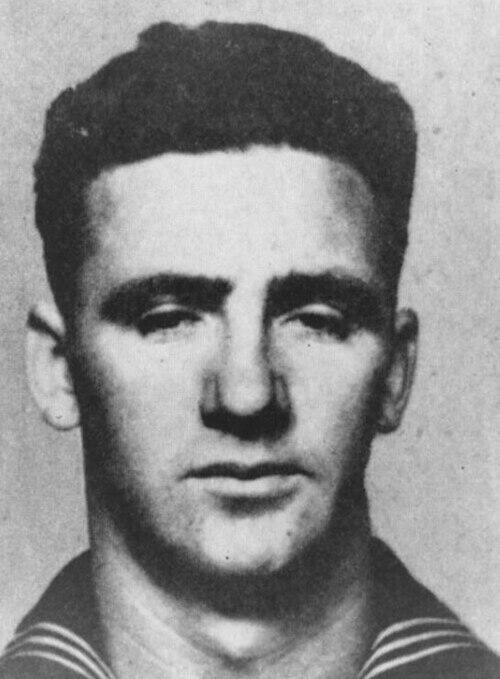
Boatswain’s Mate 2nd Class Owen Francis Patrick Hammerberg volunteered. The 24-year-old from Michigan descended into pitch-black underwater conditions. He worked for hours creating a tunnel through the sediment. Hammerberg reached the first trapped diver and freed his lines. The man safely reached the surface.
Exhausted but determined, Hammerberg pushed deeper under the buried hull. He reached a position above the second diver when another cave-in occurred. Heavy steel plating pinned him crosswise over his shipmate. His body shielded the man beneath from further injury while bearing the full weight. The man was able to escape unharmed thanks to Hammerberg.
Hammerberg died 18 hours after entering the water. His actions contributed to saving both trapped divers. The Navy posthumously awarded him the Medal of Honor. He became the only World War II service member to receive the medal for a noncombat action.
Twin Disasters Drive Reform
Two months after West Loch, an even deadlier explosion struck Port Chicago Naval Magazine in California. On July 17, 1944, munitions being loaded onto cargo ships detonated. The blast killed 320 sailors and wounded 390. Most casualties were Black enlisted men assigned to loading operations.
Port Chicago survivors refused to resume loading under the same unsafe conditions. The Navy charged 258 men for refusing orders. Fifty faced mutiny trials. The proceedings drew national attention to discriminatory practices and inadequate safety standards.
The combined disasters forced comprehensive reforms across the military. The Navy mandated full training for all personnel handling explosives. Facilities for loading gasoline and ammunition required complete separation. Mooring berths received redesign to prevent fire spread. Ships could no longer nest together during operations involving the movement of munitions.
Smoking bans near munitions became strictly enforced. Equipment underwent redesign for safer handling. Operational manuals incorporated new procedures. The regulations became standard across all military branches.
The disasters also accelerated military desegregation. Disproportionate casualties among Black service members highlighted discriminatory assignment practices. African American units routinely drew hazardous duties without training equivalent to white personnel.

The Forgotten Losses
While the true losses at West Loch are still unknown, the military claims 163 died in the blast, with almost 400 injured. Because of inaccurate record keeping and the chaotic conditions at the base that day, the true number was likely much higher.
Bodies too badly burned for identification went to the National Memorial Cemetery of the Pacific at Punchbowl. Original headstones simply read “Unknown.” Congress mandated changes to this in the 2000s. The markers now read “Unknown, West Loch Disaster, May 21, 1944.”
The Defense POW/MIA Accounting Agency began exhuming remains in October 2024. Forty-eight unknown service members currently await identification. Modern forensic techniques may return names to the fallen after 80 years.

Only LST-480’s rusting bow remains visible in West Loch. The hull sits where it beached during the disaster. Annual memorial ceremonies mark the anniversary. Navy personnel and veterans lay wreaths at the site.
The reforms implemented after West Loch and Port Chicago continue influencing military operations today. Training standards, safety protocols, and equipment design all changed because of the lessons learned in 1944. Those changes helped prevent similar catastrophes in the decades since.
Read the full article here
24 Comments
I’m curious about the impact of the incident on the families of the soldiers and sailors who were killed or injured, and how they were affected by the secrecy surrounding the event, particularly given the lack of information and support they may have received.
The incident highlights the importance of proper training and safety protocols in military operations, and it’s a reminder that the consequences of negligence or incompetence can be devastating, particularly in high-stakes environments like war zones.
The fact that the incident led to changes in Navy safety measures is a positive outcome, but it’s unfortunate that it took such a tragic event to prompt these changes, and it’s essential to learn from history to prevent similar incidents in the future.
I’m interested in learning more about the role of the 29th Chemical Decontamination Company in the war effort, beyond their involvement in this incident, and how their experiences reflect the broader context of World War II.
The fact that the 29th Chemical Decontamination Company was a segregated unit and mostly handled manual labor assignments raises questions about the role of racial segregation in the military during World War II and its impact on the incident.
It’s essential to remember the sacrifices made by the soldiers and sailors who were killed or injured in the incident, and to honor their memory by learning from the past and working to prevent similar tragedies in the future, particularly in high-risk environments like military operations.
I’m concerned that the secrecy surrounding the incident may have prevented lessons from being learned and applied to future military operations, and it’s crucial to prioritize transparency and accountability in military operations to prevent similar incidents.
The description of the scene at West Loch, with ships nested in groups of six or seven and ammunition and fuel everywhere, is a vivid reminder of the chaos and destruction caused by the incident, and it’s essential to acknowledge the complexity and challenges of military operations.
The description of the chain reaction of explosions and fires on neighboring vessels is terrifying, with burning debris showering across West Loch and gasoline drums igniting within three minutes.
It’s disturbing to think that the incident could have been prevented with proper training and safety protocols, and it’s a reminder of the importance of prioritizing safety in military operations, especially in high-risk environments like West Loch.
I’m interested in learning more about the changes that were made to Navy safety measures as a result of the incident, and how they have impacted military operations since then, particularly in terms of training, protocols, and accountability.
The image of West Loch, with 34 LSTs crammed into a confined space, each carrying roughly 90 drums of high-octane gasoline and various types of ammunition, is a recipe for disaster, especially with the ships nested in groups of six or seven.
The testimony of Private James R. Cleveland, who was thrown into the air and surrounded by flames, is haunting, and it’s a miracle he survived the initial explosion and subsequent fires.
The fact that the incident occurred just a few weeks before the scheduled assault on Saipan highlights the pressure and urgency of the military operations during this time, and it’s a testament to the bravery and resilience of the soldiers and sailors involved.
I’m curious about the debate surrounding the official casualty figures, with some estimates suggesting over 1,000 were killed, and how this discrepancy has impacted the historical record of the event.
The strategic importance of capturing Saipan, which would place the new B-29 Superfortress bomber within striking range of Japanese cities, cannot be overstated, and it’s clear that the stakes were high for the operation, with over 300 ships and 300,000 personnel involved.
The fact that the incident was relatively unknown to the public until recently is a testament to the Navy’s ability to keep secrets, but it’s also a reminder that the truth will eventually come to light, and it’s essential to acknowledge and learn from the past.
I’m curious about the long-term impact of the incident on the survivors, like Tech 5 James Caldwell and Private James R. Cleveland, and how it affected their lives after the war, considering the trauma they experienced.
It’s astounding that the Navy was able to keep the incident secret for so long, and it’s only recently that the full extent of the disaster has come to light, including the strategic importance of capturing the Mariana Islands like Saipan.
The fact that none of the soldiers from the 29th Chemical Decontamination Company had received training in handling explosives is shocking, and it’s no wonder the incident resulted in such a high casualty rate of at least 163 dead and 396 wounded.
It’s even more disturbing considering the rushed loading schedule for Operation Forager, which likely contributed to the lack of proper training and safety protocols.
It’s essential to acknowledge the bravery and resilience of the soldiers and sailors who survived the incident, and to recognize the sacrifices made by those who were killed or injured, particularly in the context of the broader war effort and its strategic importance.
The description of the fireball rising from LST-353, as witnessed by Tech 5 Clarence Henry Morgan, is a vivid reminder of the scale of the disaster, and it’s essential to acknowledge the sacrifices made by the soldiers and sailors who were killed or injured.
I’m skeptical about the official account of the incident, and I think it’s possible that the Navy’s secrecy surrounding the event was an attempt to cover up negligence or incompetence, particularly given the rushed loading schedule and lack of training.