

Listen to the article
Casualty increases and new sanctions are reshaping Washington’s response to Iran’s nationwide protests, as the White House signals it is keeping both diplomacy and force in play.
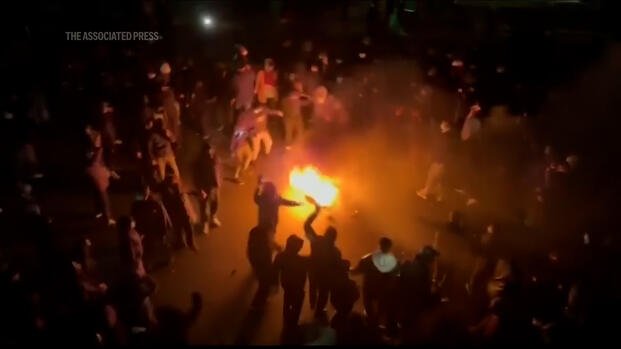
Widespread demonstrations across Iran have entered a third week, with human rights organizations reporting that thousands have been killed or detained. Meanwhile, the Trump administration weighs diplomatic outreach, economic pressure, and potential military responses to the unrest.
Military.com reached out to the White House, Defense Department, State Department and Treasury Department for comment. Only the White House and Treasury responded before publication.
White House Signals Pressure Without Deadlines
The administration continues to frame its strategy as a blend of restraint and warning.
White House spokesperson Karoline Leavitt said Jan. 12 that diplomacy remains President Donald Trump’s preferred route but confirmed that military action remains part of the administration’s planning.
“Air strikes would be one of the many, many options that are on the table for the commander in chief,” Leavitt told the press.
Leavitt added that communications with Iranian officials behind closed doors sharply contrast with Tehran’s public tone.
“He certainly doesn’t want to see people being killed in the streets of Tehran,” she said.
Trump has echoed that mix of encouragement, pressure and ambiguity in his own public remarks. He told Iranian protesters that “help is on its way,” a phrase he later declined to define. He also urged Tehran to “show humanity” as reports of civilian deaths mounted.
Together, the remarks illustrate a strategy built around pressure without deadlines, combining sanctions, diplomacy and the implicit threat of force while Washington waits to see whether Tehran alters its course.
Death Toll, Detentions Climb
Human rights organizations such as Iran Human Rights and the Human Rights Activists News Agency estimate the death toll has surged beyond 2,500 nationwide. Thousands more have been arrested as Iranian authorities continue sweeping internet restrictions that limit independent verification and slow the flow of information from inside the country.
Iran’s government declared a three-day national mourning period this week, portraying fallen security personnel as martyrs while dismissing international criticism of its tactics.
State media have framed the protests as foreign-driven unrest, even as video footage and eyewitness accounts show security forces using lethal force against demonstrators in multiple cities.
Sanctions, Diplomatic Pressures Intensify
The U.S. Treasury Department announced new Iran-related sanctions this week targeting officials and entities tied to the crackdown, expanding financial pressure as Washington coordinates with European partners.
Diplomats said the measures are designed to isolate individuals involved in repression while signaling that further economic steps remain possible.
European Commission President Ursula von der Leyen said Jan. 14 that the rising casualty figures were “horrifying” and that the European Union would “swiftly propose” additional sanctions on those responsible for repression.
At the United Nations, Western representatives condemned Iran’s use of force and urged accountability mechanisms to document alleged abuses. During an emergency Security Council session requested by the United States, the U.S. ambassador said Washington “stands by the brave people of Iran” and warned that “all options remain on the table.”
Russia and China urged restraint and cautioned against outside intervention, underscoring the diplomatic divide that continues to shield Tehran from unified international action.
Military Posture Quietly Shifts
Some personnel at the U.S. military’s Al Udeid Air Base in Qatar were advised earlier this week to relocate as a precautionary posture change, a US official said, due to escalating regional tensions tied to Iran.
Officials stressed the move was not a formal evacuation order but reflected growing concern about potential spillover risks in the Gulf.
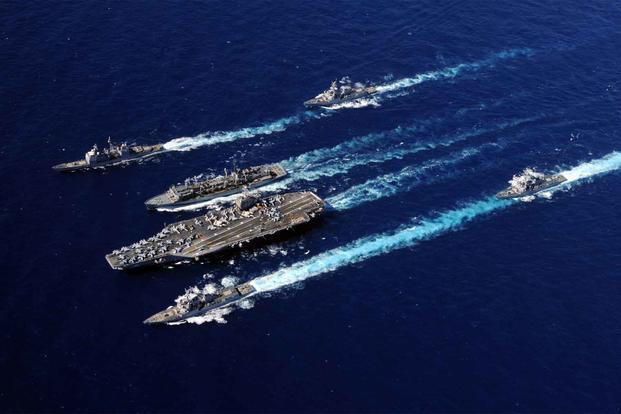
U.S. military planners have repeatedly repositioned ships and aircraft during past Iran-linked crises, including accelerating carrier movements, shifting surveillance assets, and adjusting tanker support to protect forces and reassure allies.
Trump has previously paired sharp warnings to Tehran with assurances that U.S. forces were maintaining a defensive posture designed to deter escalation while preserving freedom of action.
Defense officials have not announced new deployments tied directly to the current unrest, though planners are closely monitoring developments as diplomatic pressure builds.
The National Iranian American Council said members of the diaspora are urging U.S. leaders to prioritize civilian protection and transparency. Human rights organizations said restricted access inside Iran continues to limit independent documentation of deaths, detentions and judicial proceedings.
Groups including Human Rights Watch and United for Iran have called for international monitoring mechanisms to preserve evidence and protect detainees from abuse.
They warn that delayed accountability could allow repression to continue largely out of public view.
Read the full article here
24 Comments
The protests in Iran are not just about domestic issues, but also about the regime’s support for terrorism and its destabilizing activities in the region, and the international community should take a comprehensive approach to addressing these concerns.
I’m worried that the situation in Iran could escalate into a full-blown conflict, and the international community should take urgent action to prevent this from happening and to find a peaceful solution to the crisis.
The fact that the Iranian government has been able to maintain its grip on power despite the widespread protests and international pressure is a testament to the regime’s brutality and ruthlessness, and highlights the need for increased international pressure and support for the opposition.
The Trump administration’s strategy of pressure without deadlines may be seen as a way to avoid confrontation, but it may also be perceived as a lack of commitment to the Iranian people’s cause and a failure to take decisive action to stop the violence.
The Iranian people’s bravery and resilience in the face of overwhelming repression is an inspiration to people around the world, and their struggle for democracy and human rights deserves our full support and solidarity.
The Iranian government’s portrayal of the protests as foreign-driven unrest, despite video footage and eyewitness accounts showing security forces using lethal force against demonstrators, is a clear attempt to deflect responsibility and justify its brutal crackdown.
The human rights organizations’ estimates of the death toll and detentions are likely underestimated, given the restrictions on information and the regime’s attempts to cover up its atrocities, and the international community should be prepared for the worst.
I’m skeptical about the effectiveness of the Trump administration’s strategy of combining sanctions, diplomacy, and the implicit threat of force, as it may only serve to escalate the situation and lead to more violence.
The Iranian government’s actions are a clear violation of human rights and international law, and the international community has a responsibility to act decisively to stop the violence and hold the regime accountable.
The Trump administration’s approach to Iran is a complex and multifaceted one, and it remains to be seen whether it will be effective in achieving its goals and supporting the Iranian people in their struggle for freedom and human rights.
The international community should be prepared for a long-term commitment to supporting the Iranian people, as the struggle for democracy and human rights in Iran is likely to be a protracted and difficult one.
I’m concerned that the Trump administration’s approach may be too focused on military options, rather than exploring diplomatic solutions that could address the root causes of the protests and lead to a peaceful resolution.
The White House spokesperson Karoline Leavitt’s statement that ‘air strikes would be one of the many, many options that are on the table for the commander in chief’ is concerning, as it may be perceived as a threat rather than a genuine attempt at diplomacy.
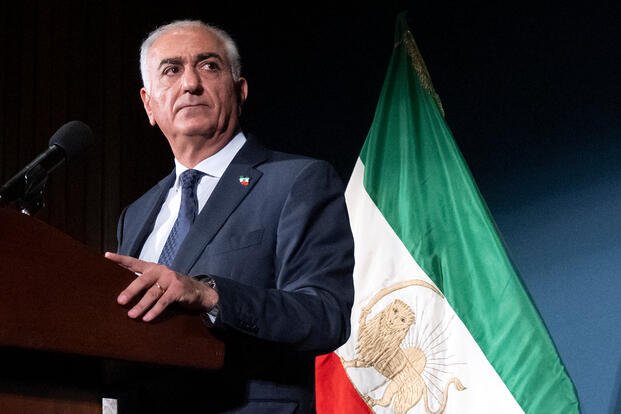
It’s interesting to note that Iranian opposition leader Reza Pahlavi has been speaking out against the government’s actions, and his voice should be amplified by the international community to bring attention to the plight of the Iranian people.
The fact that the death toll has surged beyond 2,500 nationwide, as reported by human rights organizations such as Iran Human Rights and the Human Rights Activists News Agency, is alarming and warrants a stronger response from the international community.
I agree, the international community needs to take a firmer stance against Iran’s actions, especially considering the thousands of people who have been arrested and detained.
The U.S. Treasury Department’s announcement of new Iran-related sanctions targeting officials and entities tied to the crackdown on protesters is a step in the right direction, but more needs to be done to hold the Iranian government accountable for its actions.
The fact that the Iranian government has declared a three-day national mourning period for fallen security personnel, while dismissing international criticism of its tactics, highlights the regime’s blatant disregard for human life and international opinion.
The Iranian opposition’s calls for regime change and democratic reforms should be supported by the international community, as they offer a viable alternative to the current regime and a chance for the Iranian people to build a better future.
The Trump administration’s sanctions on Iranian officials and entities are a step in the right direction, but they should be accompanied by a clear and consistent message of support for the Iranian people and their struggle for freedom and human rights.
The White House spokesperson’s statement that President Trump ‘certainly doesn’t want to see people being killed in the streets of Tehran’ is a welcome expression of concern, but it needs to be backed by concrete actions to support the Iranian people and stop the violence.
The fact that President Trump has urged Tehran to ‘show humanity’ as reports of civilian deaths mounted is a positive step, but it remains to be seen whether his words will be backed by concrete actions to support the Iranian people.
The sweeping internet restrictions imposed by the Iranian authorities, which limit independent verification and slow the flow of information from inside the country, make it difficult to get an accurate picture of the situation on the ground and highlight the need for increased international pressure on the regime.
I’m curious to know more about the ‘help’ that President Trump has promised to the Iranian protesters, and what concrete actions the administration plans to take to support the Iranian people in their struggle for freedom and human rights.