


Listen to the article
Federal prosecutors have served grand jury subpoenas to top Minnesota government officials as part of a criminal investigation into alleged obstruction of federal immigration enforcement, simultaneously as state authorities are themselves conducting an independent probe into a U.S. Immigration and Customs (ICE) agent’s shooting of a Venezuelan immigrant in Minneapolis.
The dual investigations stem from a Jan. 14 use-of-force incident in north Minneapolis, when an ICE officer shot a Venezuelan man during a federal enforcement operation. The Minnesota Bureau of Criminal Apprehension (BCA) is conducting an independent review of the shooting, while Justice Department prosecutors are separately examining whether state and local officials obstructed federal immigration enforcement tied to the case.
Military.com reached out to the Department of Homeland Security, ICE, and multiple immigration advocacy organizations for comment. Several advocacy groups declined to comment.
BCA Takes Control
The Minnesota BCA told Military.com its Force Investigation Unit responded to the scene, processed the area, and assumed authority over the review of the shooting.
“This will be an independent BCA investigation,” Minnesota Department of Public Safety spokesperson Michael Ernster told Military.com, adding more information would be release in coming days.
State officials have not released the officer’s name, the victim’s identity or additional details about what led to the confrontation.
Tensions around immigration enforcement already ran high in Minnesota before the BCA stepped in. Protests occurring after the ICE-linked shooting of local Renee Good prompted the Pentagon to place 1,500 active-duty soldiers on standby in Minnesota.
DOJ Broadens Grand Jury Probe into ICE Obstruction
Federal prosecutors have escalated the obstruction investigation by serving grand jury subpoenas to multiple Minnesota government offices, seeking records and testimony tied to federal immigration enforcement actions, according to three individuals familiar with the matter who spoke with Military.com. The proceedings remain confidential.
Subpoenas were issued Tuesday to the offices of Minnesota Gov. Tim Walz, Minnesota Attorney General Keith Ellison, Minneapolis Mayor Jacob Frey, St. Paul Mayor Kaohly Her, and officials in Ramsey and Hennepin counties, according to sources familiar with the proceedings. All officials are Democrats.
The Justice Department has not publicly confirmed specific targets, timelines or statutes under review. The subpoenas seek communications and documents related to state and local interactions with ICE during the ongoing enforcement surge in the Twin Cities, the sources said.
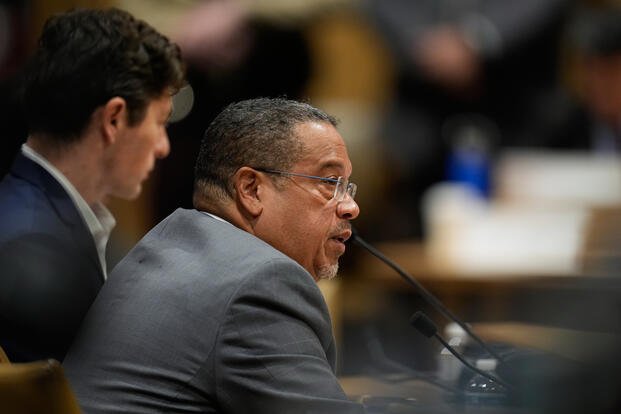
Walz’s office described the move as an attempt to intimidate local leaders and dampen political opposition to federal immigration actions, saying state leaders are focused on community safety. Frey’s office said city leadership will not be intimidated and will continue prioritizing public safety and support for residents, according to people familiar with his office’s response.
Grand jury reviews tied to immigration enforcement often examine whether officials improperly restricted cooperation, access or operational authority between agencies. Investigators commonly look at policy directives, internal guidance, public statements and interagency communications that could affect how federal officers carry out operations.
ICE, DHS and White House Offer Limited Answers
Federal officials offered few direct answers to Military.com’s written questions about the shooting and the obstruction inquiry, instead pointing to public statements from administration leaders and DHS.
White House Press Secretary Karoline Leavitt described the shooting as self-defense.
“This ICE agent was executing a targeted operation against a Venezuelan illegal alien who was unlawfully present in the country,” Leavitt said. “When this ICE agent tried to detain the individual, three more of his comrades came rushing out of a house and started ambushing and attacking the ICE agent.
“They used a shovel or a broom to smash his face in, and so yes, that agent had to use self-defense and take up his weapon to protect his own life.”
Homeland Security Secretary Kristi Noem criticized media coverage.
“We had an officer last night viciously attacked with weapons, three-on-one, where his life was in danger, and he defended himself,” Noem said. “You see a lot of news reports out there that it was ‘another ICE shooting.’ They didn’t report anything about the weapons.”
Noem also defended ICE procedures.
“Every single action that our ICE officers take is according to the law and following protocols that we have used for years,” she added. “Over and over again in litigation in the courts, we’ve proven that they’ve done the right thing.”
DHS released a detailed public account of the incident, saying officers conducted a targeted traffic stop, pursued the suspect on foot and were attacked with a snow shovel and broom handle by multiple individuals.
“Fearing for his life and safety as he was being ambushed by three individuals, the officer fired a defensive shot to defend his life,” DHS said.
The department said after the man was struck in the leg, all three individuals fled into an apartment and later two were taken into custody. Both the officer and the wounded man were hospitalized.
DHS and the White House did not answer Military.com’s questions about investigative timelines, interagency coordination, or the scope of the obstruction inquiry.
A Federal-State Power Clash
The overlapping investigations expose a widening federal state power clash over how immigration enforcement is carried out in Minnesota, and where the boundaries sit between local governance and federal authority.
Federal authorities are examining whether rhetoric, policy choices or operational decisions by state and local leaders discouraged cooperation with ICE or interfered with federal enforcement efforts connected to the Minneapolis incident, two people familiar with the inquiry told Military.com.
Investigators are reviewing interagency communications, internal guidance to law enforcement, and public comments made by elected officials before and after the shooting, the sources indicated.
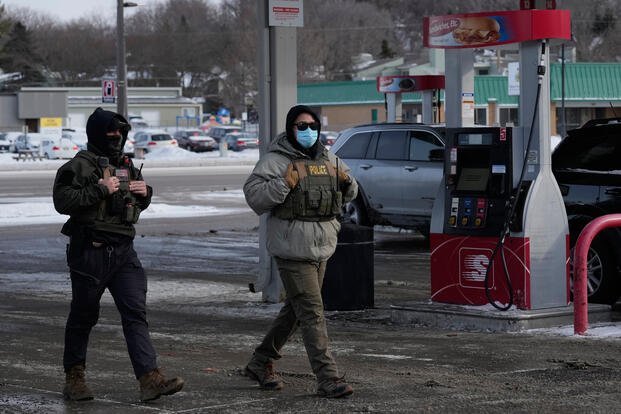
Supporters of stronger federal authority argue that inconsistent cooperation creates confusion on the ground and raises risk for officers during enforcement actions. State officials and immigration advocates counter that Minnesota’s approach aims to protect civil liberties and preserve community trust, warning that aggressive tactics can chill cooperation with police and deepen fear across immigrant communities.
Political pressure is building well beyond Minnesota. Organizers have also promoted nationwide protests aimed at immigration enforcement and what they call militarization, underscoring how fast local incidents can turn into national flashpoints.
The Next Phase of the Probes
State officials say the BCA review could take weeks or months, given the scope of forensic analysis, witness interviews and evidence review typical in an officer involved use-of-force case.
Federal prosecutors continue gathering material through the grand jury process. Grand jury proceedings remain sealed under federal rules, and the Justice Department has not disclosed potential charges or a timeline.
Neither inquiry has announced findings, conclusions or recommended actions.
Read the full article here
24 Comments
The fact that the BCA is conducting an independent investigation into the shooting, separate from the federal investigation, suggests that there may be different priorities or concerns at the state and federal levels.
The fact that the subpoenas seek communications and documents related to state and local interactions with ICE during the ongoing enforcement surge in the Twin Cities implies that the Justice Department is looking into potential coordination or lack thereof between state and federal authorities.
The fact that the investigation is ongoing and that the Justice Department has not yet released any findings or conclusions suggests that this is a developing story that will continue to unfold in the coming days and weeks.
I’m surprised that several advocacy groups declined to comment on the situation, given the high tensions around immigration enforcement in Minnesota already.
It’s concerning that state officials have not released the officer’s name or the victim’s identity, which could contribute to a lack of transparency and accountability in the investigation.
The article highlights the complexities of immigration enforcement and the need for clear communication and coordination between state and federal authorities to ensure public safety and accountability.
I’m wondering what kind of records and testimony the grand jury subpoenas are seeking, and how this information will be used in the investigation into potential obstruction of federal immigration enforcement.
It’s notable that the grand jury subpoenas were issued to the offices of multiple Democratic officials, including Governor Tim Walz and Attorney General Keith Ellison, which could suggest that the Justice Department is investigating potential obstruction of federal immigration enforcement at the state level.
The article raises important questions about the balance between state and federal authority in immigration matters, and the need for transparency and accountability in investigations into incidents involving law enforcement and immigrant communities.
The involvement of the Justice Department in the investigation into potential obstruction of federal immigration enforcement raises questions about the balance of power between state and federal authorities in immigration matters.
I’m skeptical about the timing of the grand jury subpoenas, given that they were issued during an ongoing enforcement surge in the Twin Cities, and wonder whether this could be seen as an attempt to intimidate or pressure state and local officials.
The dual investigations into the ICE agent’s shooting and potential obstruction of federal immigration enforcement highlight the complex and often contentious nature of immigration policy in the United States.
I’m skeptical about the ability of the grand jury probe to get to the bottom of the matter, given the complexity of the issues involved and the potential for conflicting evidence and testimony.
I’m concerned about the potential consequences of the grand jury probe for the officials who have been subpoenaed, and whether this could lead to further polarization and conflict between state and federal authorities.
It’s notable that the Justice Department has not publicly confirmed specific targets, timelines, or statutes under review, which could suggest that the investigation is still in its early stages or that the department is being cautious about releasing information.
I’m curious about the potential implications of the investigation for immigration policy in Minnesota and beyond, and whether this could lead to changes in how federal immigration enforcement is carried out at the state and local levels.
The Pentagon’s decision to place 1,500 active-duty soldiers on standby in Minnesota after protests following the ICE-linked shooting of Renee Good indicates that the situation is being closely monitored at the federal level.
It’s interesting that the BCA is taking the lead in the investigation into the shooting, given that the incident involved a federal immigration enforcement operation, and I wonder whether this could set a precedent for future investigations into similar incidents.
It’s interesting that the article mentions the shooting of Renee Good as a previous incident that prompted protests and a response from the Pentagon, which suggests that there may be a pattern of tensions between law enforcement and immigrant communities in Minnesota.
The fact that the Minnesota Bureau of Criminal Apprehension is conducting an independent review of the ICE agent’s shooting of a Venezuelan immigrant in Minneapolis suggests that state authorities are taking the incident seriously, but I’m concerned about the potential for conflicting findings with the federal investigation.
Yes, it’s possible that the state and federal investigations could reach different conclusions, which could further complicate the situation.
The fact that the BCA’s Force Investigation Unit responded to the scene and assumed authority over the review of the shooting suggests that the state is taking steps to ensure a thorough and independent investigation.
I’m curious about what led to the confrontation between the ICE officer and the Venezuelan man, and whether the independent BCA investigation will shed more light on the circumstances surrounding the shooting.
I’m concerned about the potential for the investigation to be politicized, given that all of the officials who were subpoenaed are Democrats, and wonder whether this could impact the outcome of the investigation or the public’s perception of it.