

Listen to the article
Three active duty soldiers were just convicted of multiple misdemeanor wildlife charges after poaching five mule deer on Fort Carson, also known as “The Mountain Post,” and one on the surrounding state land. While it is legal to hunt on military bases, you still have to abide by local and federal wildlife laws.
According to a CPW press release, this case started back in November ‘24, when a hunter reported a poached mule deer buck to Fort Carson Conservation Law Enforcement Officers (CLEOs). The CLEOs then called in for Colorado Parks and Wildlife (CPW) backup. Wildlife Officer Deme Wright arrived on scene and discovered a buck with only a piece of the hindquarters removed and the antlers sawed off, along with a dead doe located approximately 100 yards away, also only partially processed and abandoned. The evidence at both locations clearly indicated poaching to the wildlife officer.
“It didn’t look like a normal harvest,” Wright told Colorado Outdoors. “That’s when you slow everything down.”
Wright processed both crime scenes and followed physical evidence, identifying a vehicle associated with the case. She quickly uncovered social media images that identified now-convicted Army Sergeant Jacob Curtis Keyser and his accomplice, Army Staff Sergeant Juan Salcedo. Search warrants for Keyser, his vehicle, and cell phone identified evidence of poaching and proof of multiple instances of trespassing on military and state lands.
“There’s no way a 21-year-old doesn’t take pictures of everything he shoots,” she said. “Cell phone imagery documented more poaching activity and provided digital metadata evidence with times, dates, and specific locations linked to each image. Messages and videos extracted from the phone showed deliberate disregard for hunting laws.”
Investigators later confirmed the involvement of a third soldier, who was fined for disposing of the illegally-taken venison before Keyser’s initial interview with Wright.
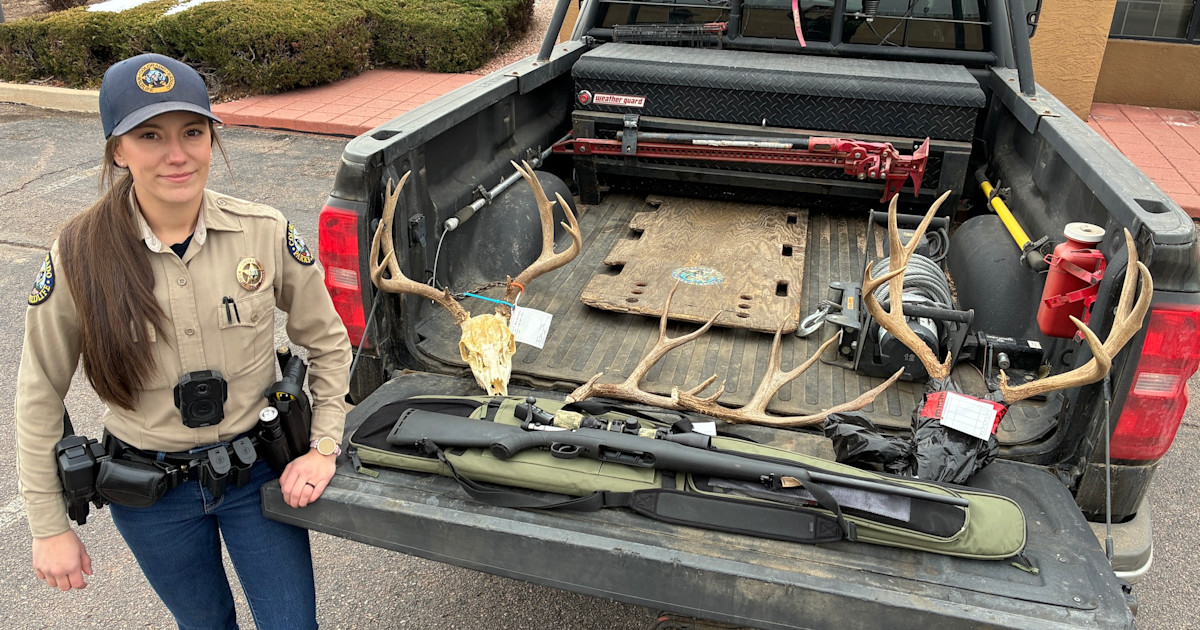
Keyser faced 30 wildlife charges, was fined $19,005, issued 180 suspension points, and forfeited his hunting rifle which will be destroyed by CPW. Co-conspirator Juan Salcedo faced 15 charges, was fined $8,817, and issued 65 suspension points. The third soldier, who remained unnamed, received a $900 fine.
“This case would not have moved forward without the help of the Fort Carson Conservation Law Enforcement Officers, Mike Allen, Paul Everett, 4th Judicial District Attorney’s Christian Wiesenberg and James Malis, and the timely reporting from hunters who discovered the crime scene,” Wright said. ”Poaching is a serious, costly crime which harms legitimate sportspersons, wildlife viewers, small business owners and taxpayers.”
Additionally, a CPW suspension hearing will occur to determine the duration of hunting and fishing suspensions, if any, that these poachers will face, with the possibility of a lifetime ban with reciprocity across all 50 states because of the Interstate Wildlife Violator Compact.
“I care about wildlife, I care about the science behind what we do, and I have great respect for our law-abiding, ethical hunters,” Wright said. “If you poach in Colorado, I’ll follow the evidence, I’ll find you, and I’ll cut your rifle into scrap metal.”
Read the full article here
15 Comments
The fact that Army Sergeant Jacob Curtis Keyser faced 30 wildlife charges and was fined $19,005 is a significant penalty, but I wonder if it’s enough to deter others from poaching on military bases like Fort Carson.
I think the fine is substantial, but the potential lifetime ban from hunting and fishing across all 50 states might be an even greater deterrent.
I’m impressed by the diligence of Wildlife Officer Deme Wright in processing the crime scenes and following physical evidence to identify the poachers, and her comments highlight the importance of thorough investigations in wildlife crime cases.
The cooperation between the Colorado Parks and Wildlife agency and the 4th Judicial District Attorney’s office, including Christian Wiesenberg and James Malis, was crucial in securing the convictions of the poachers.
The fact that the third soldier, who remained unnamed, was fined $900 for disposing of the illegally-taken venison raises questions about the extent of their involvement in the poaching operation.
The use of social media images to identify the poachers, including Army Staff Sergeant Juan Salcedo, highlights the importance of digital evidence in wildlife crime investigations.
It’s disturbing to read that the poachers only partially processed and abandoned the deer, leaving behind a buck with only a piece of the hindquarters removed and the antlers sawed off.
I’m concerned that the poaching incident on Fort Carson may indicate a larger problem with wildlife crime on military bases, and I hope that further investigations will be conducted to address this issue.
The fact that the poachers were active-duty soldiers raises questions about the military’s role in preventing and addressing wildlife crime, and whether more needs to be done to educate personnel about wildlife laws and ethics.
The article mentions that the poachers’ actions harmed ‘legitimate sportspersons, wildlife viewers, small business owners and taxpayers,’ but I’d like to know more about the specific economic and environmental impacts of poaching on Fort Carson.
I’d like to know more about the CPW suspension hearing and how it will determine the duration of the poachers’ hunting and fishing suspensions, and whether this process will be transparent and publicly available.
The quote from Wildlife Officer Deme Wright, ‘There’s no way a 21-year-old doesn’t take pictures of everything he shoots,’ suggests that the poachers’ social media activity was a key factor in their conviction.
I’m curious about the role of the Fort Carson Conservation Law Enforcement Officers, such as Mike Allen and Paul Everett, in assisting with the investigation and prosecution of the poachers.
The possibility of a lifetime ban from hunting and fishing for the convicted poachers, with reciprocity across all 50 states, sends a strong message about the seriousness of wildlife crimes.
The conviction of the poachers and the potential penalties they face serve as a reminder that wildlife crimes will not be tolerated, and that those who break the law will be held accountable.