

Listen to the article
HBO has entered the world of Westeros, yet again, in another highly anticipated spin-off, A Knight of the Seven Kingdoms. For a franchise defined by war and brutal betrayals, HBO’s latest Game of Thrones spin-off is a pretty humorous offering that opens in an unexpected place—a Westeros not at war.
The recent GoT offshoot deliberately sidesteps the bloodiest of the A Song of Ice and Fire timeline. Instead of dragonfire or dynastic collapse, it drops viewers into a rare stretch of relative calm. That choice isn’t accidental, but a deliberate decision to give audiences a bit of a different flavor of the world they’ve grown to love.
The change in tone makes a lot of sense, as the newest HBO series adapts George R.R. Martin’s lighter fare, the Dunk and Egg novella The Hedge Knight, which is set decades before the events of the original show.
The Dunk and Egg Novellas Behind A Knight of the Seven Kingdoms
If A Knight of the Seven Kingdoms feels smaller, funnier, and more character-driven than most Game of Thrones stories, that’s because it’s pulling from a very different corner of George R.R. Martin’s Westeros.
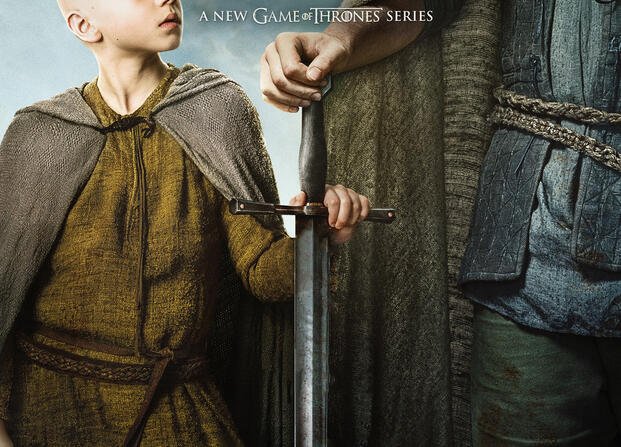
The series is based on Martin’s Tales of Dunk and Egg novellas, which follow Ser Duncan the Tall (Dunk) and his sharp-tongued young squire Egg, who later becomes King Aegon V Targaryen. The stories are set roughly 90 years before the events of the main A Song of Ice and Fire saga, and they focus less on thrones and prophecies and more on what the world looks like from the road.
So far, Martin has published three Dunk and Egg novellas:
- The Hedge Knight (1998), the story Season 1 is adapting, centered around the tourney at Ashford Meadow
- The Sworn Sword (2003) is a more grounded feud that digs into Westeros’ feudal politics and local power
- The Mystery Knight (2010), a more intrigue-heavy entry that circles the lingering fallout of the Blackfyre rebellions
The three novellas were later collected as A Knight of the Seven Kingdoms (2015) with illustrations by Gary Gianni, and they’ve also been adapted into graphic novels.
Martin has said for years he intends to continue the series, with future entries planned, but he’s also indicated the next Dunk and Egg story won’t arrive until after he finishes The Winds of Winter, which, as of this writing, is fifteen years late.

When A Knight of the Seven Kingdoms Takes Place on the Game of Thrones Timeline
A Knight of the Seven Kingdoms is set in 209 AC (After Conquest). Chronologically, that places the show between two defining periods already familiar to viewers.
It’s roughly 78 years after the Dance of the Dragons, the catastrophic Targaryen civil war depicted in House of the Dragon, and nearly 90 years before the events that ignite Game of Thrones. It’s a midpoint, far enough removed from civil war to allow stability, but close enough to future upheaval that cracks are already forming.
The war may be over, but its consequences still shape leadership decisions, force posture, and institutional trust. That’s what the Westeros Knight is interested in exploring.
Why Dragons Matter Less in A Knight of the Seven Kingdoms
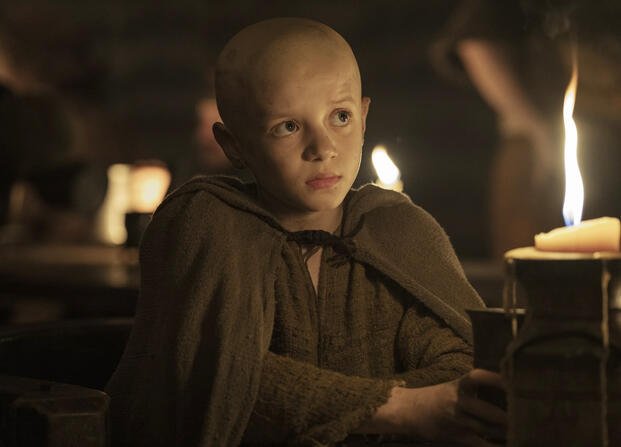
One of the most significant changes separating A Knight of the Seven Kingdoms from previous shows is the near-total absence of dragons.
By 209 AC, the Targaryens still rule Westeros, but their greatest deterrent is functionally extinct. Most people alive during the events of Knight have never seen a dragon at all. The dynasty’s authority now rests less on overwhelming force and more on tradition, alliances, and political legitimacy.
King Daeron II Targaryen, known as Daeron the Good, rules during this period, presiding over an uneasy peace following the first Blackfyre Rebellion. His reign stabilized the Seven Kingdoms, completed Dorne’s integration into the realm, and redistributed lands to weaken rival claimants.
But stability does not equal security.
The Blackfyre threat still lingers. Rebellions are not finished. And the Great Spring Sickness, a devastating epidemic, will soon kill tens of thousands across Westeros, including Daeron himself. The show’s timeline captures the moment just before those pressures boil over.
Strategically, it’s a study in what happens when a dominant power loses its ultimate weapon but continues to project authority anyway. The Targaryens are still in command, but everyone knows their leverage is thinner than it once was.
Why A Knight of the Seven Kingdoms Can Focus on Training and Leadership
By choosing a relatively peaceful setting, A Knight of the Seven Kingdoms shifts attention away from battlefield spectacle and toward something more subtle: professional identity.
The story follows Ser Duncan the Tall, a hedge knight navigating a world shaped by hierarchy, unspoken codes, and institutional expectations. He’s not a king or a dragonrider but closer to a career soldier trying to find his place in a system that values lineage as much as competence.
That perspective only works in peacetime. In active war, survival dominates every decision. In calm periods, character matters more.
Training, discipline, leadership, and judgment become the focus, exactly the qualities institutions rely on when they’re not being tested by immediate catastrophe. The tourney at Ashford Meadow functions less like spectacle and more like a convergence of power brokers, future leaders, and unresolved tensions.

A Calm That Was Never Going to Last
A Knight of the Seven Kingdoms may be quieter than its predecessors, but it’s not naïve about the nature of peace.
The show’s setting is defined by what has already been lost—dragons, unquestioned authority, absolute deterrence—and by what is coming next. Rebellions will return. The Targaryen dynasty will continue to weaken. The stability viewers see is temporary by design.
That tension is the point.
By choosing to tell a story set between wars, HBO’s newest Game of Thrones spinoff offers something the franchise hasn’t often slowed down enough to explore.
Read the full article here
12 Comments
The fact that the show is based on a series of novellas, rather than a single novel, raises questions about how the pacing and storytelling will work, and whether the show will be able to do justice to the original material.
The show’s focus on the road and the everyday lives of characters, rather than the grand battles and political intrigue of the original series, could provide a fresh perspective on the world of Westeros, and I’m curious to see how this will play out.
This could also allow for more character development and introspection, which would be a welcome change of pace from the action-oriented original series.
The fact that the show is set in 209 AC, roughly 78 years after the Dance of the Dragons, raises questions about how the characters will navigate the aftermath of such a catastrophic event, and what kind of world they will be living in.
It’s interesting that the series is pulling from a different corner of George R.R. Martin’s Westeros, focusing on character and endurance rather than conquest, and I’m excited to see how this will play out in the show.
The decision to set A Knight of the Seven Kingdoms in a rare moment of peace in Westeros is intriguing, especially since it’s based on George R.R. Martin’s lighter fare, the Dunk and Egg novella The Hedge Knight, which is set decades before the events of the original show.
The use of the Dunk and Egg novellas as source material provides a unique opportunity for the show to explore the world of Westeros in a new and interesting way, and I’m looking forward to seeing what the writers do with it.
I’m excited to see how the character of Ser Duncan the Tall will be developed in the show, and how his story will intersect with the larger world of Westeros.
I’m curious to see how the show will adapt the feudal politics and local power struggles from The Sworn Sword novella, and how it will impact the overall storyline of A Knight of the Seven Kingdoms.
The illustrations by Gary Gianni in the collected edition of A Knight of the Seven Kingdoms are a great addition to the story, and I hope the show will incorporate similar visuals to bring the world to life.
The delay in the release of The Winds of Winter, which is now 15 years overdue, has me skeptical about the future of the Dunk and Egg series, and whether we’ll ever see the next installment.
I appreciate how the show is exploring a different tone, one that is more humorous and character-driven, and I think this will be a refreshing change of pace for fans of the original Game of Thrones series.