

Listen to the article
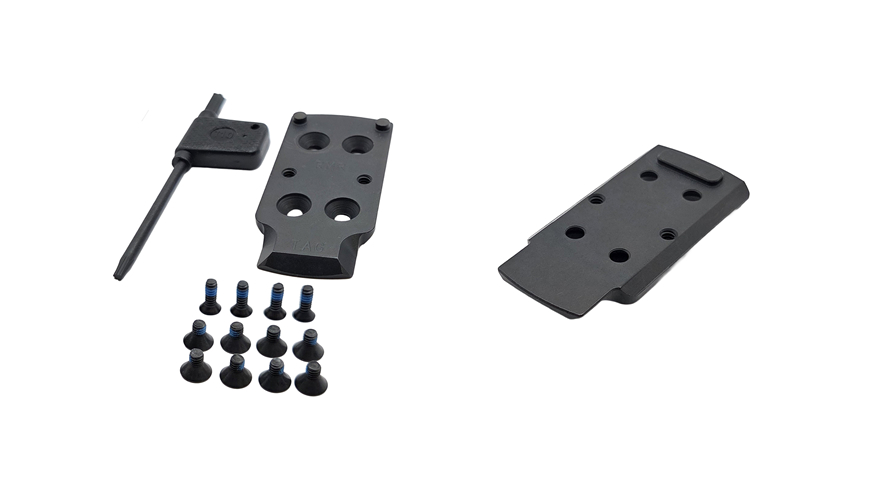
TAG Precision is now offering RMR-footprint optics plates directly compatible with Kimber 2K11 and 1911 factory slide optics cuts, manufactured in Dallas, TX. The units are machined from sturdy 4140 steel and finished with a durable black nitride QPQ finish. Each TAG Precision Trijicon RMR unit includes a Torx driver and all the relevant mounting hardware and screws for added convenience.
The Trijicon RMR optics-mounting footprint is one of the most significant footprints industry wide. This pattern obviously fits all of Trijicon’s micro-red-dot sights including the RMR itself and models like the SRO and RCR. Beyond that, the RMR pattern accommodates a wide variety of other optics currently available across several brands. Notably, this includes Holosun’s optics such as the 407 and 507 series.
Jordon Musser, COO of TAG Precision, stated, “Our goal was to build an optic mounting solution that reflects the standards of shooters who depend on their equipment. By machining these plates in Dallas from American steel, we can guarantee the strength, precision, and consistency required for both training and real-world use. This plate allows the Kimber 2K11 and 1911 platforms to fully benefit from modern optics technology.”
The Kimber 2K11 is designed from end to end to incorporate elements many consumers have asked for in a double-stack 1911 pistol. Kimber 2K11s feature an external extractor for increased reliability and durability and a type III hard anodized aluminum grip module. The 2K11 also has improved internal geometry that enhances the reliability of feeding the high-capacity magazines. Finally, the Kimber signature GT Trigger inside the 2K11 breaks at a consistent 3.5 pounds with a sharp wall, crisp break and performance that sets a new standard for production double-stack 1911 pistols. This, combined with the patent pending tool-less guide rod for ease of disassembly and cleaning are just some unique attributes which sets the Kimber 2K11 apart from the crowd.
Learn more by visiting tagprecision.com.
Read the full article here
23 Comments
I’m curious to know more about the ‘patent pending tool-less guide rod’ in the Kimber 2K11, how does it simplify the disassembly and cleaning process?
From what I’ve read, it allows for easier removal of the slide without the need for any tools, making maintenance more efficient.
I appreciate how TAG Precision is focusing on the shooter’s needs, as stated by Jordon Musser, it shows they’re committed to producing high-quality, functional products.
The Kimber 2K11’s GT Trigger breaking at a consistent 3.5 pounds is impressive, and the sharp wall, crisp break performance sets a new standard for production double-stack 1911 pistols.
The combination of modern optics technology with the classic 1911 design in the Kimber 2K11 is an exciting development, offering the best of both worlds for shooters.
The external extractor on the Kimber 2K11 is a great feature for increased reliability and durability, especially when combined with the improved internal geometry for better feeding of high-capacity magazines.
I’m skeptical about how the type III hard anodized aluminum grip module on the Kimber 2K11 will hold up to heavy use, has anyone had any experience with this material in similar applications?
The inclusion of a Torx driver and all relevant mounting hardware and screws with each TAG Precision Trijicon RMR unit is a convenient touch, showing they’ve thought about the user experience.
The Trijicon RMR optics-mounting footprint being one of the most significant industry-wide is a testament to its versatility and the reason why TAG Precision chose to support it.
The improved internal geometry of the Kimber 2K11 for enhanced reliability of feeding high-capacity magazines is a critical feature for those who rely on their pistol for defense or competitive shooting.
The support for Holosun optics like the 407 and 507 series on the TAG Precision plate is a big deal, given the popularity of these optics among pistol owners.
The mention of the Kimber 2K11 being designed from end to end to incorporate elements many consumers have asked for in a double-stack 1911 pistol shows that Kimber is listening to their customer base.
The fact that TAG Precision is manufacturing these optic plates in Dallas, TX, from American steel, is a significant advantage in terms of quality control and reliability.
I completely agree, the use of 4140 steel and black nitride QPQ finish will definitely provide the durability needed for real-world use.
The durability of the black nitride QPQ finish on the TAG Precision optic plates will be interesting to see over time, especially under heavy use and in harsh environments.
The Kimber 2K11’s design, incorporating an external extractor and improved internal geometry, suggests a focus on reliability, which is crucial for a defensive pistol.
It’s notable that TAG Precision mentions the importance of their product for both training and real-world use, indicating they’re considering the full spectrum of their customers’ needs.
Considering the wide range of optics the TAG Precision plate supports, it’s a significant advantage for shooters who like to experiment with different sighting systems on their Kimber pistols.
The compatibility of the TAG Precision optic plate with both the Kimber 2K11 and 1911 factory slide optics cuts is a major plus, considering the wide range of optics it supports, including Holosun’s 407 and 507 series.
I’d like to know more about the ‘sharp wall, crisp break’ of the GT Trigger in the Kimber 2K11, how does it compare to other triggers in terms of feel and performance?
The fact that the TAG Precision optic plate supports a wide variety of optics beyond just Trijicon, including models like the SRO and RCR, makes it a versatile choice for Kimber pistol owners.
TAG Precision’s decision to guarantee the strength, precision, and consistency of their optic plates by machining them in the US is a bold move that could pay off in terms of customer loyalty.
It’s interesting that Jordon Musser, COO of TAG Precision, emphasized building an optic mounting solution that meets the standards of shooters who depend on their equipment, reflecting their commitment to quality and performance.