

Listen to the article
Greenland and Denmark are drawing a hard line after President Donald Trump said the United States and NATO were discussing a future security framework involving the Arctic island, pushing back against any suggestion of outside control as Copenhagen accelerates military cooperation with NATO allies.
The dispute now centers on Greenland—a self-governing territory within the Kingdom of Denmark that sits along critical transatlantic defense routes. Trump’s remarks last week at the World Economic Forum in Davos prompted swift responses from Danish and Greenlandic leaders, renewed alliance-level coordination, and confirmation that Denmark is expanding its military presence in and around Greenland while pressing NATO to take on a larger role in Arctic security.
A Danish Defense Ministry spokesperson said in a statement to Military.com that Greenland’s status is not negotiable, and that any defense cooperation must operate within Denmark’s constitutional framework and existing NATO arrangements.
We will continue to strengthen our military presence in Greenland, but we will also have an even greater focus within NATO on more exercises and an increased NATO presence in the Arctic. There is consensus among NATO allies that the alliance must assume greater responsibility for security in the Arctic and the North Atlantic. – Danish Defense Ministry spokesperson to Military.com
Military.com reached out to the White House and the Department of Defense for clarification on whether Trump’s remarks reflected a formal shift in U.S. policy.
Trump Claim Triggers Sovereignty Pushback
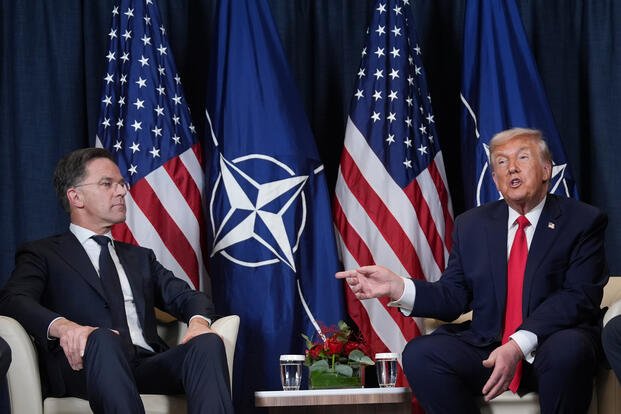
Trump’s comments at Davos immediately raised questions about access, authority and sovereignty over Greenland after he said the United States and NATO were discussing a security deal involving the territory.
“Based upon a very productive meeting that I have had with the Secretary General of NATO, Mark Rutte, we have formed the framework of a future deal with respect to Greenland and, in fact, the entire Arctic Region,” Trump wrote on Truth Social last week.
The White House did not respond to Military.com’s request for clarification on whether Trump’s remarks reflected exploratory discussions or a negotiated change to NATO’s role in Greenland.
Greenland occupies a strategic position along transatlantic missile flight paths and hosts early-warning and space-tracking infrastructure tied to U.S. and NATO defense systems, including radar capabilities designed to detect ballistic missile launches toward North America and Europe.
That role has grown more prominent as Russia expands military infrastructure along its northern coast. China also seeks a larger Arctic presence through research and commercial activity.
Danish Prime Minister Mette Frederiksen said Greenland’s political status is settled and not open to negotiation, stressing that any defense cooperation must respect Denmark’s constitutional framework. Greenland’s government echoed that stance, saying decisions related to security and defense must be made through democratic and legal processes within the Danish realm.
Frederiksen’s government has also stressed that Denmark’s sovereignty is not negotiable amid the renewed focus on Greenland.
Denmark Accelerates Arctic Military Build-Up
Denmark’s Ministry of Defense is moving forward with a stronger and more sustained military posture in Greenland, pairing new investments with expanded operational coordination among NATO allies.
Defense Minister Troels Lund Poulsen cited Exercise Arctic Light 2025, held in September, as a model for future cooperation. The multinational exercise brought together naval vessels, air assets, and ground forces from several NATO countries to rehearse long-range logistics, air and maritime surveillance, and rapid-response operations across Greenland’s vast and remote terrain.
The exercise focused on interoperability between allied forces, sustainment in extreme Arctic conditions, and coordination with civilian authorities. Danish defense officials said future training will expand allied participation, increase air and maritime patrol coverage, and strengthen links between Greenland-based infrastructure and NATO command and control networks.
Denmark has also pointed to nearly $2.3 billion in Arctic defense spending—including plans tied to new Arctic naval capabilities—as the political backdrop for the military buildup is underway.
NATO Ramps Up Pressure in High North
NATO officials have warned that the Arctic is no longer a low-tension region, pointing to Russia’s rapid modernization of Arctic military bases, deployment of advanced air defense and missile systems, and increased naval and air patrols near strategic sea lanes and undersea infrastructure connecting North America and Europe.
Alliance leaders say melting sea ice and expanded access to shipping routes and undersea cables have elevated the Arctic’s importance to collective defense planning and transatlantic security.
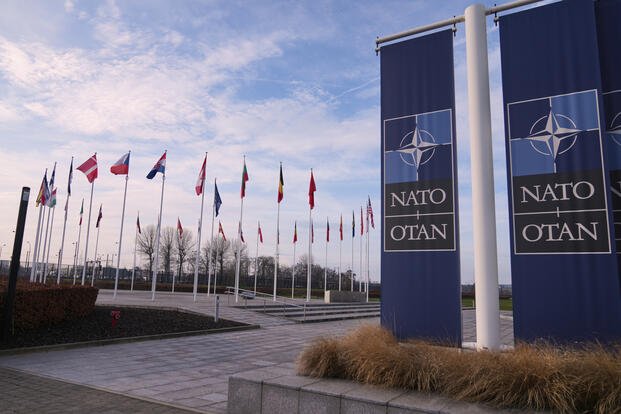
Denmark has urged NATO to treat Arctic security as a core alliance mission rather than a regional concern, arguing that Greenland’s geography makes it central to early warning, maritime surveillance, and missile defense across the North Atlantic.
Military.com reached out to NATO for comment on whether Trump’s remarks reflected ongoing alliance-level deliberations. A NATO spokesperson declined to comment on internal discussions but said the alliance continues to strengthen deterrence and defense across all regions, including the Arctic.
Next Moves in the Arctic
Despite the friction sparked by Trump’s comments, Danish and Greenlandic officials say day-to-day coordination with the United States remains focused on shared defense priorities, including early warning, maritime surveillance, and maintaining NATO’s operational reach across the North Atlantic.
No formal changes to NATO governance or Greenland’s political status have been announced. Existing agreements remain in force, and any adjustments to alliance posture would move through established NATO decision-making channels.
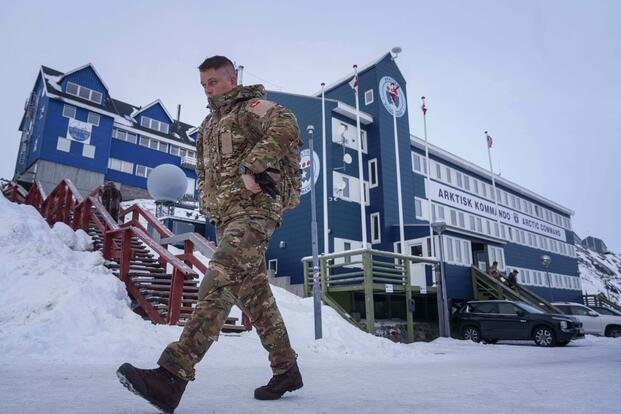
Danish defense officials said upcoming NATO exercises, force-planning reviews and alliance-level consultations later this year will signal how Arctic security cooperation evolves as NATO weighs increased presence, infrastructure investment and long-term sustainment in the High North.
Officials in Copenhagen and Nuuk have reiterated that sovereignty remains settled and that Greenland’s role in NATO defense will continue to be shaped through alliance consensus rather than unilateral action.
Greenland’s Strategic Value
Danish leaders have framed Greenland’s status as a settled question, publicly rejecting any suggestion that sovereignty could be renegotiated as debate over the island’s role in NATO defense intensifies.
Danish officials said Greenland remains an integral part of the Kingdom of Denmark, with any security arrangements governed by existing constitutional and alliance frameworks rather than unilateral decisions or outside pressure.
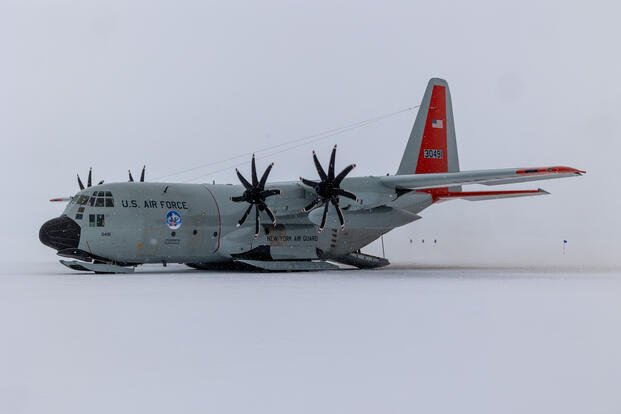
That political red line comes as Denmark moves forward with a sweeping Arctic defense expansion valued at nearly $2.3 billion, signaling that Copenhagen intends to reinforce its presence rather than dilute control.
The investment package includes enhanced surveillance, maritime patrol capabilities, and infrastructure upgrades designed to improve readiness and sustain operations in and around Greenland as allied military focus shifts northward.
Danish officials have framed the buildup as both a deterrence measure and a political signal, aimed at reinforcing sovereignty while integrating Greenland more deeply into NATO’s evolving Arctic defense posture amid heightened competition with Russia and growing strategic interest from China.
Read the full article here
5 Comments
Interesting update on Greenland’s Red Line After Trump NATO Claim; Denmark Surges Arctic Forces. Looking forward to seeing how this develops.
Good point. Watching closely.
I’ve been following this closely. Good to see the latest updates.
Great insights on Defense. Thanks for sharing!
Solid analysis. Will be watching this space.