

Listen to the article
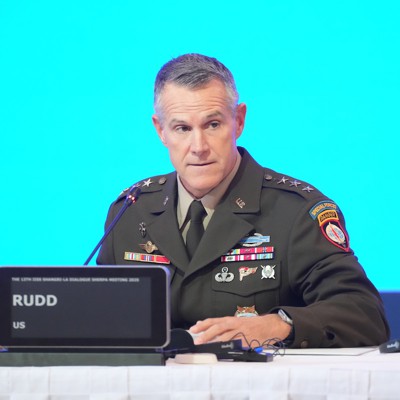
Army Lt. Gen. Joshua Rudd appears to be the Trump administration’s pick to fill the months-old vacancy atop the National Security Agency and U.S.Cyber Command.
On Monday, the White House formally asked the Senate Armed Services and Intelligence committees to approve Rudd’s promotion to the four-star level needed for the double-hat command.
Rudd, who is deputy director for U.S. Indo-Pacific Command, appears to not have previously served in military cybersecurity, but a person familiar with the matter confirmed the nomination and said his background would align with U.S. goals to counter Chinese cyber threats.
The Senate received President Donald Trump’s nomination of Rudd for the leadership role on Monday, as noted in the Congressional Record. A four-star general is traditionally tapped to lead NSA and Cyber Command in a dual-hatted capacity.
The signals-intelligence titan and combatant command have been without a permanent leader since April, when Gen. Timothy Haugh was fired, apparently on the advice of far-right activist Laura Loomer. Since then, Lt. Gen. William Hartman has led the agency in an acting capacity.
Hartman is expected to retire once a full-time leader is put in place, two people familiar with the matter previously said.
NSA’s workforce and morale have been under strain amid leadership gaps, program cuts, and recent extensions of deferred resignation offers, Nextgov/FCW reported last month. It recently achieved its goals to shed around 2,000 people from its workforce this year.
The NSA specializes in hacking and foreign eavesdropping and is deemed a “combat support agency” that faces oversight from both the Office of the Director of National Intelligence and the Defense Department. Both components get oversight from the Senate’s intelligence and armed services panels.
Read the full article here
23 Comments
Rudd’s promotion to the four-star level is a significant step, I hope he’s able to bring some much-needed stability to the NSA and CyberCom.
Lt. Gen. William Hartman’s expected retirement once a full-time leader is in place raises questions about the transition process and how it will affect the agencies.
Hopefully the new leader will be able to hit the ground running and minimize any disruption to the NSA and CyberCom’s work.
The fact that the White House formally asked the Senate to approve Rudd’s promotion is a significant step, it’s clear that they’re serious about getting the NSA and CyberCom back to full strength.
I’m curious to know more about the Senate Armed Services and Intelligence committees’ role in approving Rudd’s nomination, what kind of scrutiny will he face during the process?
Gen. Timothy Haugh’s firing back in April was a shock, and it’s interesting to see how that has affected the NSA and CyberCom’s operations since then.
I’m curious to know more about the ‘deferred resignation offers’ mentioned in the article, what kind of impact have those had on the NSA’s workforce and morale?
The article mentions that the NSA specializes in hacking and foreign eavesdropping, I wonder what kind of implications that has for international relations and diplomacy.
That’s a good question, it’s not something that’s often discussed openly, but it’s clearly a critical aspect of the NSA’s work.
It’s about time the administration nominated someone to fill the vacancy at the NSA and CyberCom, the eight-month gap has likely taken a toll on the agencies’ morale and effectiveness.
I’m skeptical about Rudd’s ability to counter Chinese cyber threats, we need someone with more direct experience in the field to take on this challenge.
But the person familiar with the matter seems to think his background aligns with US goals, I’d like to know more about what that means.
Rudd’s experience as deputy director for U.S. Indo-Pacific Command could be an asset in dealing with Chinese cyber threats, I’m interested to see how he’ll approach this challenge.
The NSA and CyberCom’s leadership gap has likely had a significant impact on their operations, I hope the new leader will be able to get things back on track quickly.
The NSA’s role as a ‘combat support agency’ is fascinating, it’s clear that they play a critical role in national security, but I’d like to know more about their oversight and how that works.
The fact that Lt. Gen. Joshua Rudd doesn’t have a background in military cybersecurity is concerning, given the critical role the NSA and CyberCom play in protecting national security.
But perhaps his experience as deputy director for U.S. Indo-Pacific Command could bring a fresh perspective to the position.
The NSA’s goal to shed around 2,000 people from its workforce this year is surprising, I wonder what kind of impact that will have on the agency’s capabilities.
The Senate’s role in approving Rudd’s nomination is crucial, I hope they’re able to move quickly and get the NSA and CyberCom back to full strength.
The fact that the NSA and CyberCom have been without a permanent leader for so long is a concern, it’s crucial that the Senate moves quickly to approve Rudd’s nomination.
I’m supportive of the administration’s decision to nominate Rudd, he seems like a qualified candidate, despite some concerns about his lack of cybersecurity experience.
The article raises some important questions about the NSA’s workforce and morale, I hope the new leader will be able to address those issues and get the agency back on track.
It’s interesting that the NSA and CyberCom face oversight from both the Office of the Director of National Intelligence and the Defense Department, that must be a complex process to navigate.