

Listen to the article
Air Force members must be ready to heed new federal grooming guidance in the weeks ahead.
That is according to updated medical guidance for shaving profiles announced Monday by the Department of the Air Force (DAF), telling members that new grooming standards will go into effect Jan. 31, 2026, as part of the standards set in motion in September by the Department of Defense and Secretary Pete Hegseth.
All shaving profiles issued before March 1, 2025, are invalid and any airmen and guardians who have medical shaving profiles issued prior to that date are being instructed to schedule an appointment with a military health care provider for further evaluation before the January deadline.
Instructions have simultaneously been given to equip primary care providers, medical profile officers and unit commanders with guidance in order to approve or deny a medical shaving profile.
“With the recent release of updated guidance on medical shaving profiles, the Department of the Air Force is coordinating additional implementation guidance to meet the intent of the Secretary of War’s grooming standards for facial hair policy,” a DAF spokesperson told Military.com.
“To ensure consistency and fairness, the department will provide detailed instructions as soon as they are finalized and will address updated standards, non-compliance procedures, religious accommodations and readiness considerations,” they added.
‘No More Beardos’
The new profile comes on the heels of Hegseth in September ordering the Pentagon “to revert to pre-2020 standards” and do away with permanent shaving profiles for medical conditions, such as razor bumps. He used the phrase “no more beardos” when discussing appearance and U.S. military standards to generals and admirals at Marine Corps Base Quantico in Virginia.
“The era of rampant and ridiculous shaving profiles is done,” Hegseth said during his September speech. “Simply put, if you do not meet the male-level physical standards for combat positions, cannot pass a (physical training) test or don’t want to shave and look professional, it’s time for a new position or a new profession.”
It has led to not just DAF but other branches issuing updated guidelines. The U.S. Army, for example, announced changes that include precise definitions for hairstyles such as authorized lengths, styles and accessories for both male and female soldiers. Standards for cosmetics, fingernails and jewelry have also been clarified.
Violation Process
DAF said that no single shaving profile may exceed a six-month period. Starting on Feb. 1, 2026, any airmen and guardians who accumulate more than 12 months of shaving profile within a 24-month period will be referred to their commander.
The memorandum does not apply to shaving waivers granted for religious accommodations.
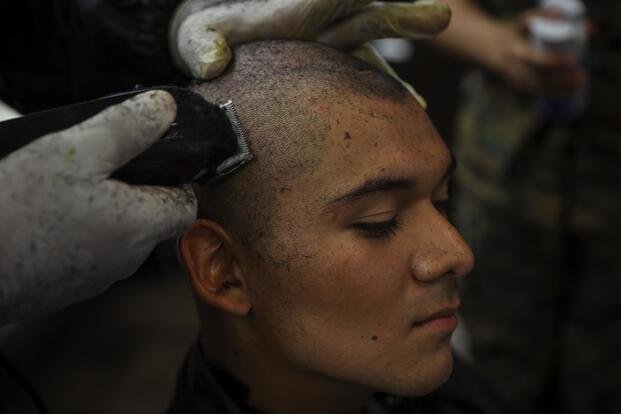
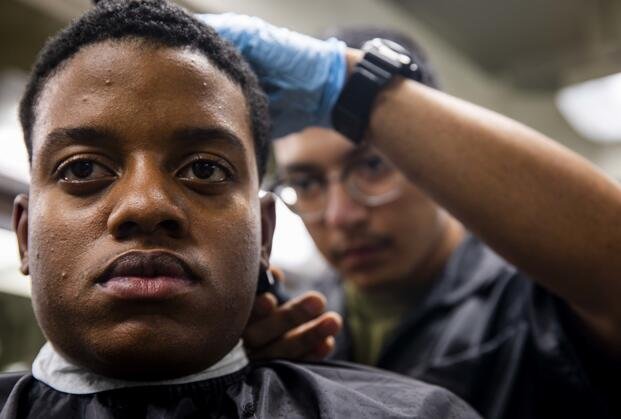
The chain-of-command for assessing, potentially reporting violations is as follows:
-
Primary care managers will evaluate members for medical conditions, recommend profiles, and submit profile recommendations to a medical profile officer.
-
Medical profile officers will review the primary care provider’s recommendations for profiles of 30 days or less. For those greater than 30 days, senior profile officers will review recommendations. DAF said that profile recommendations that meet all review criteria earn a “concur” and are submitted to the unit commander for consideration.
-
Commanders have final approval authority for medical shaving profiles, recording electronic approval or denial via the Aeromedical Services Information Management Systems (ASIMS) within seven days. They may also request service members to be evaluated due to operational concerns stemming from a medical condition.
Sensitive Skin
The new guidance provided in the Dec. 15 memo is also intended to assist health care providers in evaluating airmen and guardians for a Pseudofolliculitis Barbae (PFB) diagnosis.
PFB is described by the National Institutes of Health as a chronic inflammatory disorder characterized by papules, pustules, and post-inflammatory hyperpigmentation. The condition, which occurs more frequently in men of African and Asian descent, could also lead to itching and the development of keloids and potential scars.
The DAF memo differentiates between shaving irritation and PFB, and provides criteria to distinguish between mild, moderate and severe cases of PFB.
“We recognize the complexities involved, as updated medical shaving profile guidance may raise questions beyond shaving and profiles alone,” DAF told Military.com. “The department remains focused on providing clear, timely guidance to help airmen and guardians understand and comply with the grooming standards.”
Story Continues
Read the full article here
17 Comments
The updated guidance seems to be part of a broader effort to standardize grooming standards across the military, as seen in the U.S. Army’s recent changes to hairstyles, cosmetics, and jewelry standards.
The mention of ‘readiness considerations’ in the updated guidance suggests that the Department of the Air Force is prioritizing combat readiness over individual preferences or medical conditions, which could be a point of contention.
The new grooming standards set to take effect on January 31, 2026, will definitely impact airmen and guardians who have been relying on medical shaving profiles issued before March 1, 2025, which are now deemed invalid.
The fact that airmen and guardians with medical shaving profiles issued prior to March 1, 2025, need to schedule an appointment with a military health care provider for further evaluation before the January deadline may cause logistical challenges.
This could lead to a surge in appointments and put a strain on military healthcare resources.
It’s worth noting that the Department of the Air Force is taking a coordinated approach to implementing the updated guidance, which should help ensure a smoother transition to the new standards.
The Air Force’s decision to equip primary care providers, medical profile officers, and unit commanders with guidance on approving or denying medical shaving profiles should help streamline the process and reduce inconsistencies.
I’m interested in seeing how the other branches of the military will implement similar changes to their grooming standards, given the Pentagon’s directive to revert to pre-2020 standards.
Secretary Pete Hegseth’s statement about ‘no more beardos’ and the end of ‘rampant and ridiculous shaving profiles’ seems to imply a stricter adherence to pre-2020 standards, but how will this affect airmen with legitimate medical conditions?
It’s likely that the new guidelines will include more stringent evaluation processes for medical shaving profiles to prevent abuse.
As someone who has dealt with razor bumps, I understand the need for medical shaving profiles, but I also see the importance of maintaining professional appearance standards in the military.
It’s a delicate balance between accommodating medical needs and upholding the military’s image and discipline.
The fact that no single shaving profile may exceed a six-month period and that airmen who accumulate more than 12 months of shaving profile within a 24-month period will be referred to their commander raises concerns about the potential impact on personnel with chronic conditions.
The emphasis on providing detailed instructions and addressing updated standards, non-compliance procedures, and religious accommodations suggests that the Department of the Air Force is committed to making this transition as fair and transparent as possible.
The reference to ‘non-compliance procedures’ in the updated guidance implies that there will be consequences for airmen who fail to adhere to the new grooming standards, which could be a significant change for some personnel.
I’m curious to know how the Department of the Air Force plans to ensure consistency and fairness in implementing the updated guidance on medical shaving profiles, especially with the added consideration of religious accommodations.
The new standards seem to be aimed at promoting a more professional image for the military, but it’s essential to consider the potential impact on morale and retention, especially among airmen who have grown accustomed to more relaxed grooming standards.