

Listen to the article
Last year was the first time that U.S. Army Pvt. First Class Patrick Konczal ever remembered not being with his family on Christmas. This year, with help near and far, he made a 7,000-mile trek to give his parents—including a cancer-stricken mother—a giant holiday surprise.
Konczal, a 74D and CBRN Specialist, is stationed at Camp Casey in South Korea as part of the 65th Medical Brigade (65th MED) within the 168th Multifunctional Medical Battalion (MMB). Until recently he had not seen his parents and sister since July 2024, with the months in between including his mother being diagnosed with cancer. The deployment prevented Konczal from being able to leave Korea and tend to his mother, who was undergoing radiation and chemotherapy.
But that changed due to a familiar organization. Konczal was chosen by the American Red Cross Service to be the beneficiary of the holiday surprise, mobilizing U.S. Armed Forces staffers in the U.S. and Korea to bring him home. He was one of 26 U.S. service members nominated to receive the opportunity as part of the decade-old endeavor.
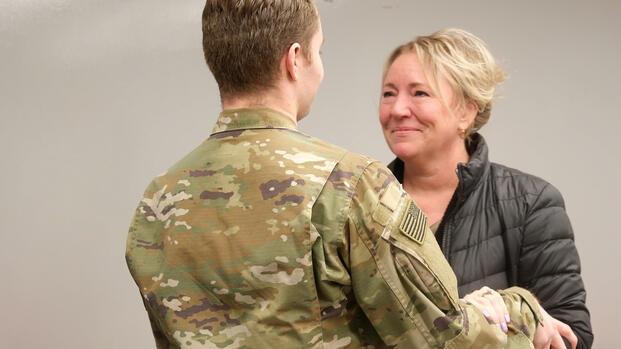
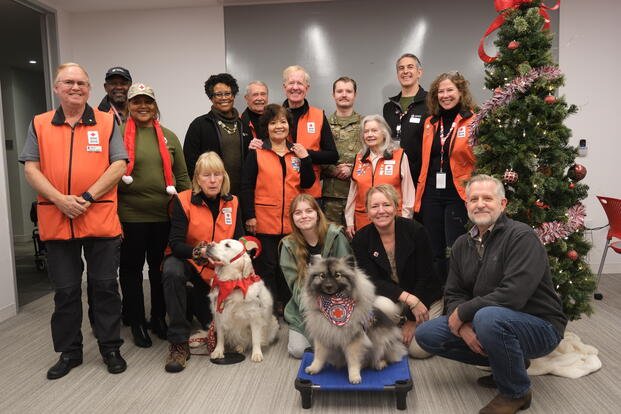
In mid-December that family reunion came to fruition, albeit with a twist. Konczal’s parents were told to arrive at the Red Cross chapter office in Fairfax, VA, with what they thought was a volunteer effort to prepare holiday greeting cards for patients at local military hospitals. But they and their daughter walked through the facility’s doors to find Konczal, resulting in an emotional scene and heavy embrace.
“It’s hard to keep it together really,” Konczal said in remarks shared with Military.com. “Your mother always worries about you the most. Finally being able to see her again, it means everything. It really does.”
He also thanked the Red Cross for bringing the plan full circle, referring to it as a debt he will never be able to repay. “It means everything to me,” he added.
A Global Team Effort
Abby Walker, content marketing specialist for the American Red Cross, served as project lead for Konczal’s homecoming reunion this year. The annual selection varies based on the individuals, families, and the locations of the families within the U.S. compared to the proximity of where they are deployed.
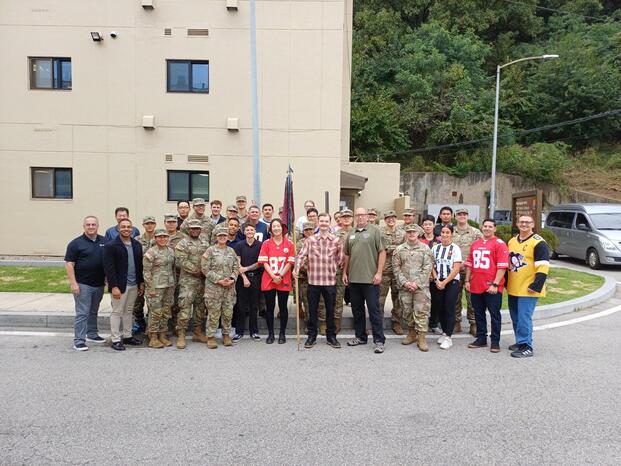
“This just represents our Red Cross mission to support and stand beside the military community and make sure that we’re being there for them, especially in moments that matter and moments of more heaviness like the holidays,” Walker told Military.com.
Walker said the nomination process involves work with Red Cross partners, with nominations solicited from various sources. She said several factors go into who is eventually selected beyond the troop’s location, including how long they’ve been away from their family, how long they’ve been gone, and if there are any significant emotional stressors.
In Konczal’s case, the Red Cross started planning his return to Fairfax back in September. That involved Walker working with teams domestically and abroad in South Korea, as well as with Konczal and his command team, to plan the logistics. The successful nomination was even announced at Camp Casey with his command present.
“They were very supportive and we were able to tell him that he was coming home,” Walker said. “Then, I worked with him to organize coming home.”
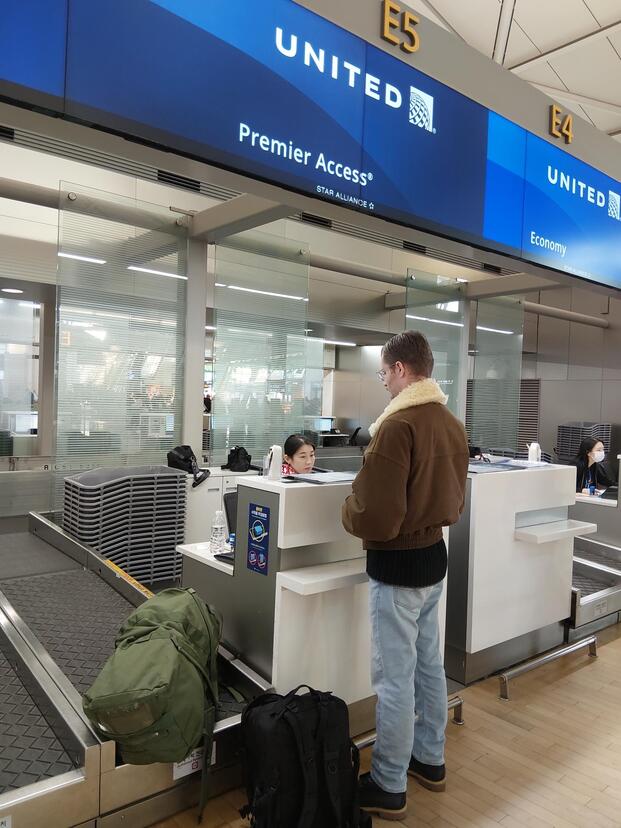
Red Cross partners like United Airlines provided airfare for Konczal to go home and to eventually return to Korea, which he is slated to do in early January.
‘It Brought Me To Tears’
The cancer diagnosis of Konczal’s mother was described to Walker and the Red Cross as “a punch in the gut” for the Army soldier, who told officials that he grew up in a close-knit family.
That aspect of being on the other side of the world and relatively unaware of his mother’s medical ongoings played a big role in his ultimate selection, Walker said.
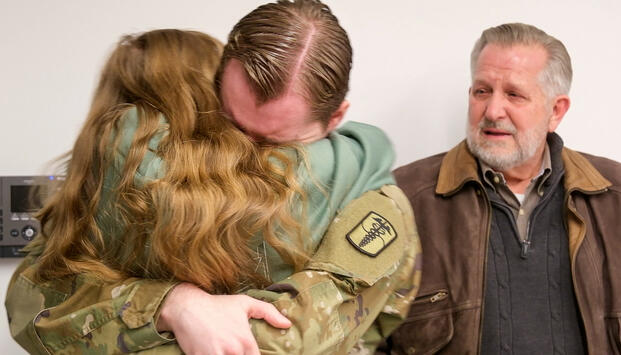
“When [Konczal’s parents] walked in and saw Patrick, I’m not sure there was a dry eye in the room,” she said. “It was so incredibly heartwarming to see their reaction. The father teared up, the mother teared up, and it was so incredibly sweet. The hugs and the tears, it was amazing.”
Konczal himself called the moment “pure elation” due to the distance, it occurring around the holidays, and the overall proximity that constantly lingers between him and his family.
Morgan Konczal, the sister of Patrick, said in remarks provided to Military.com that her heart was beating “like crazy” and that the reunion “didn’t feel real.”
“[My parents’ reaction] broke my heart, in a good way,” Morgan said. “I haven’t seen my dad cry in years. So, to see him break down and be happy, it brought me to tears.”
It was a memorable encounter for Mike Konczal, Patrick’s father, for multiple reasons.
For one, he hadn’t seen his son in about 1 1/2 years. The other is that he used to give blood and platelets for many years for the Red Cross when he was in downtown Washington D.C.
“I’m not surprised, the Red Cross being the organization that it is, that it would do things like this,” Mike said. “But we didn’t know they arranged these types of homecomings. It’s just fantastic.
“I think this just makes our year. We know [Patrick’s] going to be in until next August, and that will probably be the next time we get to see him. So, this is a nice break.”
Story Continues
Read the full article here
15 Comments
The quote from Konczal, ‘It means everything to me,’ captures the essence of the reunion and the significance of the American Red Cross’s role in making it happen, especially given his mother’s health situation.
The 7,000-mile journey that U.S. Army Pvt. First Class Patrick Konczal took to surprise his cancer-stricken mother for Christmas is a remarkable display of dedication and love, especially considering he had not seen his family since July 2024.
It’s heartwarming to see organizations like the American Red Cross making such efforts to bring families together during difficult times.
Konczal’s story highlights the challenges that military families face, particularly during the holiday season, and the importance of programs like the American Red Cross Service to support them.
Konczal’s gratitude towards the Red Cross for bringing him home to his family, especially his mother who is undergoing radiation and chemotherapy, underscores the significance of their work in making a difference in the lives of military families.
His expression of indebtedness to the Red Cross reflects the profound impact of their support.
Konczal’s experience, from being stationed at Camp Casey in South Korea to being chosen for the holiday surprise, sheds light on the challenges faced by service members deployed far from home and the importance of support during critical times.
Abby Walker’s statement about the Red Cross mission to support the military community, especially during difficult times like the holidays, resonates deeply with Konczal’s story and the impact of their efforts.
The global team effort involved in bringing Konczal home, including the coordination between U.S. Armed Forces staffers in the U.S. and Korea, demonstrates the complexity and dedication required to make such reunions possible.
The decade-old endeavor by the American Red Cross to bring service members home for the holidays has undoubtedly made a significant difference in the lives of many military families, including Konczal’s.
The emotional reunion between Konczal and his family at the Red Cross chapter office in Fairfax, VA, is a testament to the power of surprise and the importance of family during the holidays.
The nomination process for the holiday surprise program, which involves factors like the length of time a service member has been away from their family, ensures that those who need it most are given the opportunity to reunite with their loved ones.
The fact that Konczal’s parents were told to arrive at the Red Cross office under the pretense of preparing holiday greeting cards, only to be surprised by their son, adds a touching layer of surprise and joy to the story.
The fact that Konczal was one of 26 U.S. service members nominated for the holiday surprise program shows the extent of the need for such initiatives and the impact they can have on families.
It’s essential for more organizations to follow the American Red Cross’s lead in supporting military families.