

Listen to the article
The Army’s new acquisition strategy—buy fast, in small quantities, then maybe buy a lot more—is causing headaches for at least one of the vendors working on the service’s new medium-range reconnaissance drone.
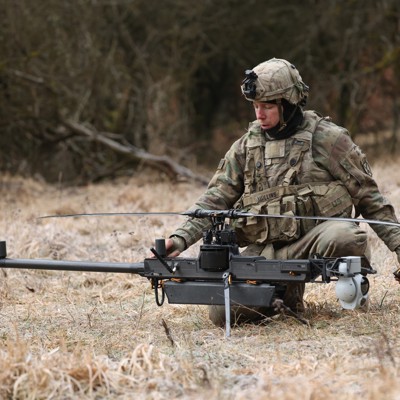
Anduril is one of two firms working to produce drones that can give Army maneuver companies at least six miles of visibility for up to 30 minutes at a time, but the service’s Continuous Transformation strategy is making it tough to plan ahead for production—which may prevent the company from delivering if the Army decides to start buying the drones by the thousands.
“The way the Army is approaching this now…they want flexibility and they want routine competition, because they know that we’re going to keep investing and keep improving the systems,” Jason Dickinson, general manager for the Ghost-X drone program at Anduril, told Defense One. “But because it’s a little opaque for us right now, it’s very hard to right-size your production capacity.”
The piecemeal buying strategy could also be in conflict with a recent Defense Department memo calling for the military services to treat small drones like munitions rather than aircraft, along with a call to start acquiring new technology as if the country is at war.
Dickinson’s team is investing in Ghost-X production capacity based on how confident he is in where his platform stands with the Army, he said, knowing that he has one co-vendor now, but expecting that there could eventually be three or four.
In 2025, that meant deploying 200 Ghost-X systems with the Army, with the expectation that another 200 would be needed this year to keep outfitted the Transformation-in-Contact brigades testing them.
But beyond that, it’s a bit of a question mark.
“How do I think about growing responsibly so that I can meet the needs of the Army, and also sell into other allied nations, sister services and those kinds of things?” Dickinson said.
Particularly painful, he said, is trying to figure out how to meet the Army’s sustainment needs for Ghost-X, because there’s no process in place to start procuring replacement components.
In a traditional program of record, repairs and maintenance would be factored in, with a guaranteed number of years and an expected payment to give the vendor an idea of how much money to sink into a production line.
“But again, for us, it’s ‘When does that start?’” Dickinson said. “We don’t know. How many are they going to buy? I don’t know.”
‘More competitive and responsive’
Army officials have stressed recently that they expect contractors to make the initial investments into developing new technology. At the same time, the Pentagon is pushing the services to turn up the volume on procurement.
That’s creating tension that the government is likely going to have to solve, said Mackenzie Eaglen, a senior fellow at the American Enterprise Institute.
“I mean, I know we’ve got to make numbers and live in the budget, but the government has to take the lead, I think, in a lot of cases,” Eaglen told Defense One during the State of Defense Business Acquisition Summit in November.
The Army declined to make an official available to Defense One to discuss this tension.
The office that oversees Army aviation acquisition provided a written statement, which said that while they are committed to “a more competitive and responsive procurement environment,” they believe their increased spending on small drones in general should reassure vendors.
“The current UAS procurement strategy has obligated all appropriated funds from previous years, and the Army is prepared to accelerate the procurement of UAS when Congress appropriates FY26 funds, further establishing a consistent demand signal to industry,” said the spokesperson, who was not authorized to speak on the record.
In its 2026 budget request, the Army asked for just under $804 million to sink into its small UAS programs. Changing the budget to a capability bucket instead of line items for individual platforms is a win for more agile acquisitions, but it does leave vendors having to guess what their slice of that pie will look like.
The Army’s response did not address specific questions about ramping up production capacity and supply chains to respond to sudden increased demand, or whether the service is looking into making some of these investments itself.
It takes about three months to increase production capacity, Dickinson said, and twice that long to get the supply chain to meet it.
“And so I have to sit here and weigh, do I invest a couple million dollars in high-tech production capabilities without knowing what the actual demand is? Am I going to get the return on that?” he said.
And once there’s floor space and technicians hired, the supply chain has to surge.
“If I’m asking them to produce tens to hundreds right now, and I’m like, ‘Hey, now I need you to go to a thousand’—that’s a major step change,” he said. “And we find some suppliers, they can’t cut it, right?”
So for now, it’s a guessing game.
“I am leaning forward on the production and the supply chain, because I know that that boat is so long to turn,” Dickinson said. “And so I know the Army has a requirement—they have a gaping wound right now of no UAS in many, many brigades.”
Read the full article here
16 Comments
The mention of treating small drones like munitions rather than aircraft in the recent Defense Department memo highlights the need for a clear and consistent approach to procurement and regulation in the drone industry.
The Pentagon’s push for the services to turn up the volume on procurement while expecting contractors to make initial investments in developing new technology is creating tension that needs to be addressed.
Anduril’s general manager, Jason Dickinson, mentioned that the company is investing in Ghost-X production capacity based on their confidence in the platform, but it’s hard to right-size production capacity due to the Army’s opaque approach.
Mackenzie Eaglen’s comment that the government needs to take the lead in solving this issue is spot on, given the current procurement strategy’s limitations and potential consequences.
The Army’s approach to procurement is not only affecting Anduril but likely other vendors as well, who are trying to navigate the uncertain landscape and meet the Army’s needs while ensuring their own business sustainability.
The Army’s new acquisition strategy of buying in small quantities and then possibly buying more is causing problems for vendors like Anduril, who are trying to plan ahead for production of the Ghost-X drone.
This approach seems to be at odds with the recent Defense Department memo that calls for treating small drones like munitions rather than aircraft.
The expectation that there could eventually be three or four vendors for the Ghost-X drone program adds another layer of complexity to the procurement process and the Army’s acquisition strategy.
The fact that the Army deployed 200 Ghost-X systems in 2025 and expects to need another 200 this year to outfit the Transformation-in-Contact brigades testing them shows the potential demand for these drones.
The Army’s goal of giving maneuver companies at least six miles of visibility for up to 30 minutes at a time with the new medium-range reconnaissance drone is ambitious, but can they achieve it with their current procurement strategy?
It’s unlikely, given the current approach, which may prevent vendors from delivering if the Army decides to start buying the drones by the thousands.
The Army’s Continuous Transformation strategy may provide flexibility, but it’s making it tough for vendors to plan ahead and invest in production capacity, which could ultimately hinder the development of new technology.
The fact that Dickinson’s team is investing in production capacity based on their confidence in the Ghost-X platform shows the level of risk that vendors are taking on in this uncertain environment.
The lack of a guaranteed number of years and expected payment for repairs and maintenance in the traditional program of record is a significant concern for vendors like Anduril, who need to plan for the long-term sustainment of their systems.
Dickinson’s concern about meeting the Army’s sustainment needs for Ghost-X is valid, especially since there’s no process in place to start procuring replacement components.
This lack of planning could lead to significant problems down the line, including increased costs and decreased drone effectiveness.