

Listen to the article
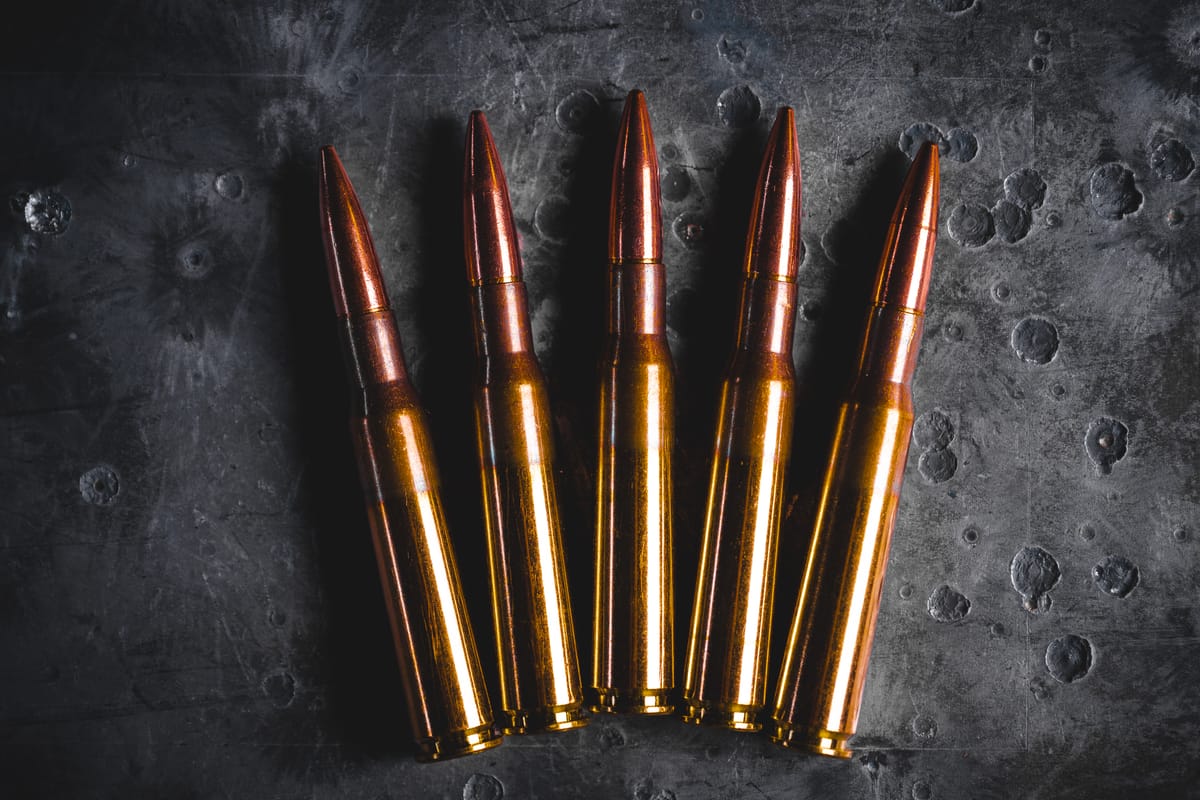
The .50 BMG wasn’t born out of a desire for subtlety. When John Moses Browning developed it in the late 1910s, it was to meet the U.S. military’s need for a heavy machine gun cartridge, capable of defeating aircraft, light armor, and hardened targets at extended ranges.
As such, it was never meant to be “gentle” or “flexible.” It was built for extreme range, high penetration, and reliable performance under harsh conditions. Officially adopted in 1921, the .50 BMG (or 12.7×99mm) round quickly became synonymous with the M2 Browning machine gun.
It proved adaptable across roles: anti-materiel, long-range suppression, vehicle-mounted weapons, and eventually precision rifles. Over time, it moved beyond the machine gun belt and found a strange, permanent home in the civilian world.
Why? Because there is simply nothing else like it.
Why Shooters Gravitate Toward the .50 BMG
No one stumbles into shooting a .50 BMG. It’s a deliberate and calculated choice.
Whereas most rounds are at the mercy of the wind and other ambient conditions, the .50 BMG kinda feels like it’s cheating.
Its heavy, high–ballistic coefficient bullets resist wind deflection exceptionally well, and their retained energy at extreme distance is unmatched by conventional shoulder-fired cartridges. That makes it uniquely suited for long-range steel target shooting, extreme-distance competition, and specialized professional applications.
But ballistically, the .50 BMG is in a class of its own. Common bullet weights range from roughly 647 grains to well over 800 grains, leaving the muzzle at velocities approaching 2,700 to 2,900 feet per second, depending on load and barrel length. The resulting energy figures dwarf traditional rifle cartridges while maintaining lethal or disruptive force at extreme ranges, including those beyond a mile.
And at those extended distances, the .50 BMG still manages to deliver flat trajectories with reduced wind drift and predictable performance when paired with quality optics and disciplined data collection.
Needless to say, the .50 BMG has become synonymous with extreme long-range shooting.
But there’s no free lunch. The recoil impulse, while often mitigated by massive muzzle brakes, is substantial. Some shooters call it a “thump,” but that’s a bit of an overgeneralization and, dare I say, a huge understatement. Firing the .50 BMG is a full-body experience, sending a visual, tactile, and audible shockwave back that clears your sinuses and reminds you exactly what kind of power you’re handling.
Fewer things feel more American, I’ll tell you that much.
Target Shooting and Civilian Use
For civilian shooters, the .50 BMG is more about precision and process than anything else. Range time is methodical, deliberate, and data-driven. Shots are planned, wind calls matter, and spotting impacts at a distance is part of the appeal.
Every trigger press feels earned and disciplined. Recoil management, breathing, follow-through, and consistency all matter, but so do things like atmospheric conditions, ballistic tables, and repeatable shooting positions.
Misses are expensive, both in time and ammo, which naturally encourages shooters to slow down and do things the right way. Many long-range shooters will tell you that spending some time behind the trigger of a .50 improves their performance with smaller calibers simply because it sharpens their process.
That said, access is a real limitation. Not every range can safely accommodate the .50 BMG, and many public ranges prohibit it outright due to backstop wear, safety concerns, or noise considerations. As a result, most .50 shooters reserve their range time for specialized facilities built for extreme distance, where the cartridge can actually stretch its legs and do what it was really designed to do.
Self-defense Considerations (and why they don’t apply)
It should go without saying, but the .50 BMG has no legitimate role in personal self-defense. Its size, penetration, overmatch, and legal considerations remove it entirely from that discussion. This cartridge is explicitly designed for anti-materiel, long-range precision, and sport shooting, and trying to force it into a defensive narrative is rather dangerous and misses the point entirely.
Final Thoughts
The .50 BMG is a purpose-built heavyweight, designed to perform where few cartridges even function reliably. It’s expensive, specialized, and demands respect. But for those who understand its role and are willing to commit to the logistics, it offers an experience unlike anything else in the shooting world.
This isn’t a cartridge for everyone. But nearly 100 years after its introduction, the fact that the .50 BMG remains relevant, capable, and feared, both on the battlefield and on the firing line, speaks volumes about the brilliance of its design.
And if you’re considering stepping into the .50 BMG world, planning ahead matters. Ammunition availability fluctuates, and range access isn’t guaranteed. Whether you shoot it once a year or regularly at distance, having a steady supply on hand ensures you’re ready when conditions, equipment, and opportunity finally align. So be sure to sign in to your AmmoSquared account today and add .50 BMG to your ammo reserve as part of this month’s special stockpile opportunity.
Read the full article here
19 Comments
The article mentions that the.50 BMG has become synonymous with extreme long-range shooting, but I’d like to know more about its use in other contexts, such as hunting or competitive shooting.
The article mentions that the.50 BMG is suited for long-range steel target shooting and extreme-distance competition, but I’d like to know more about its use in specialized professional applications.
I’ve heard it’s used by some law enforcement agencies for high-risk situations, but I’m not sure about the specifics.
The fact that the.50 BMG was developed to meet the U.S. military’s need for a heavy machine gun cartridge capable of defeating aircraft and light armor is a testament to its power.
I’d like to know more about the history of the.50 BMG’s development, particularly John Moses Browning’s role in creating this cartridge.
The.50 BMG’s use in the civilian world is interesting, particularly its adoption by precision shooters who value its accuracy and range capabilities.
The article highlights the importance of recoil management, breathing, and follow-through when shooting the.50 BMG, which suggests that it requires a high level of skill and discipline.
The.50 BMG’s ability to deliver lethal or disruptive force at extreme ranges, including those beyond a mile, makes it a formidable cartridge for military and law enforcement applications.
I’m curious about the different types of ammunition available for the.50 BMG, including the various bullet weights and loads that are mentioned in the article.
The article mentions that firing the.50 BMG is a ‘full-body experience’, which makes me wonder about the safety considerations and precautions that shooters should take when handling this cartridge.
I’m curious about the recoil impulse of the.50 BMG, with some shooters describing it as a ‘thump’, but the article suggests it’s a more intense experience.
The.50 BMG’s ability to deliver flat trajectories with reduced wind drift at extreme distances is impressive, especially when paired with quality optics and disciplined data collection.
I’m skeptical about the article’s claim that the.50 BMG is ‘in a class of its own’ ballistically, as there may be other cartridges that offer similar performance.
Actually, the article provides data to support its claim, including the.50 BMG’s retained energy at extreme distances and its resistance to wind deflection.
The article suggests that shooting the.50 BMG is a methodical and data-driven process, which appeals to me as a precision shooter who values accuracy and consistency.
The.50 BMG’s massive muzzle brakes are likely necessary to mitigate the recoil impulse, but I wonder about the effectiveness of these brakes in reducing the cartridge’s kick.
The.50 BMG’s bullet weights range from 647 grains to over 800 grains, which is significantly heavier than traditional rifle cartridges, and its velocities approach 2,700 to 2,900 feet per second.
The article’s description of the.50 BMG as a ‘full-body experience’ makes me wonder about the physical and mental demands of shooting this cartridge, particularly for extended periods.
I’d like to know more about the.50 BMG’s use in vehicle-mounted weapons, as mentioned in the article, and how it performs in this context.