


Listen to the article
Federal law enforcement officials said they now have “more tools” to pursue drug traffickers after President Donald Trump last week labeled fentanyl a “weapon of mass destruction,” triggering a broader federal crackdown of the dangerous substance.
The designation came through an executive order signed Dec. 16 that classifies illicit fentanyl and related compounds as “weapons of mass destruction,” directing federal agencies nationwide to treat the synthetic opioid as a national security threat under counter WMD frameworks typically reserved for chemical weapons.
The White House said the move reflects fentanyl’s extreme lethality, its role in tens of thousands of overdose deaths each year, and the transnational criminal networks driving its production and distribution. Fentanyl now meets the threshold of a mass-casualty threat because of its potency and scale, they added.
“Illicit fentanyl has become a weapon used against the American people,” a White House spokesperson told Military.com, pointing to the fact that as little as 2 mg can be fatal.
A White House fact sheet said the designation does not create new criminal statutes. It does, however, direct law enforcement in addition to intelligence and homeland security agencies to prioritize fentanyl cases using existing national security and counter-WMD authorities. Officials said the order is designed to tighten coordination across agencies and disrupt supply chains from precursor chemicals to street-level distribution.
The fact sheet also directs federal agencies to integrate fentanyl into counter-WMD preparedness and intelligence planning, frameworks traditionally reserved for chemical weapons threats.
DEA Agents Have ‘More Tools’
Federal law enforcement leaders signaled the designation could have real operational impact.
Drug Enforcement Administration Administrator Terrance Cole said the WMD classification gives agents “more tools” to combat fentanyl trafficking, reframing the drug as a mass-casualty threat rather than a conventional narcotics issue.
“It’s opening up the aperture to treat this really, you know, continuous poison that’s coming to the United States as a weapon of mass destruction,” Cole told ABC News.
The agency has not detailed how charging strategies or investigations may change under the designation. Officials said the move reinforces fentanyl’s treatment as an extraordinary threat to public safety rather than a routine drug case.

Pentagon Yet to Define Its Role
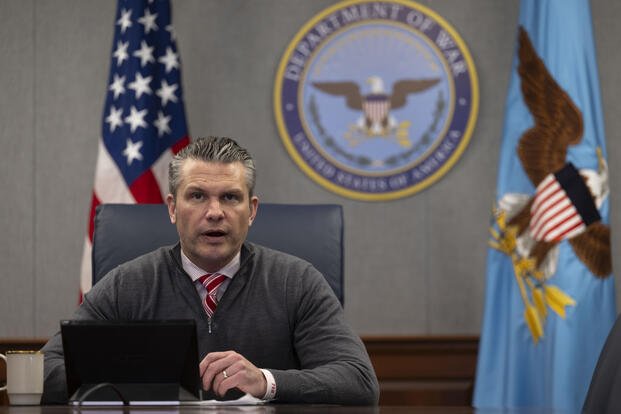
The executive order does not spell out a specific military mission and Pentagon officials have not yet stated whether the armed forces will take on a direct role under the new designation.
The Defense Department has already been grappling with fentanyl’s impact inside the ranks, including a rise in overdoses among young service members that commanders have described as both a readiness and force-protection issue.
Separately, the Pentagon has moved to improve overdose tracking and expand access to naloxone across the services as fentanyl continues to claim lives within the military community.
The services have also incorporated fentanyl into routine discipline and readiness systems, including adding the drug to standard urinalysis testing panels.
Pressure Builds on Global Supply Chains
The White House said the designation is intended to disrupt foreign sources of precursor chemicals and transnational criminal organizations—a move that could also complicate diplomatic engagement with countries tied to fentanyl production and supply chains.
Federal investigations have increasingly shown how fentanyl trafficking networks can intersect with military installations and service members, reinforcing concerns that the drug trade poses security risks beyond public health.
The WMD designation also lands amid a broader push to treat cartel networks as national security threats, including moves to escalate pressure on leadership and supply routes that extend beyond U.S. borders.
Concerns Over Militarized Drug Policy
Civil liberties and criminal justice advocates caution that the “weapons of mass destruction” framing could blur the line between law enforcement and national security authorities, potentially expanding prosecutorial tools while raising questions about proportionality and oversight.
Public health officials have also warned that enforcement-heavy approaches risk overshadowing treatment, prevention and harm-reduction strategies that remain central to addressing overdose deaths nationwide.
Administration officials said the designation represents a shift in posture rather than a single policy change, with agencies expected to apply existing authorities more aggressively in the coming months.
Story Continues
Read the full article here
23 Comments
I’m concerned that the executive order might be more of a symbolic gesture than a substantive solution, and I’d like to see more concrete plans for addressing the crisis.
The executive order’s emphasis on treating fentanyl as a weapon of mass destruction rather than a conventional narcotics issue is a significant shift in approach, and I’m eager to see the results.
I’m skeptical about the effectiveness of the executive order in disrupting supply chains, considering the complexity of the issue.
The integration of fentanyl into counter-WMD preparedness and intelligence planning is a crucial step, as it acknowledges the severity of the threat.
It’s disappointing that the executive order doesn’t provide more details on how the government will support those affected by fentanyl, such as families of overdose victims.
It’s about time the government started treating fentanyl as a mass-casualty threat, given its role in tens of thousands of overdose deaths each year.
I’m curious to see how the Pentagon will define its role in the crackdown on fentanyl, as the executive order doesn’t spell out their specific responsibilities.
The White House’s statement that illicit fentanyl has become a ‘weapon used against the American people’ is a stark reminder of the urgency of the situation.
The DEA’s statement that they now have ‘more tools’ to pursue drug traffickers is intriguing, but I’d like to know more about how this will impact investigations and charging strategies.
The executive order’s focus on disrupting supply chains from precursor chemicals to street-level distribution is a comprehensive approach, and I hope it yields results.
I’m supportive of the government’s efforts to treat fentanyl as a national security threat, but I hope they also prioritize addressing the social and economic factors that contribute to addiction.
The fact that the designation does not create new criminal statutes is interesting, but I wonder if existing laws are sufficient to address the scale of the problem.
The fact that the government is taking a more aggressive approach to fentanyl is reassuring, but I hope they also invest in education and prevention programs to reduce demand.
I’m interested in seeing how the government will measure the success of this new approach, and what metrics they will use to evaluate its effectiveness.
I’m concerned that the focus on fentanyl might divert attention and resources away from other important public health issues, such as opioid addiction treatment.
The comparison of fentanyl to chemical weapons is apt, given its potency and potential for mass casualties, and I support the government’s efforts to take it seriously.
The fact that as little as 2 mg of fentanyl can be fatal is alarming, and I’m glad the White House is taking steps to treat it as a national security threat.
This is especially concerning given the transnational criminal networks driving its production and distribution.
The fact that fentanyl now meets the threshold of a mass-casualty threat is a sobering reminder of the need for swift and decisive action.
The DEA’s administrator, Terrance Cole, is right that the WMD classification gives agents ‘more tools’ to combat fentanyl trafficking, and I’m hopeful that this will lead to meaningful progress.
I’m worried that the broader crackdown on fentanyl might lead to unintended consequences, such as driving the trade underground and increasing the risk of contamination.
I’d like to know more about how the government plans to address the root causes of the fentanyl epidemic, rather than just treating the symptoms.
The fact that federal agencies will now prioritize fentanyl cases using existing national security and counter-WMD authorities is a positive step towards addressing the crisis.