

Listen to the article
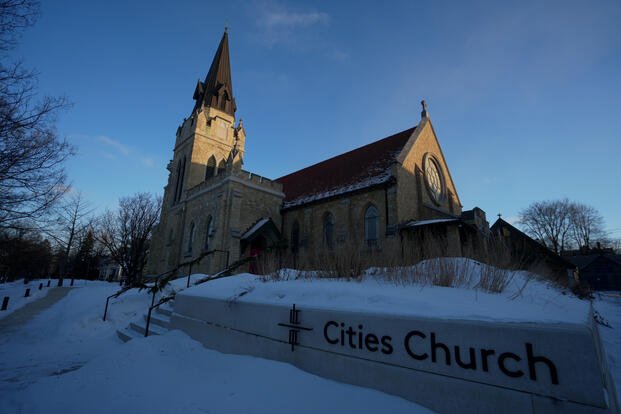
Federal authorities arrested multiple activists after protesters inside a St. Paul, Minn., church disrupted a worship service, pushing the Department of Justice into a broader investigation.
The protest unfolded earlier this month inside Cities Church in St. Paul, where demonstrators interrupted a worship service to protest federal immigration enforcement. The disruption prompted a local police response, followed by federal arrests and a widening DOJ civil rights review currently examining whether the actions violated laws protecting religious worship and if federal charges are warranted.
Military.com reached out for comment to the Department of Homeland Security, U.S. Immigration and Customs Enforcement, the city of St. Paul, Ramsey County officials, and Cities Church.
Bondi’s Forceful Response
The DOJ confirmed it is reviewing the incident after U.S. Attorney General Pam Bondi publicly weighed in, signaling a more aggressive federal posture as arrests and investigative steps moved forward.
Bondi first addressed the case on Jan. 18, hours after the disruption, writing in a post on X that she had spoken with the pastor of the St. Paul church and condemned the protest.
“Attacks against law enforcement and the intimidation of Christians are being met with the full force of federal law,” she wrote.
Bondi reinforced her position Jan. 19 in a Fox News appearance, arguing protests should not take place inside houses of worship and framing the disruption as a violation of religious freedom protections.
After federal authorities disclosed arrests tied to the incident, Bondi again took to X again on Jan. 22, writing: “Listen loud and clear: WE DO NOT TOLERATE ATTACKS ON PLACES OF WORSHIP.”
Asked about the scope and timeline, a Justice Department spokesperson referred Military.com to Bondi’s public remarks and declined to provide additional detail.
Federal prosecutors are continuing to assess whether the protest violated federal civil rights statutes and whether additional enforcement action is warranted. Officials have not announced a timeline for charging decisions, and it remains unclear whether the inquiry will lead to additional arrests or formal indictments.
From Local Protest to Federal Civil Rights Case
Federal authorities have confirmed arrests tied to the protest, signaling a decisive shift from what began as a local disturbance to a case now carrying national legal and political implications.
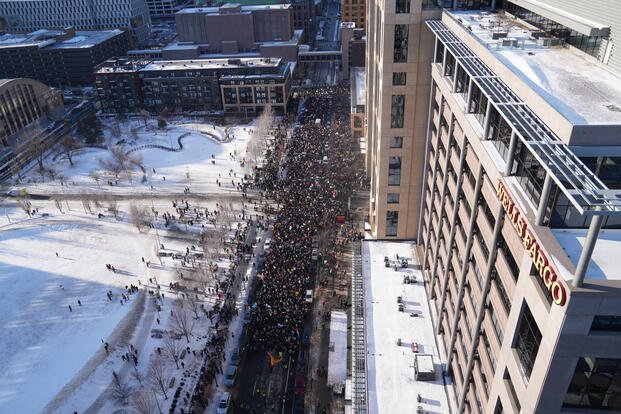
Officials have not publicly detailed how many people have been taken into custody, or whether additional arrests are expected. The investigation is examining whether demonstrators violated laws protecting religious worship, civil rights statutes governing interference, or intimidation and federal public order provisions, according to sources familiar with the matter.
The case is unfolding as immigration enforcement draws sharper scrutiny and street level resistance in multiple cities, including Minneapolis, where the Army ordered military police units to prepare for a possible deployment amid protests tied to ICE activity.
New National Flashpoint
The incident has ignited debate over how protests tied to immigration enforcement intersect with religious freedom and First Amendment protections, particularly when demonstrations move inside sanctuaries.
Disruptions during worship can draw heightened scrutiny because the law treats religious services as protected activity, even though protesters argue they are exercising core speech rights.
Advocacy groups have framed the protest in sharply different terms; supporters may refer to it as civil disobedience while critics may infer it as unlawful interference with worship.
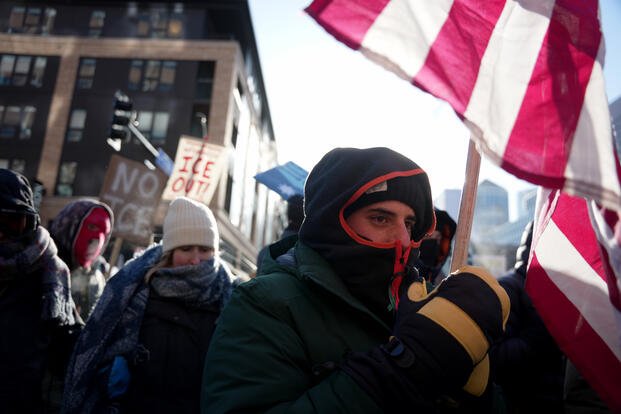
The pressure campaign lands in a broader immigration enforcement moment in which the administration has leaned on expansive legal tools, including use of the Alien Enemies Act in fast moving deportation efforts. Previous reporting has highlighted internal disputes over the legal and intelligence justifications.
No court filings tied to the arrests have been made public, leaving unanswered questions about potential charges and investigative next steps.
Read the full article here
22 Comments
Bondi’s statement ‘WE DO NOT TOLERATE ATTACKS ON PLACES OF WORSHIP’ is strong, but I wonder if it’s a genuine concern for religious freedom or a political move to appease certain groups.
The fact that the DOJ is examining whether the protest violated laws protecting religious worship suggests that the government is taking a firm stance on protecting religious freedom, but it’s essential to balance this with the right to free speech and peaceful assembly.
The fact that the protest has sparked a national conversation about religious freedom and the right to free speech highlights the complexity and importance of these issues in American society.
I’m curious to know more about the specific laws and regulations that govern protests inside places of worship and how they vary across different states and jurisdictions.
The investigation into the protest and the potential for federal charges serves as a reminder of the potential consequences of such actions and the importance of considering the impact on others.
The image of Attorney General Pam Bondi arriving at the White House to honor the 2025 Stanley Cup Champion Florida Panthers seems out of place in this article, and I’m not sure how it relates to the protest or the investigation.
The investigation into whether the protest violated federal civil rights statutes is a crucial step in determining the appropriateness of the protesters’ actions and the response of law enforcement.
It’s concerning that the DOJ is reviewing the incident to determine if federal charges are warranted, as this could set a precedent for future protests and limit the right to free speech.
The fact that the protest began as a local disturbance and has now become a federal civil rights case highlights the complexity and potential consequences of such actions.
This escalation also raises questions about the role of federal authorities in responding to local protests and the potential for overreach.
The use of the phrase ‘full force of federal law’ by Bondi is concerning, as it implies a potentially heavy-handed approach to dealing with protesters and could lead to further escalation.
I’m skeptical about the motivations behind the protest and the true intentions of the demonstrators, and I think it’s essential to consider multiple perspectives before making a judgment.
I agree with Bondi that protests should not take place inside houses of worship, as it disrupts the peaceful assembly of people and can be seen as a violation of religious freedom protections.
But what about the right to free speech and peaceful assembly? Shouldn’t protesters be allowed to express their opinions, even if it’s inside a church?
The fact that Attorney General Pam Bondi publicly condemned the protest and stated that ‘Attacks against law enforcement and the intimidation of Christians are being met with the full force of federal law’ suggests a strong stance on the matter, but I wonder if this will lead to further tensions between law enforcement and protesters.
It’s possible that Bondi’s statement may escalate the situation, but it’s also important to consider the impact of the protest on the church service and its attendees.
The fact that federal authorities have not publicly detailed how many people have been taken into custody or whether additional arrests are expected creates uncertainty and raises questions about the transparency of the investigation.
The involvement of federal authorities in a local protest raises questions about the appropriate level of involvement and the potential for overreach, and I think it’s essential to consider the implications of such actions.
I’m interested in knowing more about the pastor of the St. Paul church and their perspective on the protest, as well as the impact it had on the church community.
The lack of information about the number of people arrested and the potential for additional arrests creates uncertainty and raises concerns about the fairness of the investigation.
I’m curious to know more about the specific laws protecting religious worship that the protesters may have violated, and how the DOJ plans to proceed with the investigation.
I’m interested in knowing more about the experiences of the people who attended the church service and were disrupted by the protest, and how they feel about the subsequent investigation and arrests.