

Listen to the article
Flying with a handgun sounds intimidating the first time you do it, like the moment you say “I need to declare a firearm,” someone is going to SWAT-roll out from behind the Delta kiosk and dive-tackle you. In reality, once you understand the rules and walk in with confidence, it becomes one of those oddly normal travel routines, right up there with taking your shoes off at TSA. I’ve flown with my handgun for countless matches, including big trips like prepping for World Shoot, and the process is smoother than most people think… as long as you follow the steps.
Firearm Travel Laws You Must Know Before Flying
Before I even pack, I always refresh myself on the three worlds of firearm travel: TSA (federal), airline-specific policies, and state reciprocity laws. It takes a few minutes, and the USCCA reciprocity map makes checking state laws almost too easy.
Before any major match (especially if it involves crossing multiple states), I pull up the map to confirm where my permit is valid, what the transport rules look like, and whether the destination has any quirks that could get me in trouble (like magazine capacity limits). Meanwhile, TSA’s firearm guidelines and my airline’s firearm travel page help me avoid surprises like ammo weight limits or carrier-specific rules.
How to Pack a Handgun for Air Travel
Packing is where things start feeling “official.”
Choosing a TSA-Compliant Hard-Sided Gun Case
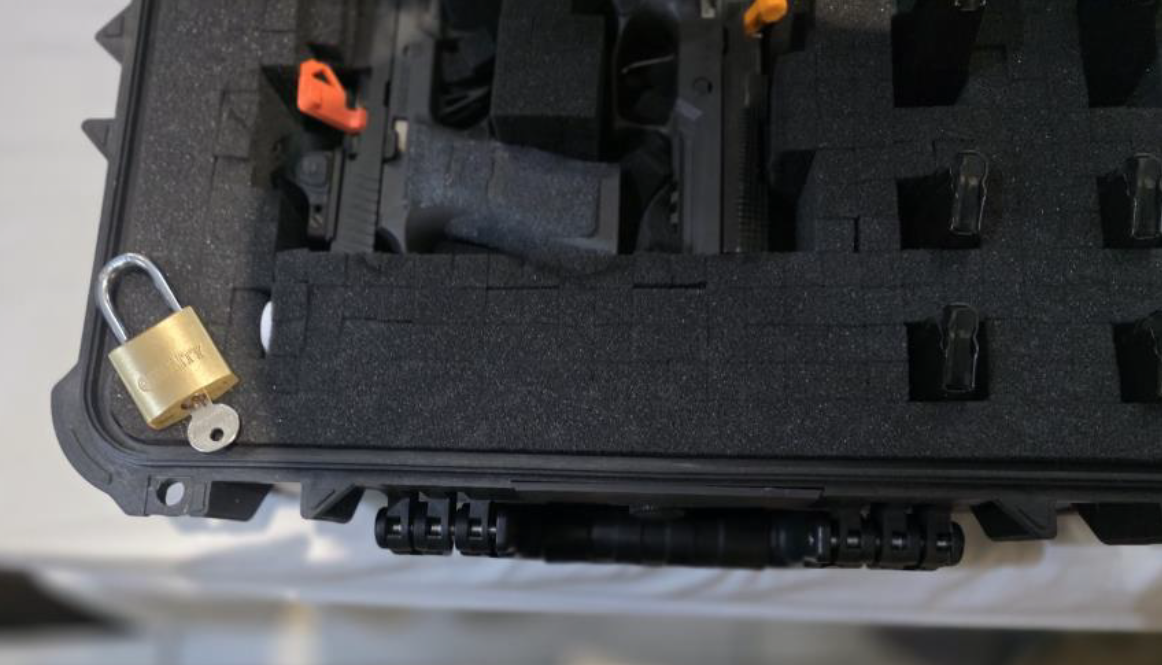
My handgun always goes into a hard-sided case, something like a Pelican or anything equally indestructible, with solid, non-TSA locks. The key detail that surprises new travelers is that the locks must be ones only I can open; TSA should never be able to pop into your gun case on their own.
Why You Must Use Non-TSA Locks on Firearm Cases
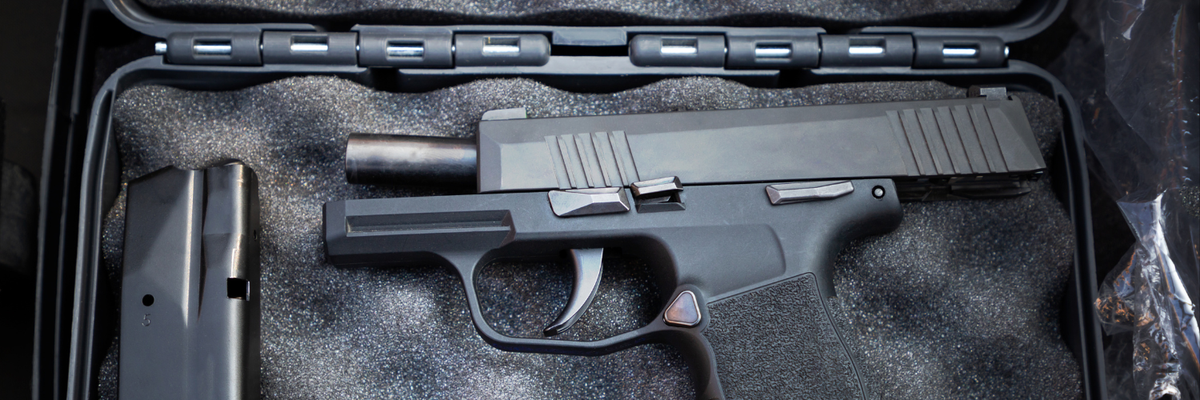
I unload the gun completely, lock the slide back, sometimes drop in a chamber flag just to be extra friendly, and place the empty mags alongside it in the foam (and I usually tuck an AirTag in the case as well, so I can track it at all times on my phone).
Packing Your Gun Case Inside Checked Luggage
Then, instead of checking the hard case by itself, I tuck it inside my normal zippered suitcase. This keeps everything discreet and gives the handgun case a ride that’s cushioned by my clothes, match belt, holster setup, and whatever random tools I inevitably throw in. I then lock the zippered suitcase with a TSA-compliant lock.
Flying With Ammunition vs Shipping Ammo Ahead
Ammo is its own adventure, and depending on the match, I either fly with it or ship it.
TSA and Airline Rules for Flying With Ammunition
Flying with ammo is allowed as long as it’s packed in proper boxes, typically plastic containers designed for cartridges, but make sure it is never loose. Airlines usually cap you at around 11 pounds, though it varies, so I check the limit before packing.
When Shipping Ammo Is the Better Option
For bigger matches, especially where I’ll be burning through serious rounds, shipping to my destination is much easier. Sometimes I’ll mail ammo ahead to the hotel or match director, and other times I’ll use a service like AmmoSquared, where my ammo balance can be shipped to wherever I need it without dragging a small brick of 9mm through the airport.
How to Declare a Firearm at the Airport
Once I’m all packed, I head to the airport and walk up to the ticket counter like a normal human who just happens to have a locked firearm in her suitcase. I smile, stay calm, and say, “I need to declare an unloaded firearm in my checked bag.” There’s no whispering the word “firearm,” and there’s no need to make it dramatic.
Firearm Declaration Cards and TSA Inspection Process
The agent hands me a white, bright orange, or red declaration card, asks me to sign that the firearm is unloaded, and then usually asks me to open the suitcase and the gun case for a quick visual inspection. I simply open the case, show that it’s unloaded, and let them look without ever touching anything myself. The declaration card you just signed will typically be laid by you into the lockable hard case where your handgun is. Once they’re satisfied, I lock everything back up, zip it closed, and hand the bag off.
Depending on the airport, they may send me to a TSA screening area or just ask me to wait nearby for a few minutes in case TSA wants to inspect the bag. If TSA does need to check the case, they’ll call me over so I can unlock it. They shouldn’t cut locks when you’re standing right there, so staying within earshot is part of the routine.
Picking Up Checked Firearms at Your Destination Airport
When I arrive at my destination, whether it’s a local match, a major championship, or an international event, my suitcase usually does not come rumbling out on the regular baggage carousel.
Where Firearm Luggage Is Returned
Instead, I walk over to oversize luggage or the special baggage office (or the occasional instance airport police will bring it over to you. They typically check my ID before releasing the suitcase, which I appreciate because it ensures only the rightful handgun-toting competitor walks off with the bag. I resist the urge to unzip anything until I’m well away from the airport because nothing says “free unwanted attention” like fiddling with a gun case near baggage claim.
Carry Laws After Landing: What to Know Before You Load or Carry
Once I’m at the rental car or hotel, that’s when the reciprocity rules matter most. Before I load the handgun or move it from the suitcase to a holster, I make absolutely sure my carry permit is valid in that state and that I understand their rules on transporting, carrying in vehicles, informing law enforcement, and even things like magazine restrictions. Some states are simple and shooter-friendly; others… well, let’s just say you don’t want to assume anything. In less friendly jurisdictions, the smartest move is keeping everything unloaded, locked, and separated until you’re legally at a place where possession is clearly allowed.
Tips for a Smooth, Stress-Free Firearm Travel Experience
After flying with my handgun countless times, I’ve learned that the trick is always the same: stay organized, stay calm, and treat the process like part of your competition routine. There’s no reason to panic, whisper, or project “suspicious energy.” If anything, the more confident and prepared you look, the smoother everything goes. Using solid locks, labeling your suitcase discreetly, staying near TSA during inspection, and double-checking your maps and rules keeps you out of trouble. And if a ticket agent or TSA officer seems unfamiliar with the process, patience goes further than frustration. Sometimes you’re not just checking a bag, you’re gently educating someone at 6 a.m. before your first coffee.
Flying With a Handgun Gets Easier With Experience
Flying with a handgun truly becomes second nature with practice. Once you’ve done it a few times, the mystique fades, and it becomes as routine as packing your belt or zeroing before a match. Whether I’m traveling for a weekend USPSA event or prepping for something legendary like the World Shoot, the system stays the same: lock it, declare it, check your laws, and move with confidence. Everything else is just part of the journey.
Until next time… “Make ready and sling some lead on the range!”
BONUS MATERIAL: Download a handgun travel checklist>>>
Download
Read the full article here
20 Comments
For larger matches, shipping ammunition to the destination instead of flying with it might be more convenient, especially considering the airline weight limits and the hassle of handling ammo at the airport.
Shipping also reduces the risk of ammunition being lost or damaged during the flight.
The author mentions using a TSA-Compliant Hard-Sided Gun Case, such as a Pelican, to pack their handgun, which makes sense for security and convenience during air travel.
The mention of using an AirTag to track the gun case is a clever idea, providing an additional layer of security and peace of mind during travel.
The comment about the process being smoother than most people think, as long as the steps are followed, suggests that flying with a handgun can be relatively straightforward with proper preparation.
It’s interesting that the author unloads the gun, locks the slide back, and sometimes uses a chamber flag, which indicates a thorough approach to safety and compliance with regulations.
The article’s emphasis on refreshing knowledge of firearm travel laws before each trip underscores the dynamic nature of legal requirements and the need for ongoing education.
The variety of rules and regulations, including magazine capacity limits in some states, highlights the need for careful planning and research before traveling with a firearm.
I’ve always wondered about the specifics of flying with ammunition, and according to the article, it’s allowed as long as it’s packed in proper boxes and not loose, with airlines usually capping the weight at around 11 pounds.
The use of a TSA-compliant lock on the zippered suitcase containing the handgun case is another detail that shows how careful one must be to adhere to all relevant regulations.
The importance of checking the specific policies of the airline you are flying with cannot be overstated, as different carriers may have unique requirements or restrictions on firearm travel.
The use of non-TSA locks on firearm cases is crucial, as the article highlights, to ensure that only the owner can open the case, which adds an extra layer of security and control.
This measure helps prevent unauthorized access, which is a significant concern for firearm owners.
Flying with ammunition or shipping it ahead of time are both viable options, but the choice between them depends on the specific circumstances of the trip and the match, including the quantity of ammo needed.
For those who regularly participate in matches like the World Shoot, understanding how to fly with a handgun efficiently is not just about convenience but also about being able to compete without unnecessary hassle.
The article suggests that once you are familiar with the rules and procedures, flying with a handgun can become a normal part of travel, similar to other security protocols like removing shoes at TSA checkpoints.
The preparation and packing process described in the article, including the use of foam in the gun case and packing the case in a suitcase, demonstrates a methodical approach to traveling with firearms.
Understanding the distinction between TSA guidelines, airline-specific policies, and state laws is essential for smooth travel with a handgun, as emphasized in the article.
The process of checking state reciprocity laws using the USCCA reciprocity map before flying with a handgun seems like a prudent step to avoid legal issues, especially when crossing multiple states.
Packing the handgun case inside a checked luggage, as described, helps keep the process discreet and provides extra cushioning, which could reduce the risk of damage during transit.