

Listen to the article
In the battle over public land access, the sides often seem to have heroic DIY hunters on one side vs villainous landowners scheming to keep us out on the other.
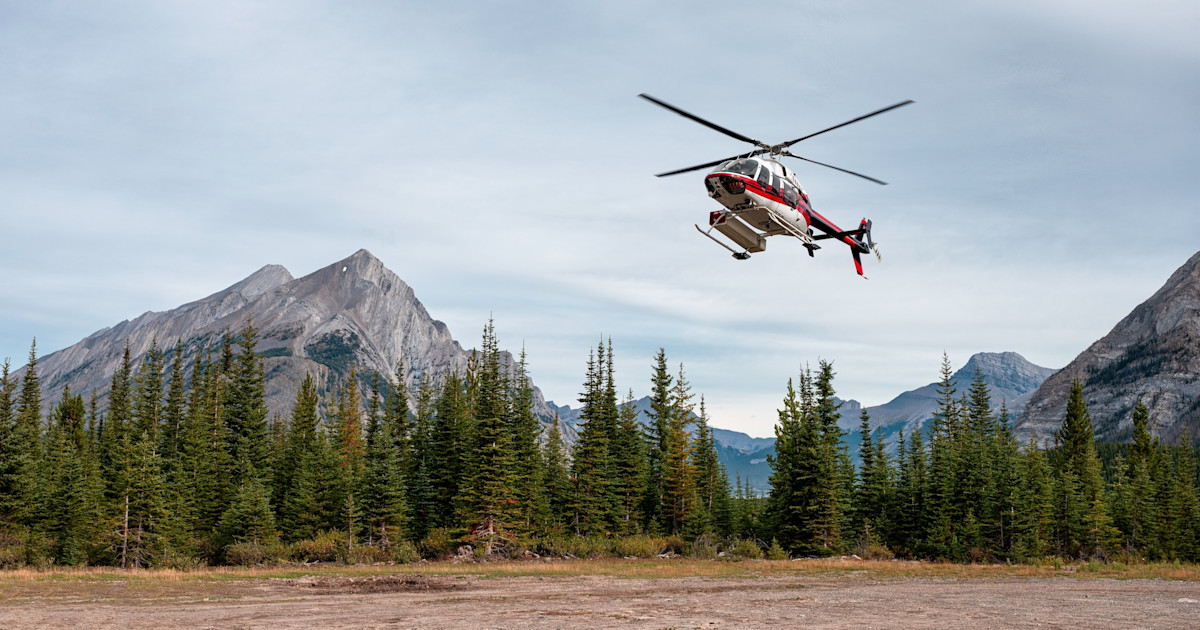
But it’s hardly ever that simple. Take, for example, David Faubion, a Wyoming-based big game hunter who has been chartering a helicopter to fly him and his hunting partners into landlocked public ground in Wyoming over the past few years. You can read about his no-holds-barred approach over at Guns and Ammo, where Faubion is an editor and staff writer.
Faubion has certainly chosen a fitting place for his chopper hunts: according to OnX, Wyoming has around 2.4 million total acres of inaccessible public land, an area roughly the size of the Big Island of Hawaii.
So a scrappy hunter hiring a helicopter for the five-minute trip up and over into that public land? Seems like an obvious protagonist.
However, the details muddy the picture. If Faubion had a five-mile-long pole vault to get to this land, there would be no issue, but there are very strict rules around the use of aircraft when it comes to hunting. For example, in Alaska, it’s illegal to hunt on the same day as you fly in–this prevents people from spotting game from the air, dropping down for a quick shot, packing that meat up, and flying out of there. That’s a hunt that violates fair chase, and the laws are in place to enforce that.
That’s also the case in Wyoming: law on the books states, “No person shall use any aircraft to spot, locate, and aid in the taking of any trophy game animal.” However, there’s plenty of grey area here. If the aircraft is only used for transportation, not for spotting or pursuing game, then you’re okay. So, if Faubion were a helicopter pilot himself and flew into and out of these areas, then there would be no problem. There are lots of amateur small-aircraft clubs that fly hunters around free of charge to keep their skills up–that kind of cooperation would also be fine.
But other rules apply to exchanging money for aid in hunting–that is, guiding or outfitting. Wyoming’s legal definition of an outfitter is anyone who, quote, “for the purpose of financial gain,” provides “guide or packing services for the purpose of taking any big or trophy game animal.” Faubion paid a helicopter operator to get him in and the animals he killed out, and moving that meat and equipment sounds like the packing services that an outfitter provides. Since this helicopter company did not have an outfitter license, these trips may have been illegal.
But it gets even more complex. Wyoming law also defines “packing services” as, “…transporting for hire or remuneration, hunters, game animals or equipment in the field for the purpose of taking any big game or trophy animal.” The key phrase there is “in the field.” Faubion argues that because the helicopter company isn’t advertising itself as a hunting-specific transportation company, it isn’t an outfitter, and because the flights take off from public roadways and land on service roads within BLM land, the helicopter is never technically “in the field.”
You might argue that everywhere on BLM land where there are elk running around is “the field.” However, it’s illegal to shoot game from a truck on a roadway, which would imply that the road is not “the field,” so maybe it is legal to pay for a helicopter trip if you make sure to stick to the roads. After all, UPS wouldn’t need an outfitting license to get your game meat from a pickup in downtown Gillette, Wyoming, to your front door in Orlando, Florida.
So after all these semantics, what do the motives of all our players look like? It’s easy to identify with parts of David Faubion’s mission, and he is forcing an issue of what is or isn’t legal on public lands, regardless of how influential the surrounding landowners are. But he isn’t exactly in a David and Goliath story: it costs several thousand dollars to charter a helicopter, and he has the institutional backing of a major media outlet working on his behalf. And zooming out, do we want rich people in helicopters flying over our heads when we’re in the outdoors?
How about the landowners? Well, of course, some have been pretty unhappy, and some charge significant trespass fees to allow outfitters to cross their land in order to get to public. While at the same time, others do allow occasional access. Does it serve the animals themselves to have helicopters buzzing them overhead?
What’s motivating established outfitters in this situation? Of course, they have a vested interest in keeping things the way they are: if all of a sudden a lot of heli-hunters are killing the trophy elk they’ve had near-exclusive access to, that puts their business in jeopardy. But being rigorous about licenses is important: it means outfitters have insurance, that they’re reputable, that if something bad happens out there, clients can hold them accountable.
Here’s how you can get involved—the Wyoming Board of Outfitters and Professional Guides is holding their quarterly meeting Thursday, December 18th. This body can set rules to clarify all this and help everyone involved. In particular, they could define exactly what “in the field” means. If you’re on your way to a place to kill elk, does that count as in the field, even if you stick to roadways? Answering that question would go a long way.
They could also clarify when general passenger transport becomes hunter transport, subject to outfitting rules around packing services. All you out there in the Cowboy State no doubt have lots of opinions, so tune into this meeting–the Board will be posting a virtual meeting link soon.
If we don’t figure out permanent legal access to our public land, we’re going to be dealing with things like this; it’s supply and demand. Should you outlaw helicopter access, even though it is not for everybody? If that’s the only way you can get into a chunk, you should leave that door open. But if there are other avenues of access, then a helo operation probably isn’t in the best interest of the access seeker or the animals.
Feature image via Adobe Stock.
Read the full article here
19 Comments
The fact that Faubion paid a helicopter operator to get him in and the animals he killed out, and moving that meat and equipment sounds like the packing services that an outfitter provides, raises concerns about the legality of these trips.
Wyoming’s legal definition of an outfitter as anyone who provides guide or packing services for the purpose of taking any big or trophy game animal for financial gain is broad and may need to be revised to account for cases like Faubion’s.
David Faubion’s approach to hiring a helicopter to access landlocked public ground in Wyoming raises questions about the definition of fair chase and the laws surrounding aircraft use in hunting.
The rules surrounding aircraft use in hunting vary by state, with Alaska having a clear law prohibiting hunting on the same day as flying in, and Wyoming’s laws need to be similarly clear to prevent abuses of fair chase.
The use of helicopters in hunting raises questions about the impact on the environment and the potential disruption of wildlife habitats, and these concerns need to be addressed in any discussion of public land access.
The fact that the flights take off from public roadways and land on service roads with no specific hunting-related infrastructure suggests that Faubion may have a valid point in arguing that the helicopter company is not an outfitter.
The law in Wyoming stating that no person shall use any aircraft to spot, locate, and aid in the taking of any trophy game animal is clear, but the grey area surrounding transportation versus spotting or pursuing game needs to be clarified.
Perhaps the law should be revised to include specific guidelines for helicopter use in hunting to avoid confusion.
Faubion’s argument that the helicopter company isn’t an outfitter because it isn’t advertising itself as a hunting-specific transportation company is weak, given that the company is still providing a service that aids in hunting.
The distinction between transportation and packing services is crucial in determining whether Faubion’s trips were illegal, and the fact that the helicopter company did not have an outfitter license adds to the complexity of the issue.
The phrase ‘in the field’ in Wyoming law defining packing services as transporting for hire or remuneration, hunters, game animals or equipment for the purpose of taking any big game or trophy animal is ambiguous and needs clarification.
The concept of fair chase is central to the debate over helicopter hunting, and the laws surrounding aircraft use in hunting need to be designed to protect this principle while still allowing access to public lands.
The example of David Faubion’s helicopter hunts in Wyoming shows that the issue of public land access is nuanced and multifaceted, and requires a thoughtful and balanced approach to regulation and management.
The use of helicopters in hunting is a symptom of a larger problem – the lack of access to public lands – and addressing this underlying issue is crucial to resolving the debate over helicopter hunting.
The fact that there are lots of amateur small-aircraft clubs that fly hunters around free of charge to keep their skills up suggests that there are alternative models for accessing public lands that do not involve paid services.
The public land access debate is not just about hunters versus landowners, but also about the rights of citizens to access and enjoy public lands, and the use of helicopters is just one aspect of this broader issue.
The fact that Wyoming has around 2.4 million total acres of inaccessible public land, an area roughly the size of the Big Island of Hawaii, highlights the complexity of the public land access debate and the need for creative solutions like helicopter hunting.
I agree, but we also need to consider the environmental impact of increased air traffic in these areas.
The complexity of the laws surrounding helicopter hunting in Wyoming highlights the need for clearer guidelines and regulations to ensure that hunters are aware of their obligations and can comply with the law.