
Listen to the article
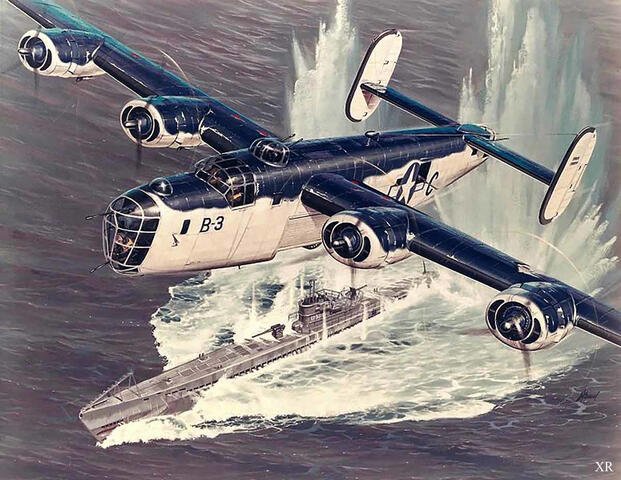
Werner Hartenstein pulled drowning British troops from the Atlantic Ocean in September 1942. The German U-boat commander was flying Red Cross flags and even radioed for help in English. American bombers attacked his submarine anyway, killing dozens of survivors with explosives and gunfire.
The attack ended German humanitarian rescues at sea, an order brought up at the Nuremburg Trials to prosecute a German admiral. Though this would backfire spectacularly against the prosecution.
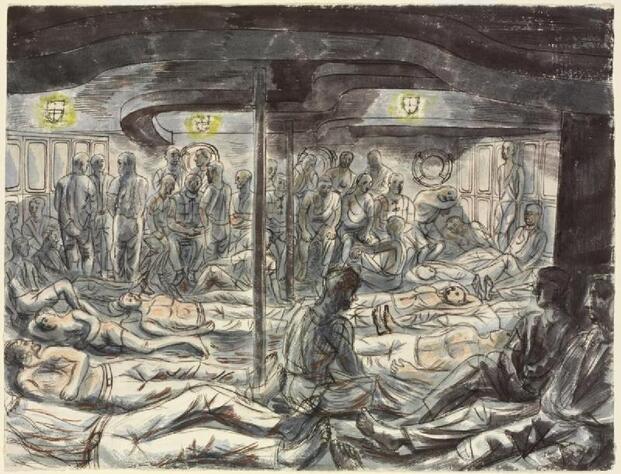
U-156 fired torpedoes into RMS Laconia around 10:30 p.m. on Sept. 12, 1942, about 130 miles north of Ascension Island in the South Atlantic. Hartenstein thought he hit a British troopship sailing alone. When his submarine surfaced, German sailors heard Italian voices screaming in the darkness. The ship was carrying 1,793 Italian POWs captured in North Africa, 286 British troops, 103 Polish guards, 80 civilians and 463 crew. 2,732 people total.
Hartenstein realized his mistake. His torpedoes had killed more than 1,000 Italian allies along with numerous enemies and civilians as the survivors found themselves in the water.
A Rescue Attempt in Enemy Waters
Hartenstein ordered his crew to save everyone they could. He radioed German headquarters to ask for help. The request went all the way up to Admiral Karl Dönitz who approved the rescue and even sent seven more submarines to assist. Dönitz pulled these U-boats from a planned attack on Cape Town, South Africa.
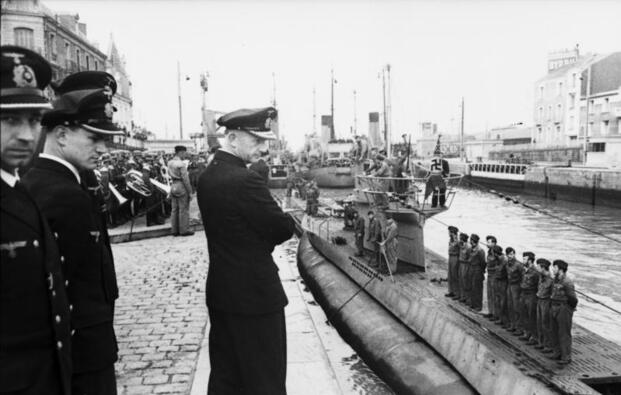
Hartenstein made a desperate decision to save as many lives as possible. He broadcast a message in English asking for assistance, telling all ships in the area that U-156 would not attack any vessels helping rescue Laconia survivors.
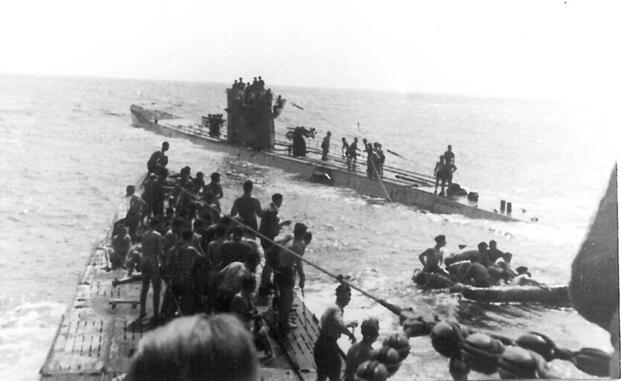
German sailors packed nearly 200 people into the submarine, which normally held 53 crew members. Five women were put in the officers’ sleeping quarters. The submarine towed four lifeboats holding another 200 survivors. The Germans made a Red Cross flag from white bedsheets and painted it red.
Three more submarines arrived on the scene. U-506 picked up 151 survivors. U-507 rescued 491 people. An Italian submarine also joined them. Vichy French warships, nominally allied to the Axis, left ports in West Africa heading toward the rescue site.
British survivors would later write a letter thanking Hartenstein and his crew for saving their lives despite the danger to the submarine.
American Bombers Attack the Rescue
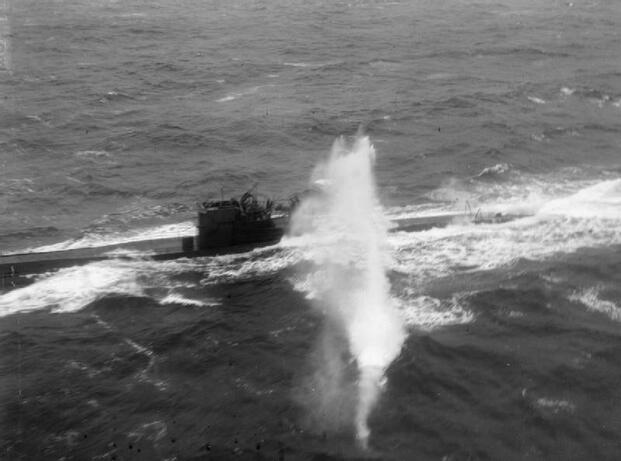
Lieutenant James Harden flew a B-24 bomber from Ascension Island on Sept. 16, 1942. The island held a secret American airbase. Harden spotted U-156 on the surface at 11:25 a.m. The submarine’s deck was crowded with survivors. The Red Cross flag hung over the front of the boat. Four lifeboats full of people trailed behind.
Harden circled for 30 minutes. Hartenstein’s crew desperately sent messages in Morse code asking for help. A British Royal Air Force officer on the submarine radioed the plane that Laconia survivors were aboard, including soldiers, civilians, women and children.
Harden flew back to base and reported what he saw. Captain Robert Richardson III, the senior officer on duty that day, ordered him to attack the submarine.
Richardson later said he did not know about Hartenstein’s radio messages announcing the rescue. He claimed submarines could not legally fly Red Cross flags during combat operations. He worried the U-boat would attack two British merchant ships steaming toward the area.
He also feared the Germans had found Ascension Island’s secret fuel storage tanks. The island base was so classified that its discovery would threaten Allied supply lines to Africa and the Soviet Union.
Harden returned and dropped bombs on the submarine and lifeboats. One bomb exploded 10 feet from a lifeboat packed with survivors, killing dozens instantly. Depth charges damaged U-156’s hull. Hartenstein cut the lifeboats loose and ordered everyone off the submarine so it could dive underwater to escape.
Despite the strafing and bombing runs by the American plane, the crew dove slowly to give everyone on the deck a chance to drift into the ocean without being pulled under.
Upon returning to Ascension Island, Harden reported that he sank U-156. He received an Air Medal for the attack, despite obviously killing unarmed shipwreck survivors.
The submarine actually survived and continued rescuing people in the aftermath. The U.S. military never investigated Harden or Richardson for one of the worst U.S. war crimes committed in WWII.
Axis Ships Complete the Rescue
The other submarines continued pulling survivors from the water despite what had just happened. U-506 and U-507 ignored orders to abandon British and Polish survivors in retaliation for the incident.
French warships arrived over the next few days. The cruiser Gloire and sloops Annamite and Dumont-d’Urville collected survivors from submarines and lifeboats, transporting them to Dakar and other ports.
In total, 1,113 people survived. Between 1,658 and 1,757 died. Most of the dead were Italian prisoners who drowned or were killed when the torpedoes struck and in the bombing attack.
Germany Ends Rescue Operations
German high command was infuriated. Dönitz issued new orders on Sept. 17, 1942. German submarines would no longer rescue survivors from ships they sank. The so-called Laconia Order said U-boats must not pull people from the water, give them lifeboats, food or water.
German submarine commanders had often helped torpedo survivors before this order. They gave them supplies and directions to land when it was safe to do so. This followed old naval traditions about helping fellow sailors at sea.
The new order ordered a stop to all such attempts. Dönitz later said the order was to protect his submarines from air attacks while on the surface and was not intended to kill survivors.
Despite the order, most German submarines attempted to assist survivors at sea whenever possible through the end of the war.
Hartenstein received Germany’s Knight’s Cross medal on Sept. 17. A U.S. Navy patrol plane sank U-156 with depth charges on March 8, 1943. All 53 crew members died, most of them having been apart of the Laconia Incident, including Hartenstein.
The Nuremberg War Crimes Trial
After the death of Adolf Hitler, Dönitz became the head of Nazi Germany and oversaw the unconditional surrender of the country to the Allies. As one of the leading Nazi officials, war crimes prosecutors were eager to see him tried for German atrocities in the war.
Prosecutors at Nuremberg formally charged Admiral Dönitz with war crimes in 1946. They used the Laconia Order as their main evidence against him. They argued the order proved Dönitz wanted to murder unarmed survivors.
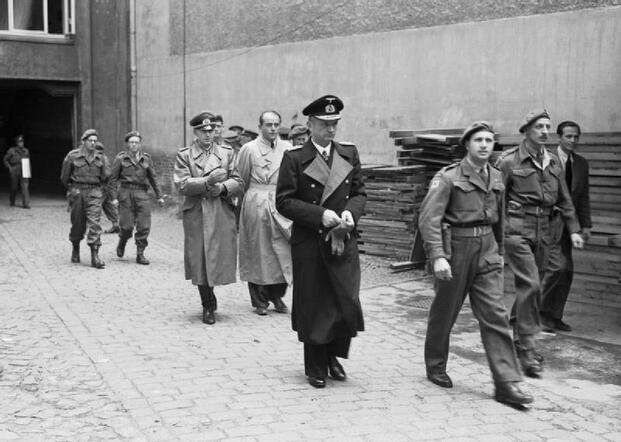
Dönitz’s lawyer, Otto Kranzbuehler, immediately asked to question American Admiral Chester Nimitz. Nimitz commanded all U.S. forces in the Pacific during the war and was serving as Chief of Naval Operations when the trials began. Kranzbuehler had learned about American submarine tactics from a book he found in a library. The court approved written questions for Nimitz to answer under oath.
Upon being questioned, Nimitz’s answers completely dismantled the prosecution’s case. The American admiral confirmed that U.S. submarines attacked Japanese merchant ships without warning starting on Dec. 7, 1941. American submarines operated this way across 30 million square miles of ocean until the end of the war.
Nimitz said American submarines generally did not rescue enemy survivors if it put the submarine at risk or stopped it from completing its mission. This was nearly identical to what Dönitz’s order said.
Kranzbuehler showed that Britain also ordered its submarines to sink all ships on sight in certain areas. He presented statements from 66 German submarine commanders describing times they helped survivors when they could do so safely. The evidence showed German submariners sometimes acted more humanely than Allied forces. It also showed the Laconia Order only came after American forces attacked a protected rescue operation.
The Court’s Decision
The court said on Oct. 1, 1946, that evidence did not prove Dönitz deliberately ordered the killing of survivors. The judges noted that American and British submarines operated under similar orders from the start of the war, even before German subs did.
The court convicted Dönitz of other charges but did not punish him for his submarine warfare policies. The judges found that Allied nations had followed the same policies Germany did.
Dönitz received 10 years in prison for pursuing an aggressive war under the Nazi regime. He served his full sentence at Spandau Prison in Berlin. He died in 1980.
About 120 American admirals wrote letters saying Dönitz’s conviction was unfair. In 1993, the Pentagon published a legal study of the Laconia incident. Pentagon lawyers wrote that Richardson and Harden were both guilty of war crimes under international law. The report further said Harden’s actions were inexcusable because he clearly saw the rescue operation happening. Under the laws of war that existed in 1942, submarines engaged in rescue operations could not be attacked.
Richardson retired from the Air Force as a brigadier general in 1967. He died in 2011. Records show little about what happened to Harden after the war.
The Legacy of the Incident
The Laconia incident being presented in the Nuremburg Trials revealed several unique pieces of WWII history. Prosecutors claimed German submarine warfare was uniquely criminal. Nimitz’s testimony proved American submarines did the same things.
Richardson’s order to attack the rescue operation killed hundreds of Allied troops and civilians on top of countless unarmed prisoners of war. The attack caused Dönitz to end all German rescue attempts. While Richardson and Harden worried the U-Boat would attack nearby Allied ships, their actions led to more Allied deaths during the war as German subs refused to rescue survivors.
The entire situation embarrassed American prosecutors at the Nuremberg trials.
Military lawyers today study the Laconia incident when teaching rules of engagement. Current laws say vessels conducting rescue operations cannot be attacked, even if they are warships.
The BBC made a television series about the incident in 2011 called “The Sinking of the Laconia.” Historians still debate whether Richardson and Harden should have faced military trials for attacking a marked rescue operation.
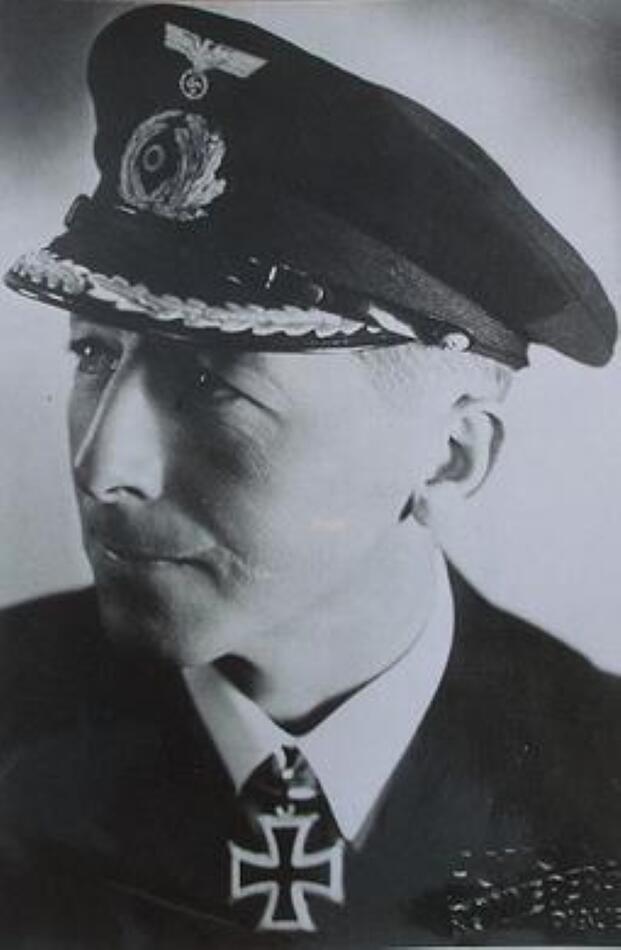
The German commander who tried to save enemy survivors received his country’s highest medal for valor only to die in combat six months later. The American officers who attacked a legal rescue operation received medals and retired with honors. The Nazi admiral who stopped all future rescues went free because American, British and Japanese submarines all followed the same policies he did.
When Nimitz testified that American submarines operated the same way prosecutors claimed was a German war crime, the case fell apart. The Laconia Incident is remains one of the worst American war crimes in history and its effects on the Nuremburg Trials remains unique in how it partially exonerated a Nazi leader accused of war crimes.
Story Continues
Read the full article here
19 Comments
The fact that U-156 was able to tow four lifeboats holding another 200 survivors, in addition to the people on board, is a testament to the resourcefulness and determination of the German sailors involved in the rescue efforts.
The incident serves as a reminder of the importance of clear communication and identification protocols in combat situations to prevent similar tragedies from occurring in the future.
I’m struck by the contrast between the humanitarian actions of Hartenstein and his crew, and the aggressive actions of the American bombers, which highlights the complexities and nuances of human behavior in wartime.
It’s worth noting that the attack on U-156 ended German humanitarian rescues at sea, which had significant implications for the conduct of naval warfare for the remainder of the conflict.
I’m curious to know more about the aftermath of the Nuremberg Trials and how this incident was used to prosecute a German admiral, and how it ultimately backfired against the prosecution.
The incident has significant implications for our understanding of the complexities of World War II and the need for nuanced and balanced historical accounts that take into account the actions of all parties involved.
The fact that the RMS Laconia was carrying 1,793 Italian POWs, 286 British troops, 103 Polish guards, 80 civilians, and 463 crew, totaling 2,732 people, underscores the scale of the tragedy and the importance of protecting human life in conflict zones.
It’s disturbing to think that the attack on U-156 may have been motivated by a desire to prevent the rescue of enemy personnel, rather than a genuine concern for military objectives or strategy.
The fact that British survivors later wrote a letter thanking Hartenstein and his crew for saving their lives, despite the danger to the submarine, speaks to the enduring power of human kindness and compassion in the midst of conflict.
The decision by Hartenstein to broadcast a message in English asking for assistance, telling all ships in the area that U-156 would not attack any vessels helping rescue Laconia survivors, demonstrates a remarkable level of courage and compassion in the face of adversity.
The decision by Lieutenant James Harden to attack U-156 despite seeing the Red Cross flag and survivors on deck is a disturbing example of the ‘fog of war’ and the potential for catastrophic mistakes in combat situations.
The statistic that over 1,000 Italian allies were killed in the initial torpedo attack on the RMS Laconia is a stark reminder of the devastating consequences of war on civilians and non-combatants.
It’s also worth noting that the Italian POWs on board were likely not a military target, and their deaths were a tragic consequence of the conflict.
I’m surprised that Admiral Karl Dönitz, who approved the rescue and sent seven more submarines to assist, wasn’t more widely recognized for his humanitarian efforts during the war.
It’s remarkable that German sailors were able to pack nearly 200 people into the submarine, which normally held 53 crew members, and that they made a Red Cross flag from white bedsheets and painted it red to signal their humanitarian intentions.
The use of a secret American airbase on Ascension Island to launch the attack on U-156 raises questions about the extent of US military involvement in the region during World War II.
The fact that U-156 was flying Red Cross flags and even radioed for help in English, yet was still attacked by American bombers, raises serious questions about the US military’s adherence to international humanitarian law during World War II.
This incident highlights the complexities of war and the difficult decisions made by military personnel in high-pressure situations.
The incident highlights the complexities of the Allied relationship with the Vichy French, who nominally allied to the Axis, yet sent warships to assist in the rescue efforts.