

Listen to the article
How much electricity does a pellet stove use?
Most pellet stoves use 80–150 watts while running, with a brief startup draw of 300–500 watts.
Most pellet stoves require electricity to run the auger, combustion fan, and exhaust fan, even though they burn pellets for heat.
If you’re wondering how many watts or amps a pellet stove uses, or whether it can run during a power outage, this article answers both. I measured my own pellet stove’s real-world power consumption and tested how to keep it running using a battery and inverter when the grid goes down.
| Pellet Stove Operation | Power Usage |
|---|---|
| Ignition startup | 300–500 W |
| Normal running | 80–150 W |
| Typical amps (120V) | 0.7–3.5 A |
| Requires electricity? | Yes |
How Much Electricity Does A Pellet Stove Use?
First, as with all typical pellet stoves I’m aware of, they require a 120-volt AC power source (typical in-home electricity) to run the auger and fans.
Second, we need to discover the operational power consumption (watts) or the AC (amps) before figuring out what we need to run our pellet stove during a power outage.
I am going to use my pellet stove, which is a Harman brand, as an example. This will likely be typical for most pellet stoves with fans and motorized auger.
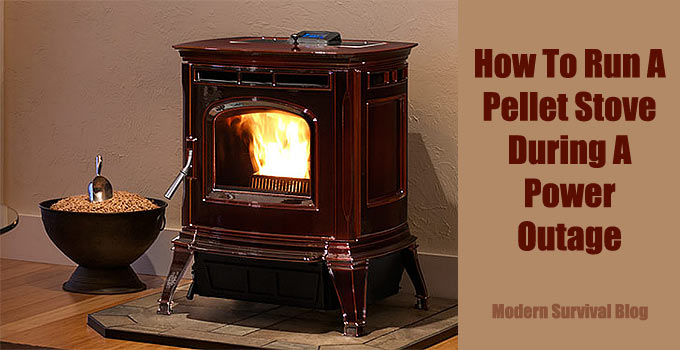
The electrical requirements listed in their spec sheet are as follows. However, I will give you real-world measurements afterward:
Specifications:
Start up: 4.0 amps (460 watts)
Run: 3.0 amps (345 watts)
My Real World measurements:
Start up: 3.0 amps (360 watts)
Run: 0.7 amps (80 watts averaged over time)
Note: I am confident these specs are for everything full-on(all fans, auger speed, etc.) on the highest settings, plus a margin.
My real-world measurements are less than that during regular operation. When the ignitor initially fires up, there is a brief condition (several minutes) of higher power consumption (the ignitor coil).
How Many Watts Does a Pellet Stove Use?
Typical pellet stove wattage:
- Startup (igniter): 300–500 watts (5–10 minutes)
- Running average: 80–150 watts
- Peak load (worst case): ~400–500 watts
My Harman ‘Absolute 43’ pellet stove draws almost 400 watts for a few minutes during the ignition period. Once lit and running, the average consumption was 80-100 watts, averaged over time.
While this example uses a Harman pellet stove, power consumption is similar across most modern pellet stoves with fans and augers.
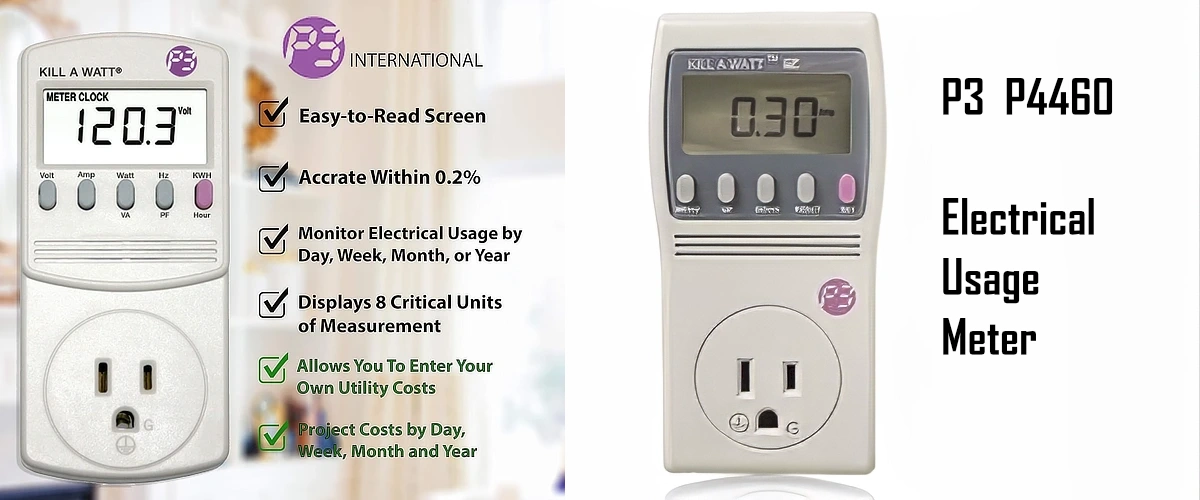
How did I measure how many watts/amps? Answer: I use the ‘KILL A WATT’ meter…
As an Amazon Associate I earn from qualifying purchases.
(no extra cost) Thank you
>> P3 International P4460 Kill A Watt EZ Electricity Usage Monitor on Amazon
I explain more about it in the following article:
[ Read: How To Measure Energy Consumption Of Appliances ]
How Many Amps Does a Pellet Stove Use?
At 120 volts AC:
- 400 watts ÷ 120V ≈ 3.3 amps
- 100 watts ÷ 120V ≈ 0.8 amps
Most pellet stoves draw less than 1 amp while running, but briefly spike higher during ignition.
On the 12-volt DC side (if using battery power and inverter), this equates to roughly 30–35 amps during ignition.
Do Pellet Stoves Require Electricity?
Yes.
Most pellet stoves require electricity to operate the auger and fans. Without power, they will not feed pellets or exhaust smoke unless connected to a backup power source.
Can You Run a Pellet Stove Without Electricity?
A pellet stove cannot run on its own without electricity — but it can be powered by a battery, inverter, or generator during a power outage.
How To Run A Pellet Stove Without Electricity
Do you want to know how to run a pellet stove during a power outage? If you have a pellet stove and rely on it for heat, pay attention to this article. I’ll show you how I measured my own pellet stove for watts/power consumption and how I can run it during a power outage for a while.
Without electricity during the winter (severe storms, snow/ice, high winds), your home or cabin will get cold quickly!
It’s not that complicated to set this system up. I will first run through the calculations to exemplify a pellet stove’s typical power consumption. Then, we’ll see what we can do to keep it running during a power outage/blackout.
12 Volt Battery & DC-AC Inverter For Pellet Stove
Could you make your emergency backup power source so you can run a pellet stove during a power outage? You will need at least one deep cycle 12-volt battery and an inverter to convert 12-volt DC to 120-volt AC.
Use a pure sine wave inverter to avoid potential damage to sensitive control boards.
DC to AC Power Inverter Wattage for Pellet Stove
The inverter you choose will have to produce at least the maximum load of your pellet stove. That would be 460 watts based on the Harman spec sheet or 360 watts based on my accurate real-world measurements. When specifying a system, looking at the worst-case scenario is always wise, so let’s look for at least a 500-watt inverter.
The only time the inverter will be loaded down will be a few minutes after the ignitor is on. Otherwise, it will be cruising well below its rated maximum during regular operation.
I tested this 600-watt Samlex (because I already had it for other purposes). It worked great. However, it is somewhat expensive (albeit a high-quality inverter made in the USA).
The following choices from BESTEK (a reputable company) are good, cost-effective power inverters. You might also consider their 1,000-watt model, which may benefit other uses.
BESTEK Pure Sine Wave Power Inverter DC 12V to 110V AC
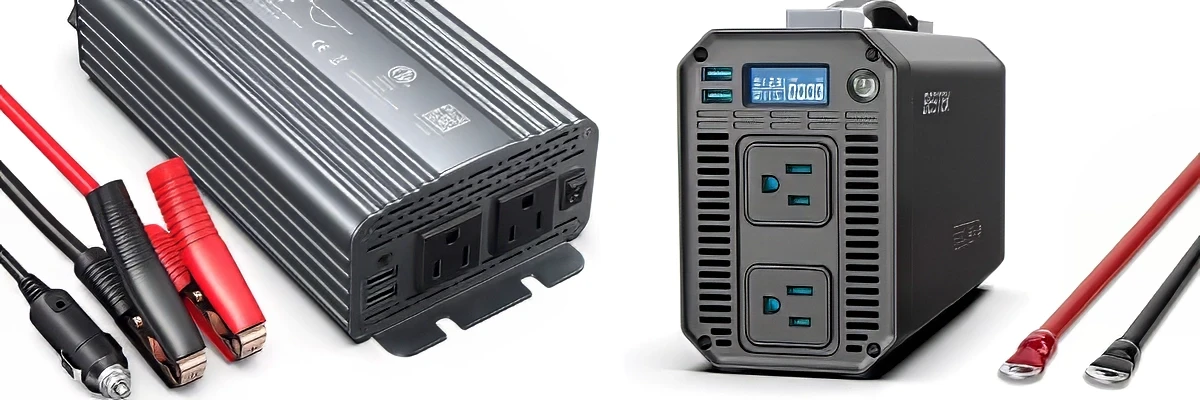
The following 500 watt inverter should get the job done, albeit nearly maxed out during the ignition phase:
BESTEK 500 Watt Inverter on Amazon
My recommendation for an inverter is the following 1,000 watt BESTEK due to the margin it provides during pellet stove ignition:
BESTEK 1,000 Watt Inverter on Amazon
Think of it this way: A 12-volt DC to 120-volt AC inverter can also power other devices. It’s great for an emergency situation, simply powering something from your vehicle battery, etc.
12 Volt Battery to DC-AC Power Inverter Cables
You might make your own cables to connect the battery to the inverter, or you might purchase one already made. Some DC to AC inverters may come with cables/connectors for this.
How many 12-volt DC Amps to run a Pellet Stove
My real-world measurements of my Harman pellet stove showed that it pulled nearly 400 watts during the ignition phase. Depending on the battery condition/voltage, the 400-watt amperage conversion for a 12-volt battery may range from 32 to 34 amps.
Bear in mind that you will need a cable set that can carry the full amp rating of the inverter. For a 500-watt inverter, an 8AWG cable is generally sufficient.
You might use the following 8AWG jumper cables. Cut the cable set in half and strip the non-clamp ends to bare wire. This will insert into the DC input connectors of the inverter.
If you are serious about using the BESTEK 1000-watt inverter near its rated capacity, I recommend the following 4AWG cable set (note the different lengths) instead of the factory-included cables.
Battery For Pellet Stove During A Power Outage
Now that you have an inverter, you will need a battery! Here’s the critical thing to remember: The battery must have enough capacity to run your pellet stove for a reasonable period.
What does that translate to? A typical 12-volt “deep cycle” marine-type battery will be rated for about 100 AH (Amp Hours). This will be displayed on the battery itself. And this will be your limiting factor regarding how long you can run your pellet stove.
Let me explain…
If you are using a 100AH 12VDC deep-cycle battery and your pellet stove draws 100 watts on average, this battery will be 50% discharged in 6 hours.
Formula:
100 watts = 8.3 amps (100 W / 12 VDC)
100 watts / 8.3 amps = 12 hours (fully discharged)
12/2 = 6 hours (50% discharged)
This assumes continuous operation; real-world runtime is often longer due to thermostat cycling.
Important: Never fully discharge a lead-acid battery. It will damage the battery. To prolong the battery’s life, it is a rule of thumb not to discharge beyond 50% before recharging.
Note: Connecting two batteries in parallel (plus to plus and minus to minus) will double their capacity and run time.
Real-world pellet stoves cycle on and off, meaning actual runtime is often longer than continuous calculations suggest.
Use Your Car Battery To Run Pellet Stove Through an Inverter
Another alternative would be to connect your inverter to your car battery. You can run an extension cord into your house to operate the pellet stove. You could start your vehicle now and again to charge the battery to keep your pellet stove running.
[ Read: Best Extension Cord ]
Frequently Asked Questions About Pellet Stove Electricity Use
Most pellet stoves use about 80–150 watts per hour while running. During startup, the igniter briefly increases power usage to 300–500 watts for several minutes, after which electricity consumption drops significantly.
No. Compared to other household appliances, pellet stoves use very little electricity. Even when running continuously, the electrical cost is modest because the stove’s heat comes from burning pellets, not electricity.
Yes. Most pellet stoves require electricity to power the auger, combustion fan, and exhaust fan. Without electricity or backup power, the stove will not feed pellets or vent exhaust gases.
A pellet stove cannot run on its own without electricity. However, it can be powered during a power outage using a battery and inverter, generator, or other backup power source.
Most pellet stoves require:
300–500 watts during ignition
80–150 watts while running
Designing a backup system with a 500–1000 watt inverter provides sufficient capacity and safety margin.
At 120 volts AC:
Running: ~0.7–1 amp
Startup: ~3–4 amps
On a 12-volt battery system, startup can draw 30–35 amps briefly during ignition.
Yes. A pellet stove can run on a 12-volt battery paired with a DC-to-AC inverter. Runtime depends on battery capacity, inverter efficiency, and how often the stove cycles on and off.
A typical 100Ah 12-volt deep-cycle battery can run a pellet stove for about 6 hours at 50% discharge. Actual runtime is often longer because pellet stoves cycle rather than running continuously.
Yes, provided you use a pure sine wave inverter with sufficient wattage capacity. Pure sine wave inverters help protect sensitive electronics in modern pellet stove control boards.
SUMMARY
- Pellet stoves typically use 80–150 watts while running
- Startup ignition briefly draws 300–500 watts
- Most require electricity for auger and fans
- A battery + inverter can keep a pellet stove running during outages
To run your pellet stove during a power outage, you need only an inverter and battery (or batteries).
Although I indicated that a single typical 100 AH battery may run a pellet stove for about 6 hours (50% discharge), in reality the stove may be cycling on and off. This would lengthen the run time of the battery.
Hopefully, this article has helped some of you who may have been concerned about losing the heating ability of your pellet stove during a power outage.
Also, a wood stove won’t have this problem during a power outage :=)
Read the full article here
24 Comments
The use of a ‘KILL A WATT’ meter to measure the energy consumption of appliances, as mentioned in the article, seems like a useful tool for understanding and reducing energy usage, and I’m considering purchasing one for my own use.
I’ve been using a pellet stove for several years and have noticed that the energy consumption can vary significantly depending on the type of pellets used and the stove’s maintenance, and I’d like to know more about how these factors affect the overall energy efficiency.
The article’s use of specific examples and data to illustrate the energy consumption of pellet stoves makes the information more credible and useful, and I appreciate the author’s attention to detail.
I appreciate the article’s focus on the practical aspects of pellet stove energy consumption, including the use of real-world measurements and specific examples, which makes the information more relatable and useful.
The real-world measurements of the Harman pellet stove’s power consumption, which showed a startup draw of 3.0 amps and an average running consumption of 0.7 amps, are helpful in understanding the actual energy usage of these stoves.
I have a pellet stove similar to the Harman ‘Absolute 43’ model mentioned in the article, and I’ve noticed that my energy consumption is similar to the measurements provided, with an average of around 100 watts during normal operation.
The article mentions that most pellet stoves use 80-150 watts while running, which seems relatively low compared to other heating systems, but I’m curious about the startup draw of 300-500 watts and how it affects the overall energy consumption.
The article’s discussion of the importance of considering the power consumption of pellet stoves, particularly in the context of power outages, is relevant to my own situation, as I live in an area prone to outages and am considering purchasing a pellet stove.
I’ve been considering purchasing a pellet stove as a backup heating source, and the article’s information about the energy consumption and requirements for running during a power outage has been helpful in my decision-making process.
I’d recommend considering the overall cost and efficiency of the stove, as well as the cost of the pellets, before making a decision.
I’m concerned about the environmental impact of using pellet stoves, particularly in terms of the energy required to produce and transport the pellets, and I’d like to know more about the overall carbon footprint of these systems.
The article mentions that the Harman pellet stove’s specifications list a startup draw of 4.0 amps, but the real-world measurements showed a lower draw of 3.0 amps, and I’m curious about the reasons for this discrepancy.
The article suggests that the specifications may include a margin for error, which could explain the difference between the listed and actual measurements.
I was surprised to learn that pellet stoves require electricity to run the auger, combustion fan, and exhaust fan, even though they burn pellets for heat, and I’d like to know more about the typical amps used by these components.
The article states that the typical amps for a pellet stove is 0.7-3.5 A, but I’d like to know if this range applies to all pellet stove models.
The article’s explanation of how to calculate the amps used by a pellet stove, using the formula 400 watts 120V ≈ 3.3 amps, is helpful in understanding the relationship between watts and amps.
I’m not sure I understand the formula, can you explain it in simpler terms?
I’m skeptical about the claim that most pellet stoves can run during a power outage using a battery and inverter, and I’d like to know more about the specific requirements for doing so.
The article doesn’t provide detailed information on the battery and inverter requirements, but it mentions that the author tested it with their own pellet stove.
The article’s conclusion that most pellet stoves use relatively low amounts of energy, particularly during normal operation, is reassuring, but I’d like to know more about the long-term costs and benefits of using these systems.
The article’s discussion of the different components of a pellet stove, including the auger, combustion fan, and exhaust fan, and how they contribute to the overall energy consumption, is helpful in understanding how these systems work.
I’d like to know more about the role of each component in the overall efficiency of the stove.
The article’s discussion of the different power consumption stages, including startup, running, and peak load, is helpful in understanding how pellet stoves use energy, and I appreciate the specific wattage ranges provided, such as 300-500 watts for startup and 80-150 watts for running.
I’m interested in learning more about the ‘KILL A WATT’ meter mentioned in the article and how it can be used to measure the energy consumption of other appliances, not just pellet stoves.