


Listen to the article
If you’re trying to kill your first turkey, this guide covers everything you need: when seasons open, essential turkey hunting gear, how to find and pattern birds, and where to aim when that gobbler finally steps into range.
I can’t think of a more thrilling hunt than calling a strutting gobbler into shotgun range. Whitetails might be the golden boy of big game hunting in America, but hunting wild turkeys might be the most fun. They’re a low-stakes-high-reward wild game species. They’re exciting, fun to call, and incredibly delicious. That’s probably why so many hunters hit the woods every spring in search of a lonely and willing tom. Besides, resident tags are cheap, and even nonresident tags won’t break the bank.
For many hunters, wild turkeys are the gateway drug to other game species. They’re super fun to hunt, but they can be challenging and downright frustrating, especially when you’re learning on your own. Whether you’re brand new or still chasing your first bird, this guide covers everything you need:
When Can You Hunt Turkey and What’s Required?
While some states offer fall seasons, turkey seasons across the country usually align with peak breeding in the spring. Some of the earliest turkey seasons open the first week of March, while the latest (Maine) closes at the beginning of June.
If you’re interested in chasing turkeys in the fall, you can read more about it here, but for the purpose of this article, I’ll focus on spring seasons.
Except for states that allow you to shoot bearded hens, most states only allow you to kill gobblers (male turkeys) during the spring, since this time of year is critical for hens nesting and nest success rates.
What You’ll Need (Licensing & Regulations)
Like any other game species, turkey hunting requires a hunting license and/or a special permit, depending on the state. Every state also requires mandatory reporting once you harvest a bird. Some states allow you to report the bird by a certain time of the day you kill it, while others require you to tag your bird before moving it.
Just be sure to check your state’s laws, and know that regulations can even vary within the state depending on different zones, private, or public lands. If you have any doubts, reach out to your local game warden.
If you’re looking to explore some new states for turkey hunting, check out The 5 Best States for DIY Turkey Hunting.
Essential Turkey Hunting Gear (For Beginners)
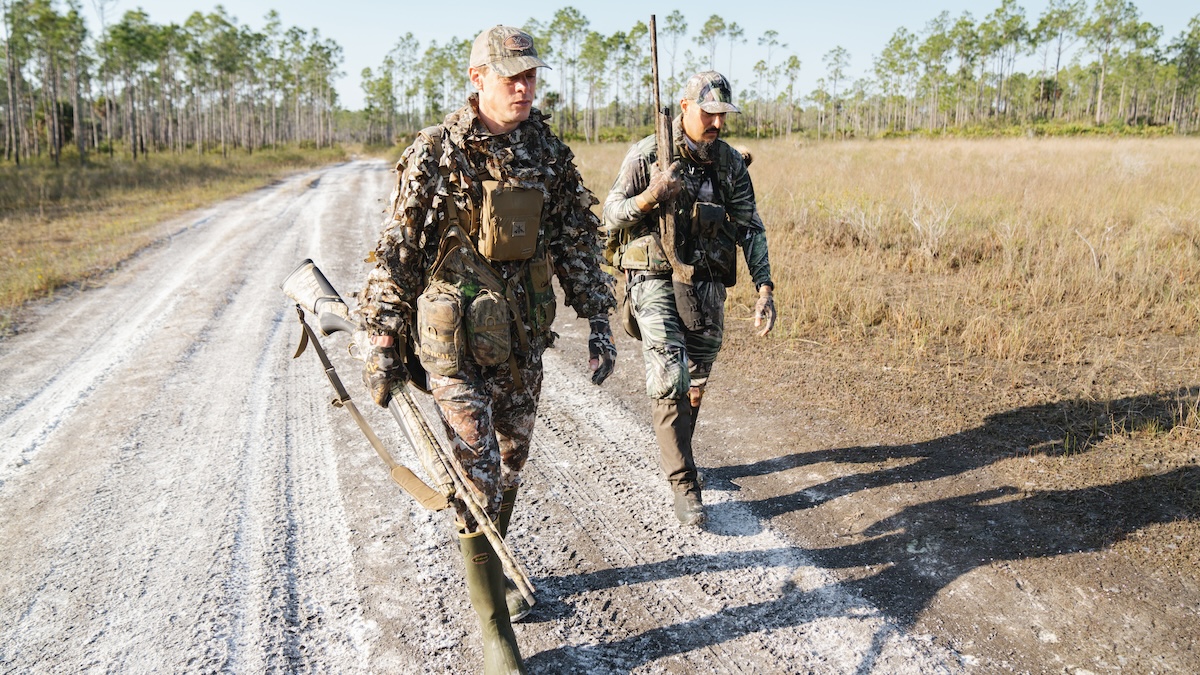
A good call, a shotgun and ammo, earth-toned clothes, and patience are all you need to kill a turkey. There’s a lot of gear out there that can make turkey hunting more convenient or comfortable, but that doesn’t mean they’re necessary to kill a turkey. Once you learn how to successfully call and kill turkeys, you can decide what extra gear you want/need.
Turkey Calls
If you’re new to turkey hunting, find a call that allows you to make easy, realistic turkey sounds. Here’s a list of the different types of calls you should consider and their pros/cons.
| Call Type | Best For | Pros | Cons |
| Box Call | Beginners, open country | Easy to use; produces loud, realistic yelps and clucks; great for locating birds at distance | Requires both hands; scraping sound can spook close birds |
| Pot (Friction) Call | Versatile mid-range calling | Short learning curve; produces wide variety of sounds; many striker/surface combos to dial in your sound | Requires hand movement; limited volume ceiling compared to box calls |
| Mouth (Diaphragm) | Hands-free, close-range | Completely hands-free; once mastered, most versatile call available; inexpensive | Steeper learning curve; can take several sessions to find a reed combo that fits your palate |
| Push-Button | Absolute beginners, one-handed | Nearly foolproof; single finger operation; realistic sounds with zero practice | Very limited sound range; hard to vary cadence and rhythm naturally |
There are other calls that require steeper learning curves, but these are more than enough to get you started. You don’t need a whole vest full of calls either. Focus on learning how to run one or two and you can add to your collection as you go.
For a deeper dive on turkey calls, check out:
Shotguns
The best shotgun for turkey hunting is the one you already have. You don’t have to buy a new, turkey-specific shotgun. You can do that later. Turkey hunters were killing longbeards well before turkey ammo, red dots, or camouflaged shotguns hit the shelves. But if you don’t have a shotgun, here are a few things to consider.
12 Gauge vs. 20 Gauge
I suppose you could opt for a .410 or even the niche 28 gauge, but 20- and 12-gauge shotguns dominate the turkey woods. They’re easy to find, and so is the ammo. If you want the best bang for your buck, a 12 gauge can cover everything from small game to predator and deer hunting. It does produce more recoil than a 20 gauge, but this can be mitigated through recoil pads or load choice.
Thanks to TSS, turkey chokes, and other shotgun configurations, the 20 gauge isn’t far behind the 12. In fact, many hunters opt for a 20 to reduce weight or recoil and still kill turkeys at impressive distances. In other words, it’s hard to go wrong with either of these turkey getters.
| 12 Gauge | 20 Gauge |
| More widely available ammo at all price points | Lighter and easier to carry all day |
| Heavier payload = more pellets downrange | Less recoil — better choice for younger or recoil-sensitive hunters |
| Versatile for deer, predators, and small game | Modern TSS loads close most of the performance gap with 12 gauge |
| More recoil, especially with heavy turkey loads | Slightly harder to find budget turkey loads at rural retailers |
| Best all-around choice for a first hunting shotgun | Excellent choice if you already own one or want to reduce recoil |
If you’re looking for a turkey gun recommendation, check out these articles:
Turkey Ammo
When selecting turkey ammo, you want your shotgun/ammo/choke combo to put 100 pellets in a 10-inch circle at 30 or 40 yards max. For most first-time turkey hunters, Winchester Longbeard XR is a great starting point. It patterns well, kills cleanly at 40 yards, and costs a fraction of premium turkey loads.
There are a number of other premium turkey ammo options available, like TSS (Tungsten Super Shot) and bismuth loads that pattern better than traditional lead shot. However, they’re really expensive. Lead should be the obvious choice for new turkey hunters (unless you live in California).
Read more about ammo selection and patterning a shotgun for turkey hunting below:
Turkey Chokes
If your shotgun already has a factory full choke, pattern it at 30 and 40 yards before you buy anything. You may not need a turkey choke at all.
Hunters killed plenty of birds with single-barrel shotguns with nothing more than full choke or even modified bores. However, if you’re struggling to consistently get a healthy dose of pellets on paper at 30 and 40 yards, you should invest in a turkey choke.
You don’t have to spend a fortune. I’m running a 20-year-old Primos Tight Wad choke in my main turkey gun. You can find them for about $30. They’re even compatible with TSS, for when you inevitably go down that rabbit hole. Bottom line, you don’t have to look hard to find an affordable and reliable turkey choke.
Decoys
Unless you’re bowhunting turkeys, you don’t need decoys. I’ve been turkey hunting for more than two decades. I’ve killed a lot of turkeys in that time, and I’ve never used a decoy. But that doesn’t mean they don’t have their place. If you’re targeting gobblers in open ag land or flocked-up turkeys, you can use decoys to add a visual confirmation to your calling. Otherwise, they’re situational, and you shouldn’t use them on public lands.
Turkey Camo
Turkey hunting clothes can make your time in the woods more comfortable and convenient, but you can get away with any earth-toned digs that you already own. First, work on your stealth. No amount of camo will fool a turkey if you can’t sit still. Focus on making subtle, glacial-like movements in the turkey woods. Skills before gear any day.
That said, if you’re looking for gear recommendations:
First Lite has a couple of different camo options that work great for turkey hunting.
How to Find Turkeys
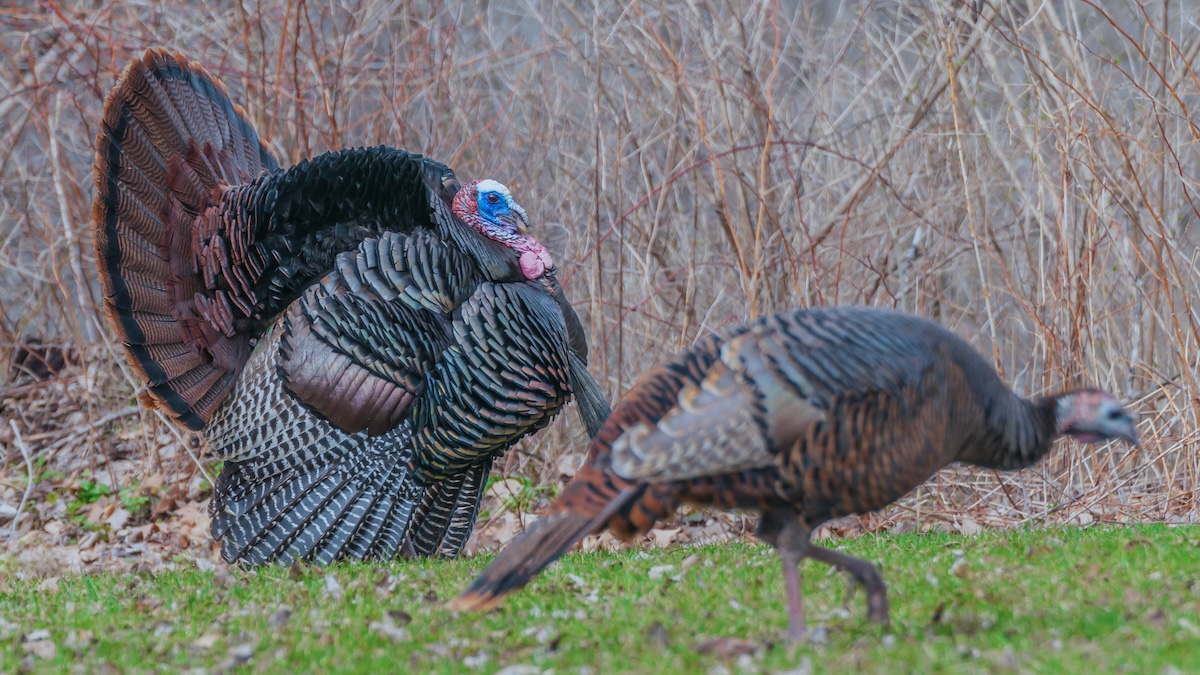
For the most part, wild turkeys are plentiful almost everywhere in the lower 48 and even Canada. You can find them in the swamps of Florida, the mountains of Colorado, and everywhere in between. The different terrain and habitat types are what make turkey hunting exciting yet challenging. Yet, these different locales all share critical habitat components that allow turkeys to thrive. Here are a few habitat features that turkeys need:
Roost Trees
Turkeys need trees to roost. They’re diurnal, meaning they’re only active during the day, while they sleep in trees (aka roost) at night. Turkeys might roost in mature hardwoods, pines, cottonwoods, or palms in Florida.
Open Feeding Areas
During the day, turkeys spend their time feeding through open woods, large ag fields, and fresh or young (one to two year) clear-cuts where they can eat green sprouts after a burn or an assortment of bugs.
Nesting Sites
Hen turkeys typically nest in thick, grassy cover. This cover helps provide security from predators during the nesting season.
Where to Look for Turkeys
Turkeys thrive in diverse habitats where they can find a combination of feeding, roosting, and nesting sites. Like whitetails, turkeys will roost and live near edges. This could be where a hardwood bottom meets a thinned section of pines or a fence row or block of woods that joins a large ag field. But, just because a place looks like it should hold turkeys, doesn’t mean it will. You’ll need to scout to make sure you’re not spending your time in a turkey desert. Look for tracks, scat, turkey scratching, or glass an area to confirm birds are there.
Private vs. Public Lands
If you have plenty of private land chock-full of turkeys, that’s great. Whether it’s your family farm or hunting club, limited or unpressured grounds can provide a great turkey hunting experience.
Even if you don’t have access to unpressured private land, you can find tough yet rewarding turkey hunting on public lands. Just know that if you hear a gobbling bird, you’re not the only suitor. Look for places that might not jump off the map. Places where large tracts of public forests meet private ag fields are easy to spot. These spots probably hold turkeys, but they probably spend most of their time on the private.
Consider spots that might hold turkeys but aren’t easily accessible, especially in later parts of the season. These could be distant ridge points, soft edges within a large, monotonous block of old-growth timber, or even a stretch of woods on the other side of a large creek or river. Yes, you’ll have to wake up earlier and walk farther to access these spots, but that’s what makes it all the sweeter when you finally pull the trigger.
Why Turkeys Can Be So Hard to Kill
Before you walk into the turkey woods this spring, it helps to know what you’re up against. Turkeys are stupid about a lot of things—but surviving isn’t one of them.
Keen Senses
Turkeys have an uncanny ability to survive. They have some of the keenest eyesight in the woods, and they can detect the subtlest of sounds. Their monocular vision, which allows them to operate each eye independently, provides them with a 360-degree field of view. This allows turkeys to spot potential predators from a distance. Their hearing functions similarly, which is why they can use it in tandem with their vision to pinpoint where certain sounds are coming from.
Luckily, a turkey’s sense of smell isn’t up to par with its eyes or ears. Otherwise, they’d be nearly impossible to kill.
You Have to Play Their Game
With the exception of those gobblers that run in, guns blazing, to those first few calls off the limb, turkeys don’t typically react the way we want them to. Turkey hunting requires you to call a tom to your setup, but that’s not typically how it works in nature. Toms gobble so they can let hens know where they’re located. Naturally, hens go to the gobbler, not the other way around. Unless you’re tight to the roost, you’re trying to convince a gobbler to do something contrary to what he’s used to. That’s why it might take a gobbler a long time to close this distance, if he does at all. This is where a lot of new hunters mess up.
When a turkey hangs up or goes silent, he’s either feeding, waiting for a hen to show up, or he already has hens. Or, best case scenario, he’s slowly making his way to your calling. A lot of new hunters don’t understand this, so they either leave too soon or try to sneak closer. Both of those scenarios usually end without a dead turkey.
Patience Kills More Turkeys
One of the most stubborn gobblers I killed made me wait half a workday to do so. From first gobble on the limb to the time I pulled the trigger was just over four hours. I never moved from my initial setup. He wasn’t very responsive, so I only yelped a handful of times once every 30 minutes. We did this dance for about three hours. I finally decided not to call and see if he’d break. After 45 minutes of silence, he finally gobbled forty yards through some brush before he popped into a shooting lane.
That 45 minutes was painful. My rear end went numb. To pass the time, I watched mosquitos fill their bellies on my index finger, which I had glued to my gun’s forend. I was hunting in thick cover and didn’t want to chance spooking a bird that had already taken three hours of my life, so I sat ready in the shooting position. That’s the kind of patience turkey hunting demands. When I finally hoisted that 17-pound pencil beard up, he felt like a stud.
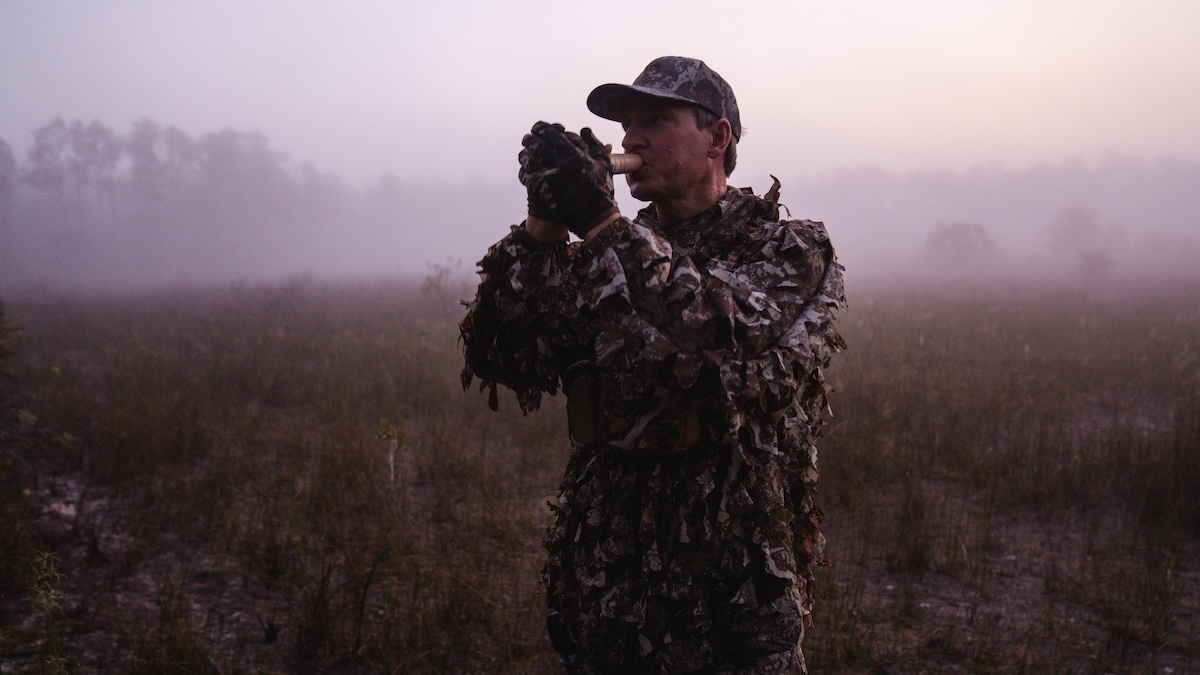
The Basic Turkey Hunt: From Roost to Shot Opportunity
Every turkey hunt unfolds differently. I’ve had some that lasted five minutes, while one peculiar longbeard dragged me all over a single property from daylight into the afternoon. Somewhere between these two extremes, most successful hunts might last a few hours. Here’s what to expect from a “typical” turkey hunt.
Get Tight to the Roost
If you haven’t roosted a turkey, you can read more about it here. For the sake of this article, let’s assume you already roosted one. First, you want to get as close to the roost as possible without alerting a gobbler or any other turkeys. The sweet spot is 100 yards, maybe 75 if you have plenty of cover and you can get in without making any noise. Otherwise, you’ll risk blowing your hunt before it even starts.
Let Him Make the First Move
Turkey hunting rewards the patient hunter. Wait until he gobbles before you even think about making the first call. Even then, you don’t have to respond immediately. Make sure he’s where you thought he was roosted, and adjust your setup if you need to. Let him gobble a few times and start with a few soft clucks. Don’t overdo it. If you’re within 100 yards of his tree, he’ll hear you. Whenever I’m making these first few clucks, I’m not calling to that gobbler, I’m simply making normal turkey noises. If he gobbles back, great. If not, that’s okay. There’s plenty of time to call.
Start Slow
Once daylight starts to break, you can start with a few soft yelps. If he cuts you off, you don’t really need to call anymore. I might make a few more yelps and then wait for him to fly down. Depending on how interested he is, that gobbler might just come right to your calling without gobbling again, or you might hear him gobble on the ground. If he does gobble on the ground, you can call to him with a few clucks or a series of yelps (four to ten). After you call, he’ll either gobble or he won’t. Either way, give it ten to fifteen minutes before calling again. This is where you develop your patience as a turkey hunter. That ten minutes might feel like a few hours, especially if he doesn’t gobble, but trust me, he hears you.
When to Go Quiet
At this point, you should have your gun propped on your knee in the ready-to-shoot position, waiting for him to show or gobble again. For turkeys that gobble a lot or cut your calls off before you finish them, you can stop calling. Get your gun at the ready and wait for him to come to you. If thirty minutes go by and he appears to gobble in the same spot, you can run a series of yelps. If he gobbles immediately, put your call down and get ready. If he stops gobbling, he’s probably on the way.
Mistakes to Avoid
This is where a lot of hunters run out of patience. When a turkey hasn’t gobbled for a while, it can be tempting to get up and move. A lot of times, the turkey is either on his way or he has hens with him. Turkeys have incredible eyesight, so it’s hard to slip up on one unless you have some terrain or thick vegetation between you and the bird. Otherwise, you’ll hear them putt and scoot out of the county.
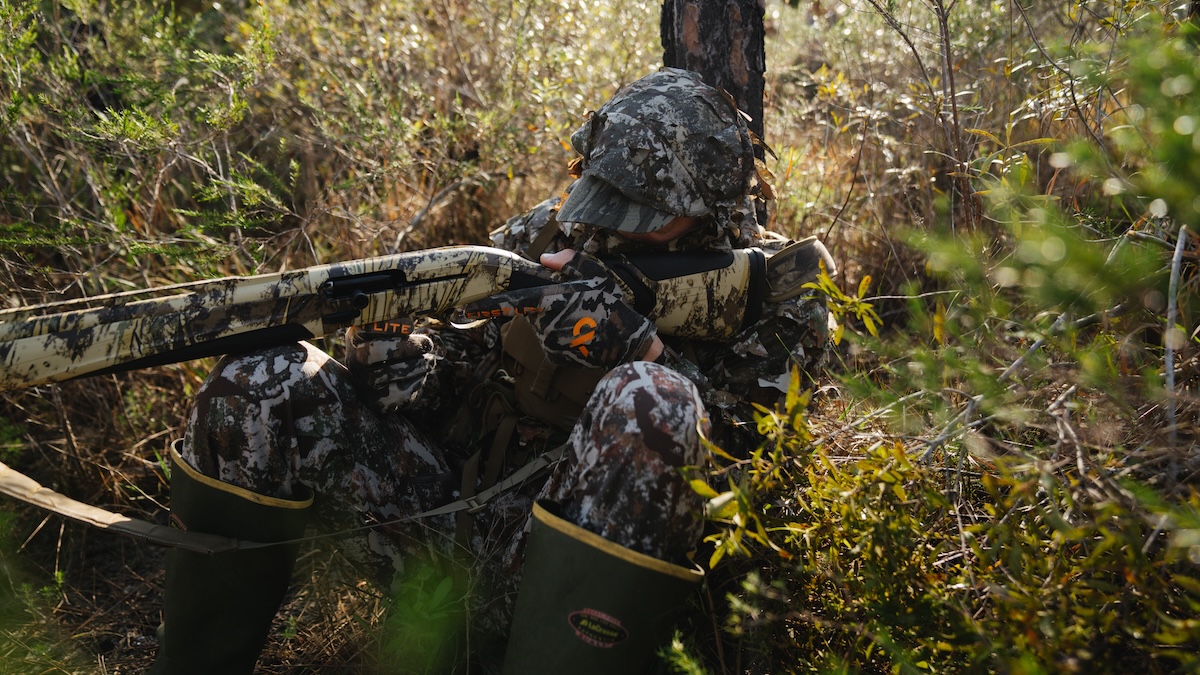
You also need to sit with your gun at the ready. Early in my turkey hunting days, I busted or missed multiple opportunities on longbeards that came in quiet. I’d get tired of waiting, the action would die down, and I’d set my gun next to me. Then, out of nowhere, a gobbler would pop up in shotgun range, and there’d be nothing I could do except watch them walk out of my life. You might be fast, but you’re not fast enough to draw on a turkey from the hip. It might get uncomfortable, but sit with your gun propped on your knee. This allows you to make a shot or get in position with minimal movement when the gobbler finally shows its face.
Where to Aim and When Not to Shoot
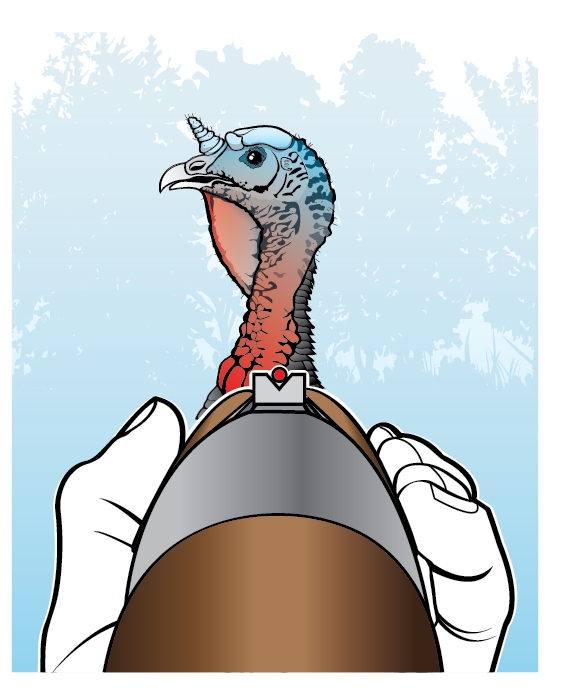
When it comes time to shoot, aim for the red wattles on a turkey’s neck where it meets the feathers. Avoid shooting a turkey while it struts. You’re likely to hit the body and ruin a lot of the meat or wound it.
Avoid obstructed shots in thick vegetation. Ideally, you should have an unobstructed view of the turkey’s head within 40 yards. Wait for the turkey to stop moving, too. Turkey loads and chokes mean your pattern could be the size of a softball at 20 yards. This makes it easy to miss a moving turkey. You can always yelp with a mouth call to get a turkey to stop so you can shoot.
Like shooting a bow or rifle, follow-through is important. Keep your head down on the gun, and don’t move until after the shot. If you pick your head up too soon, you’ll miss the turkey high. Exhale as you pull the trigger, follow through, and you’ll have a turkey flopping on the ground.
More detailed advice on aiming can be found below:
What Happens After You Kill a Turkey
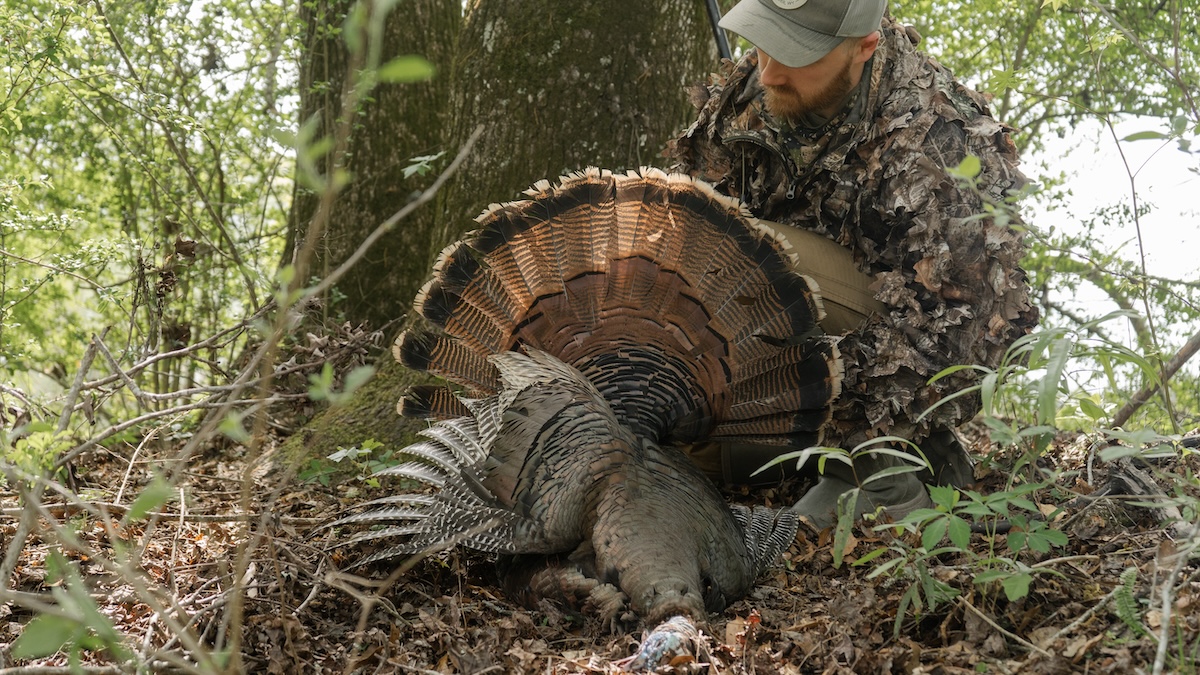
Once you have a turkey down, make sure it’s dead. You can do this by placing your heel on its head. Most turkey loads, especially TSS, make this unnecessary. Make a good shot and you won’t have to worry about it.
Before moving your turkey, make sure you tag it. Most states require you to do this, either with a physical tag or electronic record. Read up on your local regulations to make sure you’re following the rules.
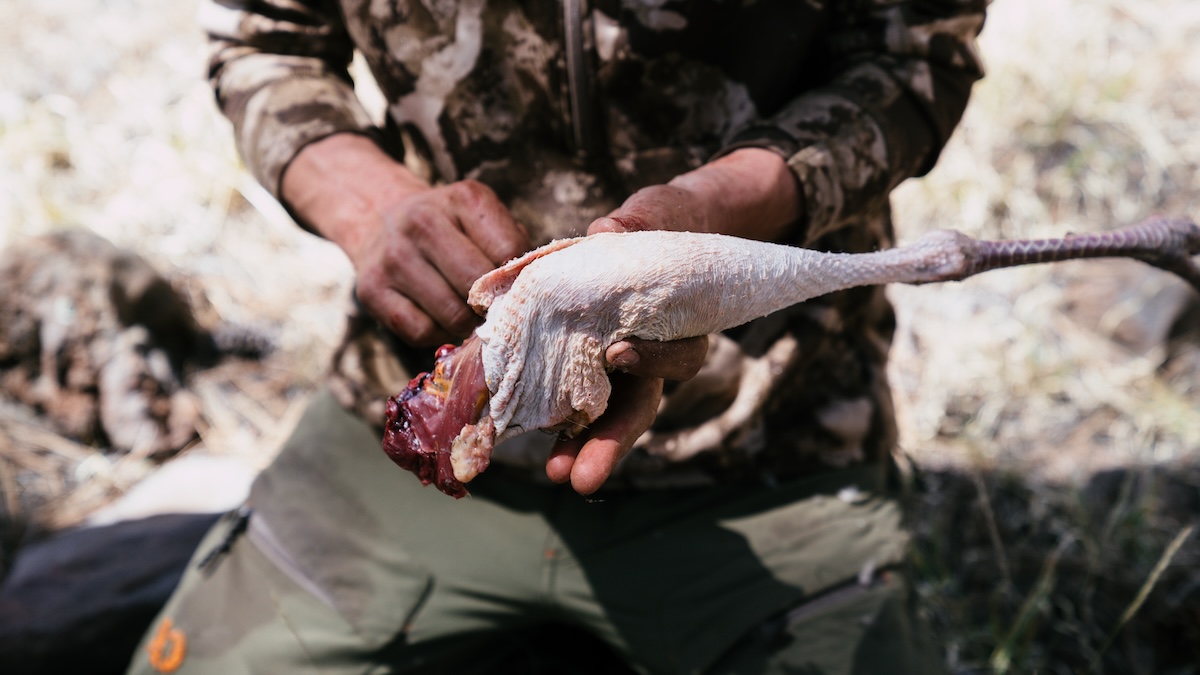
The urgency to clean your bird depends on where and when you’re hunting. If there’s snow on the ground when your turkey season opens, there’s not a huge rush. Hunters down South, especially in Osceola country, will want to move quickly. Regardless, the sooner the better. For an in-depth look at how to pluck and clean a turkey, you can watch this video here. For turkey recipes, check out this page.
Where to Go Next If You Want to Get Better
Once you get a few turkeys under your belt, you can start expanding your calling abilities. You can watch tutorials, try out new calls, and see which ones work best for you.
There are plenty of great articles, podcasts, and other resources to help you learn more about turkey hunting. However, there’s no better teacher than failure. You’ll learn best by making mistakes and figuring out what you did wrong. Turkey hunting can be hard, but, man, is it rewarding. Bottom line, spend more time in the woods. Even when you think you’ve mastered turkey hunting, they’ll throw you for a loop—and that’s the fun of it.
FAQ: Common Questions About Killing Your First Turkey
1. Is turkey hunting harder than deer hunting?
That depends. Are you rifle hunting deer, or are you spot and stalking them with traditional archery equipment? Deer and turkey hunting have their own unique challenges, and both can be difficult in their own way.
2. How long does it usually take to kill your first turkey?
If you have the privilege of learning under a seasoned turkey hunter, you might tag a bird in your first season. Learning to turkey hunt on your own might take longer, especially if you only have access to pressured or public lands.
3. What time of day are turkeys easiest to kill?
Turkeys can be challenging to hunt any time of day. However, you can increase your odds of success by slipping close (within 100 yards) to a roosted turkey before daylight. There’s also the famed 10-2 window of time, when hens start to break away from toms. Gobblers can be susceptible during this time while they look for willing hens.
4. How far can you ethically shoot a turkey?
Your effective shooting range depends on your turkey ammo, choke, and personal shooting capabilities. One way you can determine this is by counting your pellet strikes on a target. If you can consistently put at least 100 pellets within a 10-inch circle, then you can kill a turkey at that distance. Do this until you can no longer put 100 pellets within that 10-inch circle to determine your effective shooting range.
5. Do I need to be good at calling to kill a turkey?
You don’t have to be a professional turkey caller to kill a turkey. In my early days of turkey hunting, I killed several turkeys with subpar calling. Learning when to call, or when not to, is more important.
6. Why did a turkey gobble but never come in?
Turkeys might gobble but never come to your calls for several reasons. Sometimes they already have hens. Other times you might be dealing with pressured gobblers. Or, you might not be in the best spot/position for calling.
7. Why did a turkey suddenly go silent?
A turkey might suddenly go silent when he decides to come into your calling; maybe he was spooked or had hens approach him. It’s a good idea to wait at least 30 to 45 minutes after a turkey goes silent before making a move.
8. Can a beginner realistically kill a turkey on public land?
Turkey hunting on public land can be extremely challenging, especially for beginners, but not impossible.
Read the full article here
6 Comments
This is very helpful information. Appreciate the detailed analysis.
Interesting update on How to Turkey Hunt: The Ultimate Beginner’s Guide. Looking forward to seeing how this develops.
Great insights on Hunting. Thanks for sharing!
I’ve been following this closely. Good to see the latest updates.
Good point. Watching closely.
Solid analysis. Will be watching this space.