

Listen to the article
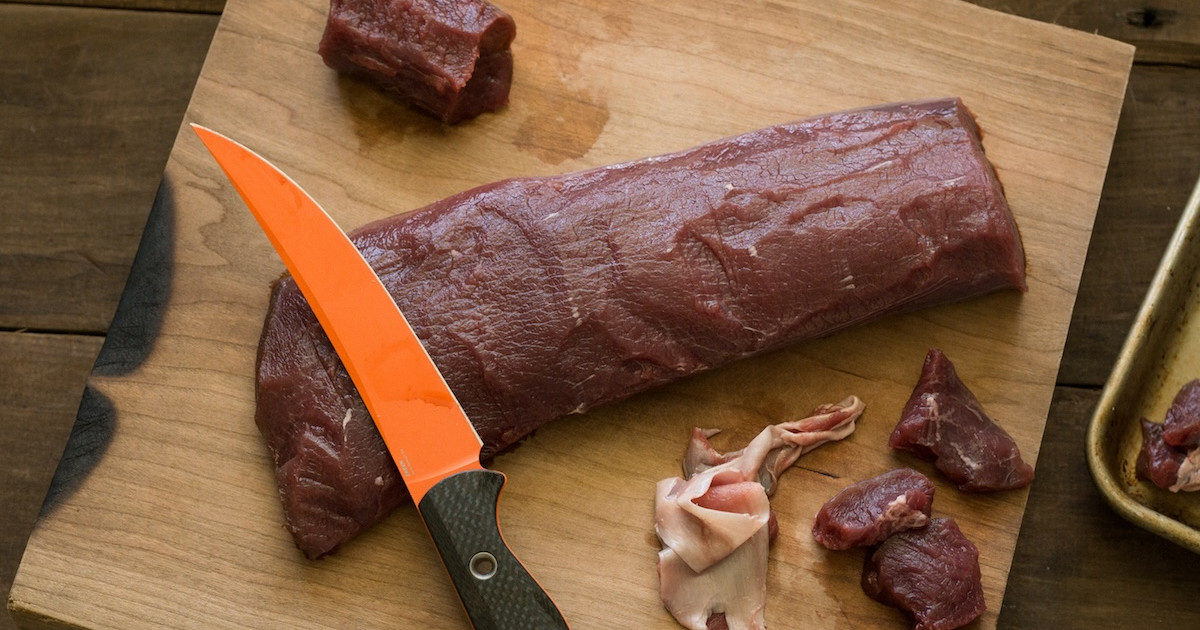
Among hunters, the backstraps have earned a high reputation. Aside from the tenderloins, they’re usually the cut that most people prize. We’ve all seen the grip n’ grin photos of a backstrap harvested in the field. If you’re like me, you’ve probably taken a few photos too. While this showpiece steak is visually impressive, I’m going to be honest: I don’t think it’s quite as good as people make it out to be. There are better steaks on a deer.
I used to think that the backstraps are the “prime cut” of a deer, elk, or antelope. They’re fairly tender and large compared to other steaks, making them great for sharing. However, it’s not the best, or even second best.
For argument’s sake, we can all agree that the tenderloins got their name for a reason. Outside of that, the top round (or inside round) beats the backstrap any day. And, even more controversially, I also prefer the sirloin tip.
Why? It comes down to texture, grain, and cooking flexibility. The backstrap can be dense, and because it lacks a long grain line like the top round, it doesn’t offer the same natural tenderness when cooked. When the top round is handled properly and sliced against the grain, it delivers significantly more tender, satisfying meat than a backstrap. Check out this video for to make some delicious, tender venison fajitas with a top round.
The shape of the backstrap also presents its own challenges. It’s long and flat, and many people butterfly it to make it wider. I know I’m going to ruffle some feathers when I say this, but I’m not a fan of this method. It creates a thin steak, sometimes only half an inch thick, that easily overcooks! A thin backstrap will brown quickly on the outside while drying out in the center, which means you have to babysit it at the stove or on the grill to avoid overcooked, dry meat. By contrast, a big, thick steak from the top round or sirloin tip can be cooked with a little more margin for error, giving you a juicy, satisfying bite every time.
That said, I still enjoy eating the backstrap, especially when it’s turned into tartare. Its long shape makes it a great candidate for smoking whole, and it’s a good steak to share with friends and family. But in my opinion, it doesn’t quite live up to the hype as the ultimate steak.
So, if you’re weighing your options when breaking down a deer, don’t feel obligated to treat the backstrap as the crown jewel. Explore the other cuts—you might be surprised how satisfying they can be. Sometimes, the unsung cuts are the ones that leave the most lasting impression at the table.
Read the full article here
19 Comments
The idea that the natural tenderness of the top round makes it a better option than the backstrap is interesting, and I’m planning to do some more research to see if it’s really true.
The video link to making venison fajitas with a top round sounds delicious, and I’m planning to try it out this weekend to see if it’s as tender and flavorful as the author claims.
The article has definitely given me some food for thought when it comes to cooking deer meat, and I’m looking forward to experimenting with different cuts and cooking methods.
The author’s point about the backstrap being dense and lacking a long grain line makes sense, as I’ve had issues with it being tough in the past.
I’ve found that marinating the backstrap helps to break down the connective tissues and make it more tender, but I’m interested in trying the top round to see if it’s a better option.
I’m surprised that the author doesn’t like the butterfly method for cooking backstraps, as I’ve had good results with it, but I can see how it could lead to overcooking if not done carefully.
I’ve always been a fan of the backstrap, but the author’s points about its limitations have made me think about trying some other cuts to see if they’re really better.
I’m curious to know more about the author’s experience with different types of game meat, and how they think the top round compares to other cuts like the sirloin tip.
I’m skeptical about the author’s claim that the top round is better than the backstrap, as I’ve had great results with backstraps in the past, but I’m willing to give the top round a try to see if it’s really superior.
I’m surprised that the author doesn’t mention the importance of proper handling and storage of the meat when it comes to tenderness and flavor, as I’ve found that it makes a big difference.
I’ve always thought that the backstraps were the best cut of meat on a deer, but after reading this article, I’m curious to try the top round or sirloin tip to see if they really are more tender and flavorful.
The author’s experience with smoking whole backstraps sounds delicious, and I’m planning to try it out on my next hunting trip to see if it’s as good as they claim.
The idea that the unsung cuts of meat can be the most satisfying is really interesting, and I’m looking forward to experimenting with different cuts on my next hunting trip.
I’ve never thought about using the backstrap to make tartare, but it sounds like a great idea, and I’m planning to try it out on my next hunting trip.
The author’s point about the backstrap being a good steak to share with friends and family is well taken, as it’s always a crowd-pleaser when cooked correctly.
I’m curious to know more about the author’s favorite ways to cook the top round, and if they have any tips for getting the most flavor and tenderness out of the meat.
I’ve always been a fan of the tenderloins, and it’s good to see that the author agrees that they’re a prized cut of meat, but I’m curious to try the sirloin tip to see if it’s a better option.
I’ve always been a fan of grilling backstraps, but the author’s point about the top round being more forgiving when cooked has made me think about trying a different approach.
The shape of the backstrap does present some challenges when cooking, and I’ve found that it’s easy to overcook if not done carefully, but I’m not sure that the top round is the answer.