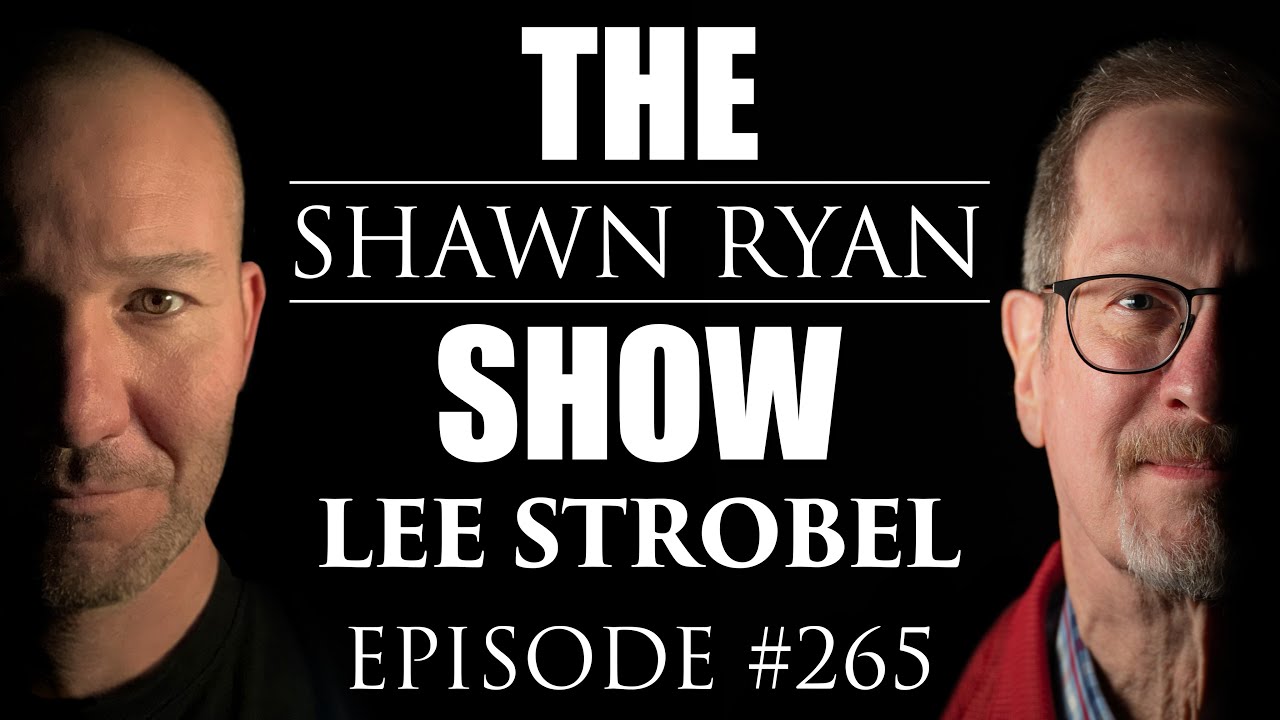
The idea that there’s a mathematical proof for Jesus being the Messiah raises questions about the role of faith in religion, does this proof replace the need for belief or complement it?
This discussion reminds me of other attempts to merge science and religion, such as the cosmological argument for the existence of God, it’s a complex and intriguing area of study.
The challenge with any proof, mathematical or otherwise, for religious claims is the subjective nature of belief, can such proofs truly change one’s faith?
I’d love to understand more about the historical context and the specific prophecies Strobel references in his argument, are they widely accepted among scholars?
The concept of mathematical proof for Jesus being the Messiah is intriguing, I’d like to see the actual calculations and data Lee Strobel used to come to this conclusion.
It’s crucial to approach such claims with a critical yet open-minded perspective, recognizing both the potential insights and the potential pitfalls of applying mathematical reasoning to religious questions.
While the idea of a mathematical proof is captivating, I’m more interested in the personal stories of how this proof has impacted individuals’ faith journeys.
I’ve always been skeptical of using mathematical models to prove religious claims, can someone explain how this approach is different from other attempts?
It’s interesting to consider how different cultures or religious groups might respond to the idea of a mathematical proof for Jesus being the Messiah, given the diversity of beliefs worldwide.
It would be fascinating to see how Strobel’s mathematical proof holds up to scrutiny from experts in both mathematics and theology, perhaps a panel discussion could shed more light.
I’m curious about the reception of Strobel’s argument within the academic and religious communities, has there been any significant debate or validation?
I wonder if Strobel’s work could be a starting point for interfaith dialogue, exploring where different religious beliefs intersect or diverge on logical and spiritual levels.
I’ve heard of similar attempts to use probability and statistics to validate religious beliefs, what makes Strobel’s approach unique or more compelling?
While I appreciate the effort to provide a logical basis for faith, I worry that relying on mathematical proofs might detract from the spiritual experience of religion.
The video’s claim about mathematical proof for Jesus being the Messiah has piqued my interest, I plan to watch it to understand the methodology and evidence presented.

26 Comments
The idea that there’s a mathematical proof for Jesus being the Messiah raises questions about the role of faith in religion, does this proof replace the need for belief or complement it?
This discussion reminds me of other attempts to merge science and religion, such as the cosmological argument for the existence of God, it’s a complex and intriguing area of study.
The challenge with any proof, mathematical or otherwise, for religious claims is the subjective nature of belief, can such proofs truly change one’s faith?
Perhaps not for everyone, but for some, it could provide a rational foundation that complements their spiritual beliefs.
For those who have watched the video, can you share how Strobel addresses potential criticisms or limitations of his mathematical proof?
He discusses some counterarguments, especially concerning the interpretation of biblical prophecies and their application to Jesus.
I’d love to understand more about the historical context and the specific prophecies Strobel references in his argument, are they widely accepted among scholars?
The video’s premise prompts me to think about the limitations of using human logic to understand or prove divine matters, where do we draw the line?
That’s a question theologians and philosophers have grappled with for centuries, and perhaps there’s no one-size-fits-all answer.
The concept of mathematical proof for Jesus being the Messiah is intriguing, I’d like to see the actual calculations and data Lee Strobel used to come to this conclusion.
I think he mentioned using biblical prophecies and their probabilities in the video, but I’m not sure how he quantified them.
It’s crucial to approach such claims with a critical yet open-minded perspective, recognizing both the potential insights and the potential pitfalls of applying mathematical reasoning to religious questions.
While the idea of a mathematical proof is captivating, I’m more interested in the personal stories of how this proof has impacted individuals’ faith journeys.
I’ve always been skeptical of using mathematical models to prove religious claims, can someone explain how this approach is different from other attempts?
The difference lies in the specific prophecies and historical events Strobel focuses on, which set his argument apart.
It’s interesting to consider how different cultures or religious groups might respond to the idea of a mathematical proof for Jesus being the Messiah, given the diversity of beliefs worldwide.
It would be fascinating to see how Strobel’s mathematical proof holds up to scrutiny from experts in both mathematics and theology, perhaps a panel discussion could shed more light.
I’m curious about the reception of Strobel’s argument within the academic and religious communities, has there been any significant debate or validation?
There have been discussions, but it’s challenging to find neutral ground between believers and skeptics on such a sensitive topic.
I’m not sure how to feel about using mathematics to prove religious beliefs, part of me sees it as innovative, another part as reductionist.
I wonder if Strobel’s work could be a starting point for interfaith dialogue, exploring where different religious beliefs intersect or diverge on logical and spiritual levels.
I’ve heard of similar attempts to use probability and statistics to validate religious beliefs, what makes Strobel’s approach unique or more compelling?
The uniqueness might lie in the specific combination of historical and biblical data he analyzes, which could offer a fresh perspective.
While I appreciate the effort to provide a logical basis for faith, I worry that relying on mathematical proofs might detract from the spiritual experience of religion.
The video’s claim about mathematical proof for Jesus being the Messiah has piqued my interest, I plan to watch it to understand the methodology and evidence presented.
The intersection of mathematics and theology is a fascinating field, I hope to see more interdisciplinary discussions like this in the future.