

Listen to the article
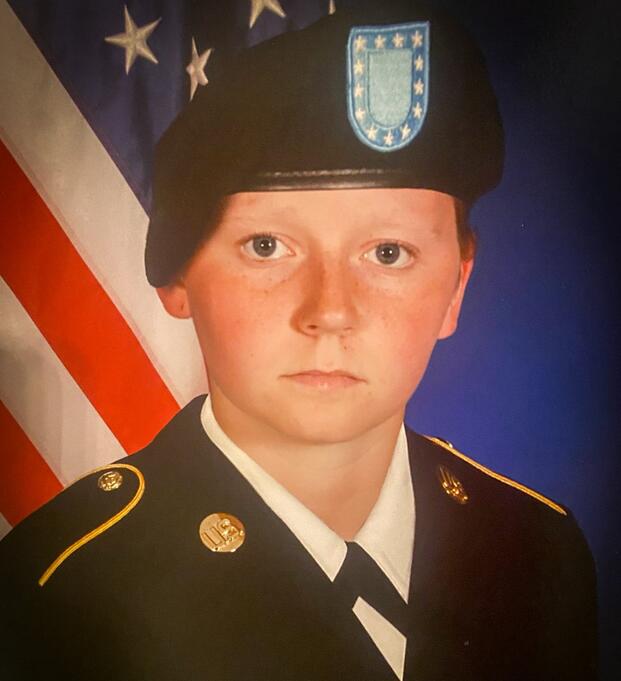
Alexis Nelson was so excited about a future in the military, she signed up for the Army National Guard the day she turned 17.
But her dream of serving the country was soon derailed when she suffered a service-related injury during basic training. She was forced to leave the National Guard with a medical deferment.
What followed were years of depression and substance use challenges, along with feelings of failure, loss and isolation that threatened to derail Nelson for good. Ultimately, Nelson received a lifeline from the Department of Veterans Affairs (VA) that turned her life around.
Nelson’s story of struggle and triumph was recently featured on the Michigan Veterans Affairs Agency’s (MVAA) website, as part of its “I Am a Veteran” campaign.
Service Runs Deep
From the time she was a small child, Nelson aspired to join the service.
Growing up in a small Upper Peninsula town, Nelson looked up to her grandfathers who served in the Army, Air Force and Marine Corps. But she yearned to blaze her own path, becoming the first woman in her family to join the military.
Enlisting in the Army National Guard was a birthday present to herself.
“I raised my hand when I was a junior in high school,” Nelson said. “I was doing something that none of my friends were, and I felt like the coolest person to walk the face of the earth at that moment.”
Like a lot of inspired 17-year-olds, Nelson had her future mapped out. She planned to finish basic training, come back to the U.P. to graduate high school, and venture out of Michigan to complete Advanced Individual Training (AIT) and transition to active duty.
Injury Changed Everything
In May 2013 she arrived at Fort Leonard Wood, Missouri, ready to tackle basic training.
Almost immediately, she impressed her drill sergeant by breezing through her sit-ups and push-ups. The drill sergeant wondered if she could do the same on her running drill, challenging her to max out.
But the pride she felt quickly turned to agony. Less than a mile into her run, both hips locked up and a jolt of intense pain shot through her body. Gritting her teeth through painful tears, Nelson completed her run but failed to hit her max. Her drill sergeant knew something was wrong and sent her to the athletic trainer.
“I was doing something that none of my friends were.”
Tests and doctors’ diagnoses confirmed the worst: stress fractures in both hips.
“When they did the bone scan both hips just lit up like spider webs,” Nelson said. “I was put on crutches and since I was still in high school, I was sent back home to finish my senior year and heal.”
Nelson was optimistic that she could return fully healthy and continue pursuing her military dreams. But when tests showed the fractures had not healed well enough, the National Guard granted her a medical discharge. She was crestfallen.
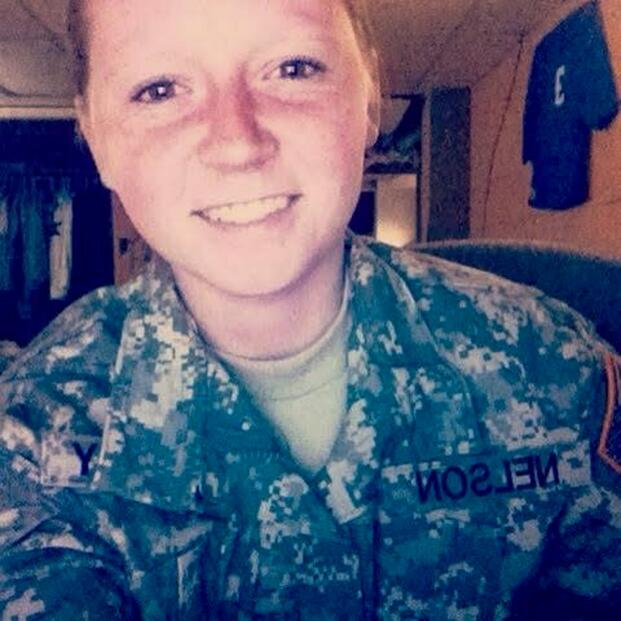
The devastating news sent her mental health into a downward spiral.
“I came home feeling like a complete failure, embarrassed to tell my story and would cringe when someone would thank me for my service because in my head I didn’t feel as though I achieved anything,” said Nelson. “I fell into a major depression with severe anxiety, constantly feeling lost and hopeless.”
Down a Dark Road
Wrestling with what to do next, Nelson enrolled in college and earned a criminal justice degree.
Still struggling with that empty feeling, she never pursued a job in criminal justice. She eventually realized it wasn’t her true calling in life.
Again, she grappled with questions about her future.
The next several years were fraught with depression, alcohol and drug abuse. There was a suicide attempt.
Finally, she became eligible for VA benefits and was offered recovery services and mental health therapy.
Jan. 1, 2026, was a life milestone as she marked being three years sober.
“It was a very dark time and when I was 18 years old, I felt like I went from having the whole world ahead of me to having what felt like nothing,” Nelson said. “This went on for several years. And then while I was bartending at my local VFW, I told myself I was going to wake up on New Year’s Day sober and never look back.”
A Helping Hand
One of Nelson’s grandfathers was a past member of the local VFW, so she started a part-time bartending job there.
That’s when a chance meeting with Eric Martin, the MVAA veteran service officer, changed her life. She warmed up to him and finally felt brave enough to share her emotional story.
“Knowing what he did for work, I finally opened up to him about my story, why I never considered myself to be a veteran, and how I was even embarrassed to tell him my story,” Nelson said. “Eric was floored and told me that I need to work with him to get something, anything resolved. That’s where our journey began.”
Nelson was juggling multiple jobs and didn’t have extra time to search for proper documentation. Martin met Nelson halfway, working around her schedule to meet at the VFW post. He stayed committed to her, obtaining all her paperwork and answering any lingering questions.
“I didn’t have to go into his office, schedule an appointment or wait around for answers,” Nelson said. “Anytime I needed anything, he was right there.”
The Lifeline She Needed
With Martin’s help, Nelson was relieved when she obtained a 50% VA disability rating. But with her mental and physical health still drifting into the abyss, Nelson confided in Martin about her struggles.
He suggested scheduling a reevaluation of her mental health needs and before long, Nelson was back in the doctor’s office.
One morning, while Nelson was working, Martin contacted her asking her to stop by his office. He sounded urgent. She arrived at Martin’s office expecting bad news.
“All of these trials were like side quests to lead me to exactly where I needed to be.”
Instead, Martin slid a letter across his desk with the news she had been hoping: a 100% disability rating.
“When I saw the 100% it was something that I never thought in a million years would happen,” Nelson said. “It not only made me feel like I was actually being taken serious for what had happened, but it also opened up a lot of avenues for my life.”
These days, Nelson is working on improving her body and mind. Since September, she’s found wiggle room in a loaded work schedule to hit the gym regularly and explore bodybuilding. She aspires to move out of the Upper Peninsula and see other parts of the world.
“All of these trials were like side quests to lead me to exactly where I needed to be,” Nelson said. “You’re finally able to be the person you’ve always wanted to be, and even though you know you’re not perfect yet, you’re so much better than what you were.”
Nelson still finds it odd calling herself a veteran. But she’s getting there.
“I still stutter when I call myself a veteran,” she said. “However, I raised my hand and swore that oath and I want people to know that they’re not alone and their stories matter, too, because I spent so long thinking that my story didn’t matter.”
Read the full article here
20 Comments
The experience of Nelson, who felt like the ‘coolest person to walk the face of the earth’ when she enlisted, serves as a reminder that the reality of military life can be far removed from the initial expectations and excitement.
The statistic that Nelson was able to breeze through her sit-ups and push-ups but struggled with the running drill due to her hip injuries raises questions about the adequacy of the physical training programs in place for new recruits.
Perhaps the military should reconsider their training methods to reduce the risk of injuries like Nelson’s, which can have long-term consequences for the individual’s mental and physical health.
Nelson’s experience of feeling like a failure and struggling with substance use challenges after her medical discharge is a common narrative among veterans, and it’s essential to address these issues through targeted support programs.
Nelson’s story serves as a reminder that the transition from military to civilian life can be difficult, and that support systems like the Department of Veterans Affairs are crucial in helping veterans navigate this transition.
Alexis Nelson’s story highlights the challenges faced by veterans, particularly the 17% of female veterans who experience depression, and how the Department of Veterans Affairs can be a lifeline for those struggling.
It’s inspiring to see how Nelson’s grandfathers, who served in the Army, Air Force, and Marine Corps, influenced her decision to join the military, and how she wanted to blaze her own path as the first woman in her family to do so.
It’s striking that Nelson’s injury occurred during basic training, which is meant to prepare recruits for the physical demands of military life, and raises questions about the adequacy of the training programs in place.
Nelson’s story underscores the importance of addressing the mental health needs of veterans, particularly those who have experienced trauma or injury during their service.
The fact that Nelson was able to find a sense of purpose and meaning through the Department of Veterans Affairs’ programs is a testament to the impact that these services can have on the lives of veterans.
The fact that Nelson’s drill sergeant recognized her potential and challenged her to max out on her running drill, only for her to suffer an injury, raises questions about the balance between pushing recruits to their limits and ensuring their safety.
The fact that Nelson was forced to leave the National Guard with a medical deferment due to stress fractures in both hips is a stark reminder of the physical and emotional toll of military training.
It’s surprising that the National Guard didn’t have a more comprehensive support system in place to help Nelson cope with her injuries and subsequent depression.
Nelson’s story highlights the importance of early intervention and support for veterans struggling with depression and substance use challenges, and the role that organizations like the Department of Veterans Affairs can play in providing these services.
It’s heartening to see how Nelson’s story has been featured on the Michigan Veterans Affairs Agency’s website, raising awareness about the importance of seeking help and the resources available to veterans struggling with depression and substance use challenges.
The ‘I Am a Veteran’ campaign by the Michigan Veterans Affairs Agency is a great initiative to raise awareness about the struggles faced by veterans like Nelson, and the importance of seeking help when needed.
The ‘I Am a Veteran’ campaign’s focus on sharing the stories of veterans like Nelson serves as a powerful reminder of the importance of community and connection in the healing process.
The fact that Nelson was sent back home to finish her senior year and heal after her injury, only to be granted a medical discharge later, highlights the need for more comprehensive support systems for injured veterans.
Nelson’s experience serves as a reminder that the journey to recovery is often long and difficult, but with the right support and resources, it is possible for veterans to heal and find a new sense of purpose.
The Department of Veterans Affairs’ role in turning Nelson’s life around is a testament to the impact that targeted support programs can have on the lives of veterans struggling with depression and substance use challenges.