

Listen to the article
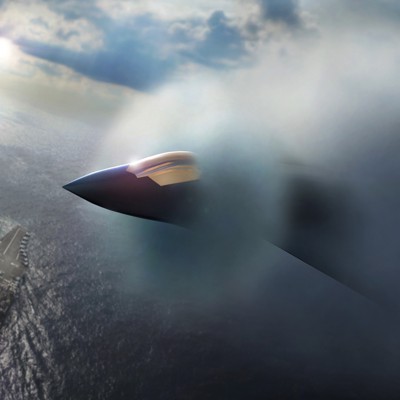
Congressional appropriators have revived funding for the Navy’s F/A-XX program and lambasted the Defense Department for failing to award key development contracts for the service’s sixth-generation fighter jet.
While the program was designated to get just $74 million by the National Defense Authorization Act signed into law last month, appropriators moved to give it another $897 million in a four-bill package, including the annual defense appropriations bill, on Tuesday.
“The agreement supports the Navy’s efforts to develop the F/A-XX sixth generation fighter and understands the program’s unique capability in delivering air superiority to the fleet, including greater operational range, speed, stealth, and enhanced survivability,” appropriators wrote in the bill, which would need approval by both houses and the president’s signature to become law.
The move bucks plans by the White House, Navy, and Pentagon’s plans to underfund the effort and focus on the Air Force’s F-47 instead.
It’s the latest twist for a program marked by debates and disagreements between Congress, the White House, and the Pentagon. In March, the Navy reportedly came close to choosing Boeing or Northrop Grumman to make the future aircraft, but no announcement was made, and only the bare minimum amount of money was put forth for the program.
In Tuesday’s bill, appropriators lashed out at the Defense Department for dragging out the timeline. Officials “expended nearly all fiscal year 2025 funding on contract extensions with minimal demonstrated value to the program,” the lawmakers wrote in a joint explanatory statement.
The bill also said “that none of the funds made available to the Department of Defense for this fiscal year or any prior fiscal year may be used to pause, cancel, or terminate the Next Generation Fighter program.”
Defense budget experts told Defense One that appropriators breaking with the Senate and House Armed Service Committees is “noteworthy” but not unusual.
“It’s not uncommon for appropriators to go their own way,” said Todd Harrison, a defense budget expert at the American Enterprise Institute. “And they have the ultimate say because they control purse strings. Authorizing committees have a lot less power over specific programs and priorities than people tend to think.”
The compromise bill also requires the Navy secretary to submit a report within 45 days that details the service’s F/A-XX acquisition strategy; spending plan; and timeline for awarding the engineering-and-manufacturing-development contract, fielding the aircraft, and reaching initial operating capacity. They also want an explanation of what prevented the Navy from spending F/A-XX funds allocated in previous years.
In June, a U.S. official told reporters that the Defense Department had made “a strategic decision to go all in on F-47” instead of moving ahead immediately on F/A-XX. The 2026 NDAA reflected that decision, providing only the requested $74 million for F/A-XX—and $2.6 billion for the Air Force’s next-gen fighter.
Tuesday’s spending bill added even more to the F-47 effort: just over $500 million, which the bill said would cover a “classified adjustment” and correct “reconciliation funding incongruence.”
The bill also contained $900 million in research and development funds to keep the E-7 Wedgetail alive. As with the F/A-XX, the bill “prohibits the use of funds to pause, cancel, or terminate” the radar plane program.
Similar efforts to keep the early warning and control aircraft alive were tucked into a bipartisan agreement to fund the government in November, versions of the NDAA and Defense Appropriations Act this summer, and a stopgap funding bill in September.
Read the full article here
19 Comments
The fact that appropriators are requiring the Navy secretary to submit a report within 45 days detailing the F/A-XX acquisition strategy and spending plan suggests a sense of urgency and accountability.
The fact that the 2026 NDAA reflected a decision to focus on the F-47 with $2.6 billion, compared to the $74 million for F/A-XX, shows a previous imbalance in priorities that the new funding seeks to address.
The decision to allocate an additional $897 million to the F/A-XX program is a significant departure from the initially proposed $74 million, and it will be interesting to see how this impacts the development of the sixth-generation fighter jet.
The mention of Boeing and Northrop Grumman as potential manufacturers of the future aircraft, with the Navy coming close to making a choice in March, suggests that significant industrial interests are at play.
The requirement for the Navy secretary to explain what prevented the Navy from spending F/A-XX funds allocated in previous years adds a layer of transparency and accountability to the program.
Given the history of debates and disagreements between Congress, the White House, and the Pentagon over the F/A-XX program, it’s crucial to monitor how this new funding affects the program’s progression.
The additional funding for the F/A-XX program, despite initial underfunding plans, indicates a recognition of the program’s potential to deliver significant advancements in air superiority for the Navy.
I’m skeptical about the effectiveness of the F/A-XX program, given the Defense Department’s previous decision to focus on the Air Force’s F-47 instead, with a $2.6 billion allocation.
It will be interesting to see how the Navy’s F/A-XX acquisition strategy and the spending plan, as required to be submitted by the Navy secretary, align with the newly allocated funds and the program’s objectives.
The compromise bill’s emphasis on the F/A-XX program’s unique capability in delivering air superiority to the fleet, including greater operational range, speed, stealth, and enhanced survivability, highlights its potential importance.
The move to allocate more funds to the F/A-XX program, against the initial plans to focus on the F-47, suggests a reevaluation of priorities within the Defense Department and Congress regarding sixth-generation fighter jets.
This shift in priorities could signal a broader strategy adjustment in how the U.S. approaches air superiority in the coming decades.
The involvement of key players like Boeing and Northrop Grumman in the potential development of the F/A-XX highlights the industrial and economic implications of the program beyond its military applications.
Understanding these implications will be crucial as the program moves forward, especially considering the significant funding now allocated to it.
It’s concerning that the Defense Department expended nearly all fiscal year 2025 funding on contract extensions with minimal demonstrated value to the program, as stated in the bill.
The American Enterprise Institute’s defense budget expert, Todd Harrison, noted that it’s not uncommon for appropriators to go their own way, which adds context to the current situation with the F/A-XX program’s funding.
The F/A-XX program’s potential to reshape the Navy’s air superiority capabilities, with features like greater operational range and stealth, makes the additional funding a significant investment in national defense.
The requirement that none of the funds made available to the Department of Defense can be used to pause, cancel, or terminate the Next Generation Fighter program indicates a strong commitment to seeing this project through.
I’m curious to know more about the ‘strategic decision’ made by the Defense Department to initially focus on the F-47 instead of the F/A-XX, as mentioned by a U.S. official in June.