

Listen to the article
Airline officials and the United States military pledge to investigate if necessary a near “midair collision” that reportedly occurred off the Venezuelan coast last Friday.
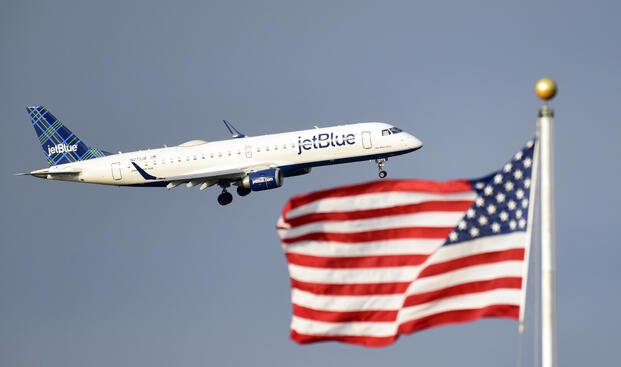
A JetBlue aircraft (Flight 1112) traveling from the Dutch Caribbean island of Curaçao to New York City’s John F. Kennedy International Airport on Dec. 12 nearly collided with a U.S. military plane in proximity to Venezuelan airspace. There has been a forceful U.S. presence in the region since Sept. 2 as boat strikes against alleged narcotics traffickers have remained consistent.
Audio communication retained from air traffic control (ATC) flight recordings from within the aircraft and with air traffic controllers reportedly relayed the JetBlue pilot’s concern, who said, “We almost had a midair collision up here.” The military aircraft was an Air Force refueling tanker that purportedly crossed paths with the commercial aircraft, according to recordings cited by CNN and ABC News.
A ‘Safety’ Priority
JetBlue and U.S. military officials have pledged caution and said the situation will be remedied, via investigation or otherwise.
“Safety is our top priority,” a JetBlue spokesperson told Military.com on Monday. “Our crewmembers are trained on proper procedures for various flight situations, and we appreciate our crew for promptly reporting this situation to our leadership team. We have reported this incident to federal authorities and will participate in any investigation.”
The Pentagon referred Military.com to U.S. Southern Command, which provided Military.com the following statement: “We are aware of the recent reporting regarding U.S. military aircraft operations in the Caribbean and are currently reviewing the matter.”
“Military aircrews are highly trained professionals who operate in accordance with established procedures and applicable airspace requirements. Safety remains a top priority, and we are working through the appropriate channels to assess the facts surrounding the situation,” the statement added.
A Federal Aviation Administration (FAA) spokesperson said the situation was under the guise of the Curaçao Civil Aviation Authority. Military.com reached out to them for comment.
What Happened In The Air
The JetBlue pilot overseeing the flight in question reportedly accused the U.S. military aircraft of “passing directly in our flight path,” according to audio recordings of the incident attained by CNN and other media outlets. The pilot claimed that the opposing craft did not have its transponder turned on, calling it “outrageous.”
“We just had traffic pass directly in front of us within 5 miles of us—maybe 2 or 3 miles—but it was an air-to-air refueler from the United States Air Force and he was at our altitude,” the pilot said in the recording. “We had to stop our climb.”
“We are working through the appropriate channels to assess the facts surrounding the situation.”
The pilot said that following the near-collision the Air Force plane proceeded to head into Venezuelan air space.
While the FAA does not oversee air traffic overseas, it did issue a warning in November advising pilots to exercise “extreme caution…due to the worsening security situation and heightened military activity in or around Venezuela.
The risk warning was targeted to “aircraft at all altitudes,” including those in-flight and before and during arrivals and departures.
Story Continues
Read the full article here
14 Comments
This incident highlights the need for better communication and coordination between different authorities and agencies responsible for air safety, as well as the importance of transparency and accountability in preventing similar incidents in the future.
The fact that the incident occurred on December 12 and is only now being reported raises questions about transparency and the willingness of authorities to disclose information about safety incidents, and whether there are other incidents that have not been reported.
The Curaçao Civil Aviation Authority’s role in investigating this incident is crucial, as they will be able to provide an independent perspective on what happened and whether any safety protocols were breached, and their findings should be made public to ensure accountability.
JetBlue’s statement that safety is their top priority is reassuring, but the incident highlights the need for improved communication and coordination between civilian and military aircraft to prevent such incidents in the future.
The near midair collision between JetBlue Flight 1112 and the US military plane off the Venezuelan coast is alarming, especially since the military aircraft’s transponder was not turned on, which is a critical safety protocol.
As a frequent flyer, this incident makes me nervous about the safety of air travel, especially when military aircraft are operating in the same airspace as civilian planes, and I hope that the FAA and other regulatory bodies will take a close look at this incident and implement changes to prevent similar incidents in the future.
The investigation into this incident should also examine the role of air traffic control and whether they played a part in preventing or contributing to the near collision, as the audio communication retained from air traffic control recordings will be crucial in determining what went wrong.
The fact that the US military plane was an Air Force refueling tanker, a KC-46A Pegasus, raises questions about the protocols in place for military aircraft operating in civilian airspace, and whether these protocols were followed in this incident.
It’s possible that the tanker was on a mission to refuel other aircraft in the area, but that doesn’t excuse the lack of communication and safety procedures that led to this near collision.
I’m concerned about the safety of passengers and crew members, given that the JetBlue pilot reported the military aircraft passing directly in their flight path, and the incident occurred in proximity to Venezuelan airspace where there’s been a forceful US presence since September 2.
The US Southern Command’s statement that military aircrews are highly trained professionals who operate in accordance with established procedures and applicable airspace requirements is not entirely convincing, given the seriousness of this incident.
While it’s true that military aircrews are trained professionals, the fact that the transponder was not turned on suggests that there may have been a breakdown in protocol or a mistake made by the crew.
I hope that the investigation into this incident will lead to changes in the way that military aircraft operate in civilian airspace, and that the FAA and other regulatory bodies will take steps to prevent similar incidents from occurring in the future.
I’m skeptical about the Pentagon’s referral of the matter to US Southern Command, as it seems like a way to deflect responsibility and avoid answering tough questions about the incident, and I hope that the investigation will be thorough and transparent.