

Listen to the article
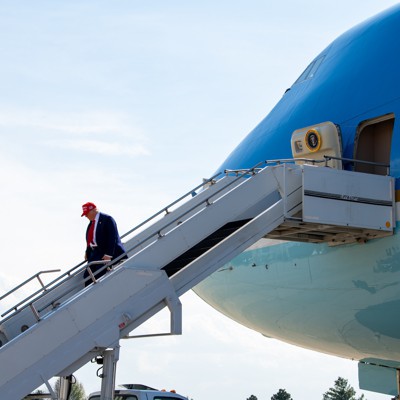
Boeing’s Air Force One program is now projecting a mid-2028 delivery date for the first presidential transport aircraft, sooner than projected, as the service faces continued pressure from the Trump administration.
The new date—which is earlier than the “2028 or 2029” timeframe given earlier this year—emerged as an Air Force spokesperson confirmed to Defense One on Friday that the service would be giving Boeing an extra $15.5 million to upgrade the communications systems for the two VC-25Bs.
“These costs are associated with integration of new communications capability that allows VC-25B to keep pace with mission requirements that have evolved since the program baseline was established,” the Air Force spokesperson said in an emailed statement. “This modification can be accomplished within the current program schedule with the projected delivery date for the first VC-25B aircraft in mid-2028.”
The latest modification is separate from the contract’s firm-fixed-price engineering and manufacturing development efforts, according to the latest announcement. The new contract total exceeds $4.3 billion. The communications upgrade work is expected to be complete by next December.
In September, Air Force Secretary Troy Meink had expressed confidence about keeping the VC-25Bs on schedule.
“What I’d say on both aircraft is, and I’ve had an opportunity to work with the contractors closely over the last couple months, I think they’re on schedule,” Mink told reporters at the Air & Space Force Association’s annual conference. “I think we’re able to deliver them when the President needs them.”
The effort to replace the two existing VC-25s, in service since 1990, got underway in 2015. The following year, Boeing won the contract to provide two replacement jets—new-build 747s—for an estimated cost of $4 billion. But in December 2016, President-elect Donald Trump tweeted—inaccurately—that the program was already over budget and should be cancelled. Within a year, Boeing had settled on a new plan: to use two 747s built but never paid for by a defunct Russian airline. Work began in 2020, but Boeing’s efforts were slowed by shortages of workers and parts. In 2022, the projected delivery date slipped to 2026; the following year, it slipped to 2027.
By May 2025, the jets’ delivery had slipped yet again, to 2028 or 2029. Trump, after stating his frustrations with the delays, accepted a Boeing 747 luxury jet from Qatar this summer to be converted into Air Force One. The following month, Meink estimated the cost to upgrade the luxury jet would be less than $400 million and later revealed to Congress that funds were moved from the service’s Sentinel intercontinental ballistic missile program to pay for the 747’s modifications. The service secretary told lawmakers he expected the retrofit to take “just short of a year.”
Bradley Peniston contributed to this report.
Read the full article here
13 Comments
The projected delivery date has slipped several times since the program began in 2015, and I’m skeptical about whether the new mid-2028 date will be met, given the history of delays and setbacks.
The fact that the communications upgrade work is expected to be complete by next December suggests that the program is making progress, but I’d like to know more about the specific communications capabilities being integrated into the VC-25Bs.
The use of two 747s built but never paid for by a defunct Russian airline has been a controversial aspect of the program, and I’m curious to know how this decision has impacted the overall cost and delivery schedule.
The new projected delivery date of mid-2028 for the first presidential transport aircraft is a significant improvement from the previously stated ‘2028 or 2029’ timeframe, and I’m curious to know what factors contributed to this accelerated schedule.
The extra $15.5 million allocated for upgrading the communications systems likely played a crucial role in expediting the delivery date.
Air Force Secretary Troy Meink’s confidence in keeping the VC-25Bs on schedule, as expressed in September, seems to have been justified with the new projected delivery date, but I’m still concerned about potential future delays.
The $400 million estimated cost to upgrade the luxury jet accepted by President Trump from Qatar seems relatively low compared to the overall contract total, and I’d like to know more about the specifics of this upgrade and how it will be funded.
The article mentions that Boeing’s efforts were slowed by shortages of workers and parts, which is a concern for the overall aerospace industry, and I’d like to know more about how the company is addressing these issues.
It’s interesting to note that the contract total now exceeds $4.3 billion, which is significantly higher than the initial estimated cost of $4 billion when Boeing won the contract in 2016.
The fact that funds were moved from the service’s Sentinel intercontinental ballistic missile program to pay for the 747’s modifications raises questions about the priorities of the Air Force and the potential impact on other programs.
The acceptance of a Boeing 747 luxury jet from Qatar by President Trump has added a new layer of complexity to the program, and I’m curious to know how this will impact the overall delivery schedule and cost of the VC-25Bs.
The integration of new communications capability into the VC-25Bs is crucial for the aircraft to keep pace with evolving mission requirements, and I’m supportive of the Air Force’s efforts to prioritize this aspect of the program.
The Air Force’s decision to give Boeing an additional $15.5 million to upgrade the communications systems for the two VC-25Bs raises questions about the initial budget allocation and whether it was sufficient to meet the program’s requirements.