

Listen to the article
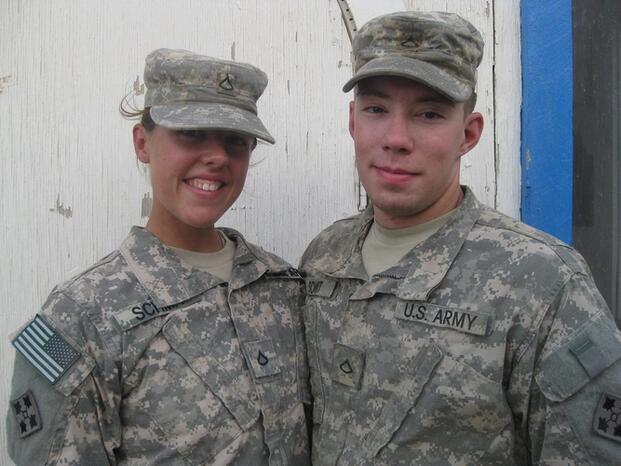
Across a military career, service members are repeatedly told that benefits reflect individual service and sacrifice. In practice, however, some of the most consequential benefits are structured around households rather than individuals. This tension becomes clearest when two people who both served, or are currently serving, form a single household. Whether on active duty or as veterans, dual-service couples often discover the system treats them as one economic unit, even though each person earned benefits independently.
This is commonly described as a “one household, one set of benefits” problem. The phrase is informal, but the structure is real. It affects active duty service members through housing allowances and veterans through needs-based VA programs. The unifying logic is cost replacement, not service recognition. That distinction is where fairness concerns arise.
Active Duty BAH and the Dual-Military Penalty
Basic Allowance for Housing (BAH) is designed to offset the cost of maintaining a residence when government housing is not provided. For a single servicemember, BAH increases when the member has dependents, reflecting higher expected housing costs.
When a servicemember marries a civilian, BAH typically increases to the “with dependents” rate. That increase is widely understood as recognition of added household responsibility.
The dynamic changes when two servicemembers marry each other. In most cases, dual-military couples do not receive two “with dependents” BAH payments for the same residence. Instead, both members typically receive BAH at the “without dependents” rate, unless children are involved and one member is designated as the member with dependents.
The policy rationale is that the government will not pay twice for a single housing unit. From an accounting perspective, that logic is internally consistent. From the servicemember’s perspective, however, it often feels inequitable. Marriage to a civilian can increase a member’s housing allowance through the with-dependents rate, while marriage to another servicemember generally limits the household to only one with-dependents allowance for the same residence.
This is where fairness concerns emerge. BAH is frequently experienced not merely as reimbursement for rent, but as a benefit tied to individual service. When two servicemembers marry and cannot receive the same combined housing increase available to a servicemember married to a civilian, it creates the perception that the system discounts one member’s service in favor of a household-based accounting rule, despite identical service obligations.
Disability Compensation Remains Individual After Service
After separation, VA disability compensation operates very differently. Each veteran receives compensation based solely on their own service-connected disability rating. Household income, including a spouse’s compensation, does not reduce the payment.
For dual-veteran couples, this is one area where benefits truly stack. Two veterans can each receive compensation at their respective ratings regardless of marriage. There is no household collapse and no offset based on spousal income.
This distinction matters because it highlights that the “one household” problem is not universal. It appears only when the benefit is framed around replacing a cost or addressing financial need rather than compensating for service-connected harm.
Dependency Rules Can Still Reduce Add-Ons
Even within compensation, household structure can still matter at the margins. Veterans rated at least 30% disabled may receive additional compensation for dependents. Once both spouses are recognized as veterans in their own right and receive compensation, neither is typically considered the other’s dependent.
The result is not a reduction in base compensation, but a loss of dependent-based add-ons that existed when only one spouse was rated. For dual-veteran households, this can feel like a quiet benefit reduction tied to marital status.
Where Dual Veterans Face the Same Problem as Dual-Military Couples
The sharpest “one household” issue for veterans arises in needs-based programs, particularly the VA pension. Pension, sometimes called a non-service-connected disability pension, is explicitly income-tested. Congress directed the VA to consider household income and reduce payments accordingly.
For dual-veteran couples, this means both veterans’ incomes are combined, including both VA disability compensation payments. Two veterans who might each qualify individually for a pension can lose eligibility once married because VA measures are met at the household level.
The logic mirrors BAH. VA assumes one household with one level of financial need, even when two service records exist.
Aid and Attendance Does Not Change the Household Rule
Aid and Attendance is often misunderstood as a separate entitlement. In most cases, it functions as an enhancement to a pension rather than a stand-alone benefit. It raises the maximum pension rate but does not eliminate income testing.
For dual-veteran couples with serious medical needs, household income can still eliminate or sharply reduce benefits, even when both spouses require assistance.
VA Health Care Uses Household Income for Some Veterans
VA health care eligibility is structured through priority groups. Veterans with compensable service-connected disabilities qualify regardless of income, but others are subject to income thresholds and copays. In those cases, VA evaluates gross household income, including income from both veterans.
As with a pension, dual-veteran couples may lose eligibility or face higher costs once household income is combined.
The Structural Problem Across a Military Lifecycle
From active duty through veteran status, the pattern is consistent. Benefits tied to service recognition remain individual. Benefits tied to cost replacement or financial need collapse to the household level.
That logic explains why BAH is reduced for dual-military couples and why the pension disappears for dual-veteran couples. It does not resolve the fairness concern. Service is individual. Sacrifice is individual. Yet benefits meant to support that service often assume a single household cost, even when two careers were required to earn them.
The “one household, one set of benefits” problem is not a clerical error or a misunderstanding. It is a policy choice. Whether that choice still makes sense for a force where dual-service households are increasingly common is a question Congress, not the VA or DoD, ultimately has to answer.
Story Continues
Read the full article here
23 Comments
The article highlights the tension between benefits reflecting individual service and sacrifice, versus the reality of benefits being structured around households, which can lead to unfair treatment of dual-service couples.
It’s crucial to consider the potential impact of the ‘one household, one set of benefits’ problem on military recruitment and retention, as it may affect the decisions of potential servicemembers who are considering marriage to another servicemember.
The fact that marriage to a civilian can increase a member’s housing allowance, while marriage to another servicemember generally limits the household to only one with-dependents allowance, raises questions about the equity of the system.
It’s worth exploring alternative solutions that could address the ‘one household, one set of benefits’ problem, such as providing additional support for dual-service couples or revising the BAH policy to account for their unique circumstances.
The fact that BAH is designed to offset the cost of maintaining a residence, but does not account for the added household responsibility of two servicemembers, raises questions about the fairness of the system.
It’s essential to consider the long-term effects of the ‘one household, one set of benefits’ problem on the well-being and financial stability of dual-service couples, particularly in retirement.
The article highlights the need for greater awareness and understanding of the challenges faced by dual-service couples, and the importance of advocating for policies that recognize and support their individual service and sacrifice.
I appreciate the article’s emphasis on the importance of recognizing individual service, as it’s essential to acknowledge the unique contributions and sacrifices of each servicemember, regardless of their marital status.
The BAH policy seems to be at odds with the idea that benefits should reflect individual service and sacrifice, and it’s crucial to revisit this policy to ensure fairness and equity for all servicemembers.
The policy rationale that the government will not pay twice for a single housing unit may be internally consistent, but it fails to account for the unique circumstances of dual-military couples and the value of their individual service.
The ‘one household, one set of benefits’ problem affects not only active duty service members but also veterans, particularly dual-service couples who feel that their individual service is not fully recognized.
This is especially concerning when considering the impact on housing allowances, where dual-military couples may not receive the same combined benefits as a servicemember married to a civilian.
I can relate to the frustration of dual-service couples, as my own experience with the BAH policy has been similarly disappointing, feeling like our individual service is not fully valued.
The fact that dual-veteran couples can receive stacked benefits through VA disability compensation is a positive step, but it’s essential to address the ‘one household, one set of benefits’ problem in other areas, such as BAH.
The distinction between cost replacement and service recognition is crucial, as it affects how benefits are allocated to dual-service couples, and it’s essential to consider the impact on their livelihoods.
It’s interesting to note that VA disability compensation operates differently, with each veteran receiving compensation based solely on their own service-connected disability rating, regardless of household income.
The article sheds light on the complexities of military benefits and the need for a more nuanced approach that recognizes the individual service and sacrifice of dual-service couples.
The article raises important questions about the fairness and equity of the military benefits system, particularly in regards to dual-service couples, and it’s essential to continue this conversation to ensure that all servicemembers are treated with the respect and recognition they deserve.
The ‘one household, one set of benefits’ problem is a stark reminder that military benefits are not always designed with the needs of dual-service couples in mind, and it’s time for a more inclusive approach.
The Basic Allowance for Housing (BAH) policy seems to penalize dual-military couples, as they typically receive BAH at the ‘without dependents’ rate unless children are involved, which can be perceived as inequitable.
I’m concerned that the current system may inadvertently discourage servicemembers from marrying other servicemembers, which could have unintended consequences for military morale and retention.
It’s concerning that the ‘one household, one set of benefits’ problem can lead to a perception that the system discounts one member’s service in favor of a household-based accounting rule, despite identical service obligations.
I’m curious to know more about how the VA disability compensation system works for dual-veteran couples, and whether there are any plans to address the ‘one household, one set of benefits’ problem in the context of BAH.