

Listen to the article
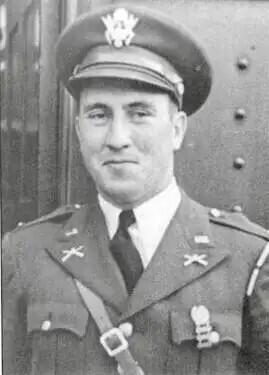
Capt. Willibald C. Bianchi, an Army Medal of Honor recipient who survived many obstacles in World War II, only to be killed in a terrible mistake, will finally return home to receive proper burial 80 years after he was declared missing in action.
Bianchi, whose remains were properly identified on Aug. 11 by the Defense POW/MIA Accounting Agency, will be laid to rest in his hometown, New Ulm, Minnesota, in May 2026, just in time for Memorial Day, according to Minnesota Public Radio.
Bianchi’s journey through World War II was harrowing. He survived getting wounded twice, the notorious Bataan Death March, and captivity in a prisoner of war camp. The Army captain was killed at age 29 when his POW transport ship was bombed mistakenly by U.S. forces.
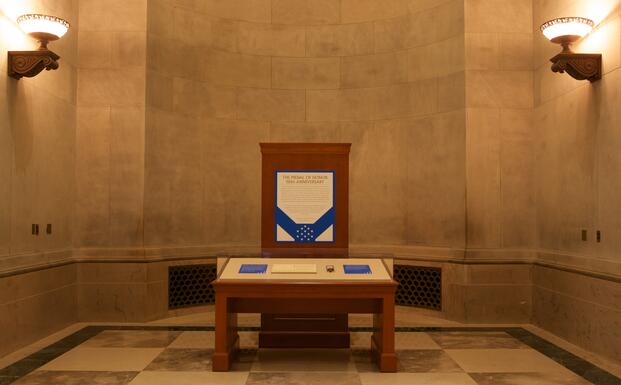
For his bravery and heroics, Bianchi was honored posthumously with the Medal of Honor, the country’s most prestigious military award. Bianchi is one of only 473 soldiers to receive the Medal of Honor for acts of valor in World War II.
Poor Farm Boy Turned Soldier
After his remains were identified and his story came to light, Bianchi was honored at the Minnesota Veterans Day program in Mankato.
U.S. Sen. Amy Klobuchar said the New Ulm native was raised on a small chicken farm. Tragedy struck Bianchi at a young age. His father was killed in an accident, and Bianchi opted to leave high school to care for the family farm.
He enrolled in the University of Minnesota Farm School, and classmates tagged him with a new nickname – “Medals.”
“That’s because he wore his ROTC uniform, partly because he could not afford clothing,” Klobuchar said during the Veterans Day event. “But also, because he was so proud.”
Despite the tragic way he died, Klobuchar said Bianchi’s story is one of sacrifice that can’t be forgotten.
“His story reminds us of a solemn promise that we bring every missing hero home,” Klobuchar said. “No matter how long it takes. The story reminds us that we can never fully repay what our veterans have given our nation, but we can honor their service now.”
Wounded Multiple Times in Battle
When Bianchi was assigned to the Bataan Peninsula in the Philippines in 1942, little did he know his life would change.
As a commander, he led the Philippine Scouts of Company D, 1st Battalion, 45th Infantry Regiment. On Feb. 3, 1942, he volunteered for a deadly assignment, clearing out machine gun nests manned by Japanese soldiers. He was hit twice on the hand with bullets, but kept leading the charge. He simply switched from a rifle to a pistol and forged ahead, wiping out an enemy nest with a grenade. Incredibly, Bianchi was wounded two more times, including shots to the chest, before being knocked to the ground by a tank round.
Bianchi’s actions in the Philippines earned him the Medal of Honor.
POW Time Leads to Unfortunate Death
Bianchi, a 1st lieutenant at the time, was taken prisoner on April 9, 1942, and kept as a POW by Japanese forces until 1944, when Japan decided to transport prisoners to Manila in the Philippines and transfer them to the ship Oryoku Maru, prepared to sail to Japan.
But an American aircraft attacked the ship, not knowing it was carrying POWs. The ship sank in Subic Bay, but Bianchi survived the attack. Bianchi was then shipped to Takao, Formosa, known today as Taiwan, on the Enoura Maru.
Perhaps having the worst luck imaginable, Bianchi’s ship was again struck by U.S. bombers in January 1945, killing the soldier and other prisoners of war on board.
In 1946, after the war ended, the American Graves Registration Command began investigating what happened to Bianchi and the other POWs. The organization recovered 311 bodies buried in a mass grave on a beach. Investigators couldn’t identify the remains, but they sent them to the National Memorial Cemetery of the Pacific, aka “The Punchbowl,” in Hawaii for burial.
Several decades later, through DNA testing and anthropological analysis, Bianchi’s remains were finally identified in a DPAA laboratory. The veteran’s name is listed on the Walls of the Missing at the American Cemetery and Memorial in Manila, grouped with other MIA soldiers.
But after more than 80 years, Bianchi has been accounted for and, according to the DPAA, a rosette will be attached next to his name to signify the soldier has been found.
Story Continues
Read the full article here
23 Comments
I’m skeptical about the circumstances surrounding Bianchi’s death, and I think it’s essential to learn more about the events leading up to the mistaken bombing by U.S. forces.
Yes, it’s crucial to understand what happened and to ensure that such tragedies are not repeated in the future.
I’m impressed by the words of U.S. Sen. Amy Klobuchar, who said that Bianchi’s story reminds us of the solemn promise to bring every missing hero home, and it’s a powerful reminder of our responsibility to our veterans.
It’s interesting to note that Bianchi’s nickname ‘Medals’ was given to him by his classmates because he wore his ROTC uniform with pride, and it’s a fitting tribute to his legacy.
I’m curious to know more about the experiences of the Philippine Scouts, who were led by Bianchi during the Battle of Bataan, and their role in the war.
It’s remarkable that Bianchi’s story has come to light after so many years, and it’s a testament to the importance of preserving the history of our veterans and their sacrifices.
The story of Bianchi’s life, from growing up on a small chicken farm to enlisting in the Army and earning the Medal of Honor, is a true inspiration and a reminder of the importance of honoring our veterans.
The fact that Bianchi was posthumously awarded the Medal of Honor is a testament to his bravery and heroism, and it’s essential that we continue to recognize and honor the sacrifices of our veterans.
I’m curious to know more about the process of identifying Bianchi’s remains, which was finally completed on August 11 by the Defense POW/MIA Accounting Agency.
The identification process likely involved DNA analysis and other forensic techniques to confirm the remains were indeed those of Capt. Bianchi.
I’m impressed by Bianchi’s bravery and selflessness, particularly in the face of overwhelming enemy forces, and his actions on February 3, 1942, were truly heroic.
The fact that Bianchi was wounded multiple times, including shots to the chest, and yet continued to lead the charge, is a testament to his courage and dedication to his country.
The story of Bianchi’s life and death is a reminder of the importance of ensuring that our military personnel are protected and supported, and that we do everything in our power to prevent such tragedies from occurring in the future.
It’s heartbreaking to think that Bianchi was only 29 years old when he was killed, and his death was the result of a terrible mistake by U.S. forces.
Yes, it’s a sobering reminder of the risks and uncertainties of war, and the importance of ensuring that our military personnel are protected and supported.
I’m curious to know more about the events leading up to the Battle of Bataan, and the role that Bianchi and the Philippine Scouts played in the war.
The fact that Capt. Willibald C. Bianchi survived the notorious Bataan Death March and was later killed in a mistaken bombing by U.S. forces is a tragic reminder of the harsh realities of war.
I’m curious to know more about the impact of Bianchi’s death on his family and community, and how his legacy has been preserved over the years.
The fact that Bianchi’s remains will be laid to rest in his hometown of New Ulm, Minnesota, in May 2026, is a fitting tribute to his memory and a chance for his family and community to finally find closure.
I’m impressed by the work of the Defense POW/MIA Accounting Agency in identifying Bianchi’s remains, and it’s a reminder of the ongoing efforts to account for our missing personnel.
The story of Bianchi’s life and death is a powerful reminder of the sacrifices made by our veterans and their families, and it’s essential that we honor their service and memory.
It’s heartbreaking to think that Bianchi’s father was killed in an accident, and he had to leave high school to care for his family’s farm, and yet he still managed to enlist in the Army and serve his country with distinction.
It’s remarkable that Bianchi was one of only 473 soldiers to receive the Medal of Honor for acts of valor in World War II, and his story is a testament to the bravery and sacrifice of those who served.