
Listen to the article
Enough Republican U.S. senators flipped to President Donald Trump during a vote on Wednesday that at least in the meantime has handed the White House a major victory as scrutiny over the United States’ direct involvement in Venezuela remains ongoing.
The Senate narrowly rejected a war powers resolution on Wednesday that would have limited President Donald Trump’s authority to conduct military operations tied to Venezuela. The 50-50 vote was broken by Vice President JD Vance, keeping Trump’s strategy intact after days of lobbying by administration officials and Republican leaders.
The Republicans that voted with Democrats to demand more oversight were Susan Collins of Maine, Rand Paul of Kentucky, and Lisa Murkowski of Alaska. Two Republican senators who flipped on their previous support for the legislation were Josh Hawley of Missouri, and Todd Young of Indiana.
“I have secured from the administration fairly extensive personal assurances related to our future intentions in Venezuela,” Young told the press prior to the vote, according to The Hill. “I’ve secured from them a letter, which will be posted online…indicating that prior to the major military operations in Venezuela the administration will come to Congress … for a formal authorization.
“I’ve secured from Secretary of State [Marco] Rubio, personally, that he’ll appear before the Foreign Relations Committee [later this month] to discuss this very topic. It’s been a real point of emphasis of mine that we need public scrutiny of these sorts of operations and need to involve the public.”
Supporters of the resolution, led by Sen. Tim Kaine (D-Va.), argued Congress must reclaim its constitutional role over war and peace. They said lawmakers were not briefed in advance about the capturing of Venezuelan President Nicolas Maduro and warned that unchecked executive authority risks pulling the U.S. into conflicts without public debate.
The effort built on months of congressional frustration over escalating maritime interdictions and strikes linked to Venezuela, including lawmakers demanding clearer evidence and legal justification for specific actions at sea and near Venezuelan territory.
White House Pushes Back
The constitutional fight over war powers immediately shifted back to the White House.
Officials declined to provide independent comment, directing Military.com instead to Trump’s Truth Social account and Vance’s remarks during a recent White House briefing.
Trump used his social media presence to attack Republican senators who supported the resolution.
“Republicans should be ashamed of the senators that just voted with Democrats in attempting to take away our powers to fight and defend the United States of America,” Trump wrote, adding the effort “greatly hampers American self-defense and national security.”
The president also called the War Powers Act “unconstitutional, totally violating Article II of the Constitution.”
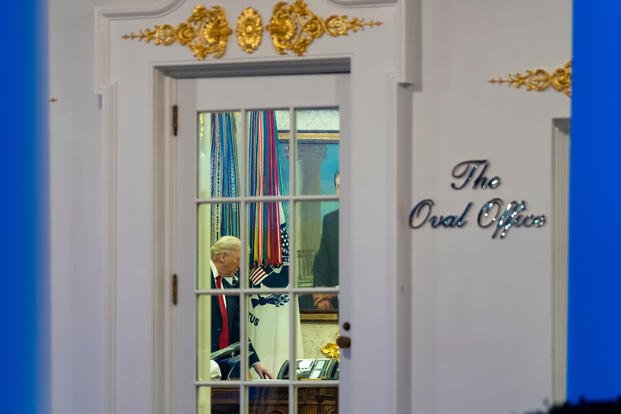
Vance echoed that position during the briefing.
“Every president, Democrat or Republican, believes the War Powers Act is fundamentally a fake and unconstitutional law,” Vance said. “It is not going to change anything about how we conduct foreign policy.”
He also confirmed his involvement in shaping the administration’s Venezuela policy.
“My role is going to be whatever the president asks me to do,” Vance said. “So far, that has been very involved.”
The Defense Department declined to offer separate comment, referring Military.com to the White House.
Military.com also reached out for comment to the National Security Council, State Department, Treasury Department and Organization of American States.
DOJ Memo Ignites Legal Firestorm Over Maduro Capture
The legal battle intensified after a Department of Justice (DOJ) memo focused on domestic presidential authority while avoiding a determination on whether the operation that captured Maduro violated international law.
The Office of Legal Counsel opinion concluded the operation did not qualify as war under constitutional standards, allowing the president to proceed without congressional authorization. The memo emphasized domestic authority while treating international law questions as outside the analysis, fueling debate among legal observers and foreign policy analysts watching how Washington justifies cross-border actions.
Administration officials and supporters of the memo argued the opinion reflects a lawful interpretation of domestic authority, saying the operation should be viewed as a law enforcement action tied to existing criminal charges against Maduro.
Justice Department officials have not disputed the memo’s reasoning.
How Maduro Was Taken Into US Custody
Details released by U.S. officials described an operation that moved fast, from the raid to detention and transport, with Trump publicly saying Maduro and his wife, Cilia Flores, were moved by helicopter to a U.S. warship before being taken to New York to face charges.
The sequence has become central to the political argument in Washington and the legal argument ahead in federal court because it frames the action as both military and prosecutorial from the start.
The release of multiple Americans held in Venezuela offered a rare moment of relief in an otherwise tense confrontation.
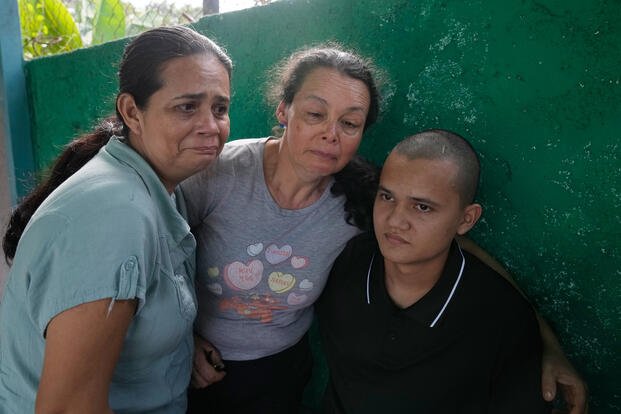
U.S. officials confirmed the releases but declined to say how many Americans were freed or provide details about their detention. Venezuelan authorities have not publicly explained the terms of the move.
The releases landed in a broader pattern of detainee diplomacy in the Venezuela file, including previous rounds in which Americans were freed amid closed-door negotiations involving migration, sanctions and security arrangements.
Venezuela also announced a broader round of prisoner releases. The rights group Foro Penal said it was able to verify far fewer releases than officials claimed, citing uncertainty about who was freed and under what conditions.
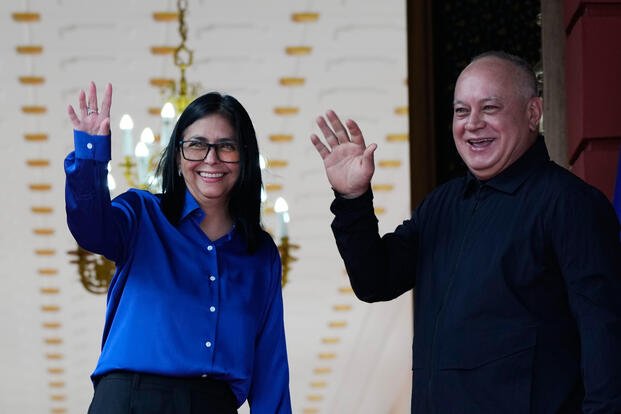
Trump and Venezuelan acting President Delcy Rodriguez later described a phone call between them as positive, focusing on oil, trade and security cooperation.
Energy Pressure Builds at Sea
The confrontation has also played out on the water, where U.S. authorities have pursued and boarded vessels tied to Venezuelan oil as Washington tries to squeeze revenue and enforce sanctions.
U.S. officials have also tracked additional tankers in the sanctions dragnet as the administration broadened its pressure campaign, signaling that enforcement is likely to remain a major lever regardless of how the diplomacy shifts.
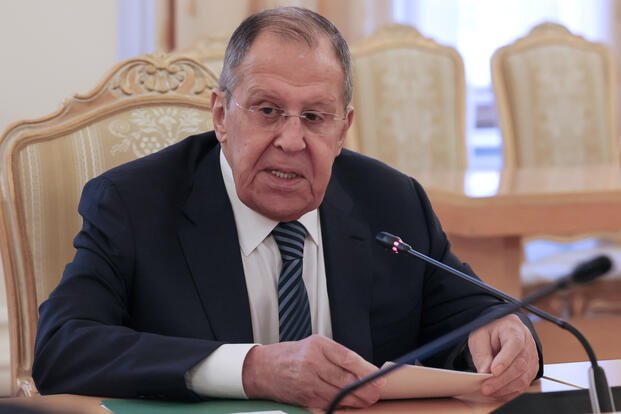
Russian Foreign Minister Sergey Lavrov accused the United States of destabilizing the international order with its Venezuela operation, warning the action could set a dangerous precedent.
Lavrov said the move undermined international law and risked encouraging similar operations by rival powers, according to Reuters.
Federal courts in New York are preparing to oversee the prosecution of Maduro, a case that could raise new questions about jurisdiction, executive authority, and the role of international law in U.S. criminal proceedings.
Read the full article here
15 Comments
The fact that two Republican senators, Josh Hawley and Todd Young, flipped on their previous support for the legislation raises questions about the effectiveness of the administration’s lobbying efforts.
Sen. Tim Kaine’s argument that Congress must reclaim its constitutional role over war and peace is a valid concern, especially considering the lack of briefing on the capturing of Venezuelan President Nicolas Maduro.
It’s interesting to note that Sen. Rand Paul, Susan Collins, and Lisa Murkowski voted with Democrats to demand more oversight, highlighting the bipartisan concern over the administration’s actions in Venezuela.
The capturing of Venezuelan President Nicolas Maduro without prior congressional briefing is a clear example of the executive branch overstepping its authority.
The administration’s claim that the resolution would ‘greatly hamper American self-defense’ is a misleading argument, as the goal of the resolution is to ensure congressional oversight, not restrict the president’s authority.
The 50-50 vote on the war powers resolution, which was broken by Vice President JD Vance, highlights the deep divide within the Senate on the issue of US involvement in Venezuela.
It’s surprising to see Vice President Vance’s tie-breaking vote, given the administration’s efforts to lobby Republican senators.
The fact that Secretary of State Marco Rubio will appear before the Foreign Relations Committee to discuss the issue is a positive step towards increasing public scrutiny and transparency.
I’m skeptical about the ‘extensive personal assurances’ secured by Sen. Todd Young from the administration, as it’s unclear what specific commitments were made regarding future military operations in Venezuela.
The war powers resolution is a crucial step in reasserting Congress’s constitutional authority, and its rejection is a setback for those advocating for greater oversight and transparency.
Trump’s attack on Republican senators who supported the resolution, stating they should be ‘ashamed’, is a divisive tactic that undermines the democratic process.
This kind of rhetoric is unbecoming of a president and only serves to further polarize the debate.
The White House’s decision to direct inquiries to Trump’s Truth Social account and Vance’s remarks, rather than providing independent comment, suggests a lack of transparency on the issue.
This lack of transparency is concerning, especially given the gravity of the situation and the need for public debate.
The months of congressional frustration over escalating maritime interdictions and strikes linked to Venezuela demonstrate a clear need for clearer evidence and legal justification for specific actions.